Key takeaways
- Pays almost always: a deep clean, everything working, neutral paint where it is tired, odors fixed at the source, a tidy yard.
- Judgment calls: flooring in the main rooms, light fixtures, hardware, fence and gate, appliances.
- Rarely pays on a rental: full kitchen or bath renovations, premium finishes, personal-taste projects.
- Order: safety and repairs, paint, flooring, fixtures, deep clean, yard, then photos and the listing.
- Test every item on your own quote: cost divided by the extra monthly rent it supports, minus any vacancy it saves.
What should you do to prepare a house for rent? Before you list a rental in Fort Worth, Keller or North Richland Hills, fix what a renter sees and uses, in an order that keeps trades from undoing each other: safety items and repairs, paint, flooring, fixtures, a deep clean, the yard, then photos. A deep clean, working fixtures and neutral paint almost always pay back; full renovations and premium finishes rarely do on a rental.
This guide ranks the work in one table, sets out the order, and shows how to test any quote against the rent and the vacancy it buys. Owners whose house is occupied should also read pre-leasing before move-out.
What pays, what is a judgment call, what rarely pays
Here is the usual make-ready work on a single-family rental, sorted by whether it tends to earn its cost back, with what decides the close calls:
| Work | Verdict | Why | Decide with |
|---|---|---|---|
| Rekey, security devices, smoke alarm test | Required | Texas law, not a choice | The safety checklist |
| Everything works: outlets, faucets, doors, blinds, bulbs | Pays | Renters test them at showings | A walk-through list |
| Deep clean, including inside appliances | Pays | Clean reads in every photo | Your cleaner's quote |
| Paint where tired, one neutral color | Pays | Biggest visual change per dollar | Your painter's quote |
| Odor fixed at the source | Pays | Odor ends showings at the door | Find the source first |
| Yard mowed, edged, beds cleaned | Pays | The front photo is usually first | Your yard quote |
| Flooring in main living areas | Judgment | Worn carpet hurts; good carpet can wait | The comps in a rental analysis |
| Light fixtures and hardware | Judgment | Small cost, visible in photos | Whether the house looks one tier below its comps |
| Fence and gate repair | Judgment | Matters most if you allow pets | Your pet policy |
| Full kitchen or bath renovation | Rarely pays | Rent rarely rises enough to repay it | Payback months on your quote |
| Premium or delicate finishes | Rarely pays | Same rent, higher cost each turnover | Durability |
| Personal-taste projects | Rarely pays | You are renting to many tastes | Skip |
How to read this table: work in the first group is done on every house; the judgment calls are settled by comparing your house with the leased homes it competes with, not by taste; the last group needs a payback test on your own quote before you spend. The safety row is not optional: see who checks smoke alarms and locks before move-in.
Two tests for every item: the listing photo and the next tenant
Every make-ready decision passes two tests. First, the listing photo: renters shortlist from photos, and what reads clean, bright and cared-for earns the showing. Second, the next tenant: everything you install will be lived on by someone who did not buy it, so durable and neutral beats premium and delicate. Every recommendation below follows from those two tests, and the table above sorts the usual items by them.
Always worth it: the non-negotiables
- Safety first. Rekey the locks, confirm the required security devices and test every smoke alarm; Property Code 92.156(a) requires the rekey no later than the seventh day after each tenant turnover date, and 92.258(b) requires the alarm test at the start of the tenant's possession.
- Everything works. Every outlet, faucet, door, blind and bulb. Renters flip switches at showings, and each dead one suggests deferred maintenance.
- A deep clean, including inside the oven, refrigerator and cabinets. A spotless older kitchen shows better than a dirty updated one.
- Paint where it is tired, in one neutral color throughout; paint and finishes for rentals covers choosing it once.
- Odors fixed at the source, often carpet, pads or ducts, never masked.
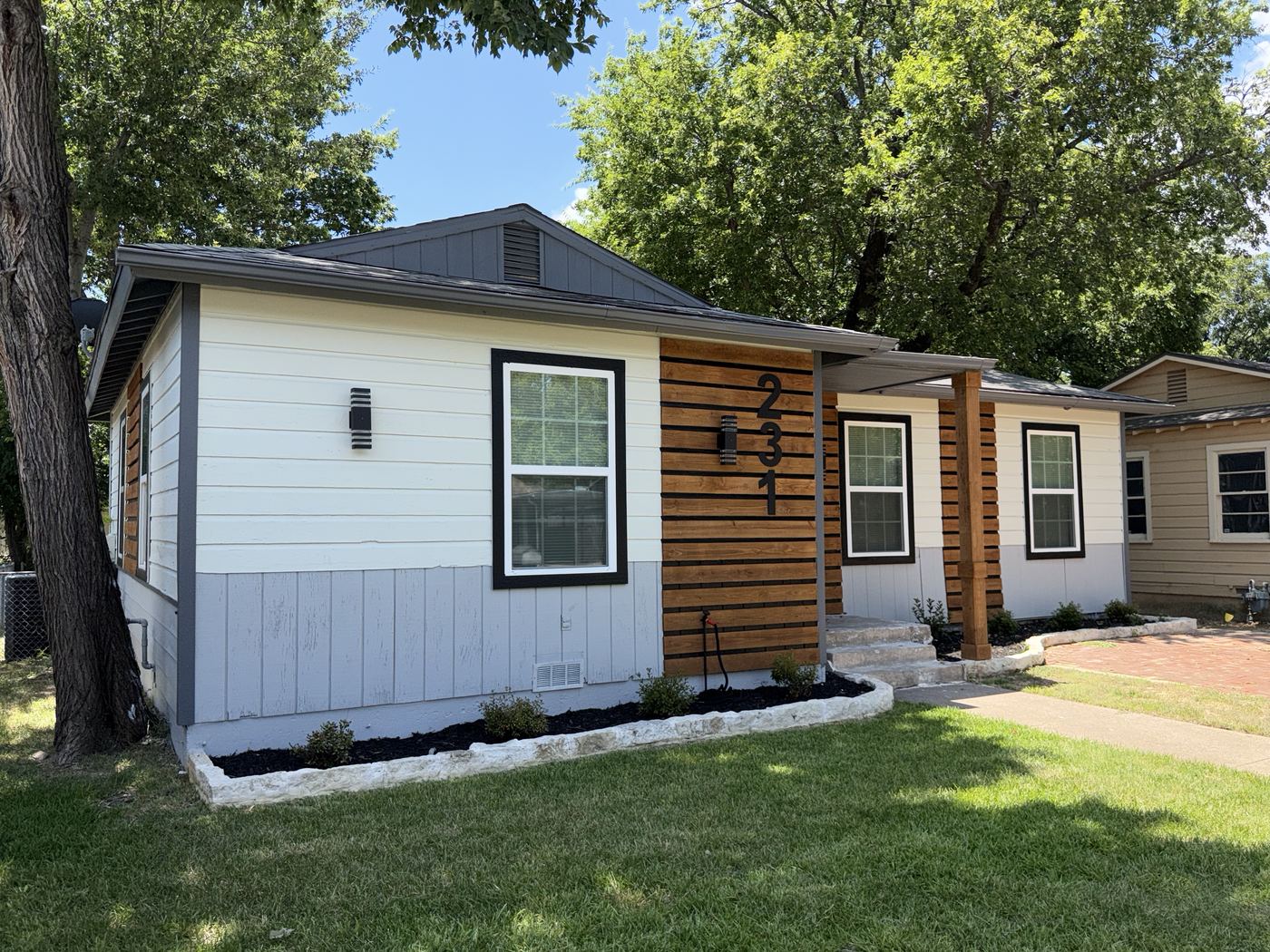
- Curb appeal: mowed, edged, beds cleaned, house numbers visible.
Usually worth it: judgment calls that often pay
- Flooring in the main living areas. Worn carpet in living spaces shows in every photo; durable hard flooring photographs well and survives tenants and pets. Bedrooms in good condition can often wait a cycle.
- Lighting. Replacing dated fixtures with simple ones, and using the same bulb color throughout, changes photos at a small cost.
- Hardware. Cabinet pulls, faucets and door handles give an updated look without a renovation.
- Fence and gate. Essential if you allow dogs; see whether to allow pets.
- Appliances. Match the house's tier and make everything work; see whether to provide appliances.
Each of these is decided by the homes you compete with. If the leased homes near yours have hard floors and updated lights, yours needs them to rent at the same level; if they do not, the money may be better kept.
Rarely worth it on a rental
- Full kitchen or bath renovations. Paint, hardware, lighting and a deep clean usually capture most of the photo value; a renovation has to be repaid by rent, which takes a long time on a rental.
- Premium finishes. Designer tile and delicate surfaces tend to earn the same rent as durable ones and cost more at every turnover.
- Personal-taste projects. Accent walls and bold fixtures narrow the pool of renters who like the house.
- Adding amenities with ongoing duties. A new pool, for example, brings maintenance, insurance questions and a safety check; see renting a house with a pool.
None of these is forbidden. If you decide on one, read how to supervise a major renovation between tenants before the work starts. Each needs the payback test below before you sign the quote.
The make-ready order, step by step
Trades undo each other when the order is wrong, so do the work in this sequence:
- Safety and repairs: rekey, devices, smoke alarms, then plumbing, electrical, drywall and anything leaking.
- Paint, after drywall patches are dry.
- Flooring, after paint, so drips land on the old floor.
- Fixtures and hardware.
- Deep clean, after every trade has left.
- Yard, timed close to photo day.
- Photos and the listing, the day the clean is done; see the listing photo shot list.
Every extra week of make-ready is a week of rent not received. Timing and turnover costs are covered in what a turnover costs and how long it takes, and a manager's role in arranging the vendors in whether a manager can arrange cleaning, painting and yard work.
Testing a quote: payback months, with illustrative numbers
Test any item on your own quote with one division: payback months = cost of the work ÷ extra monthly rent it supports. Then subtract any vacancy it saves. Our marketing page puts a week of avoidable vacancy at about $460 at $2,000 a month in rent.
| Step | Illustrative numbers |
|---|---|
| Your quote for the work (C) | $1,800 |
| Extra monthly rent the comps support after the work (R) | $75 |
| Payback with no vacancy effect: C ÷ R | $1,800 ÷ $75 = 24 months |
| If the work shortens vacancy by one week | $1,800 - $460 = $1,340 left to recover |
| Payback after the vacancy saving | $1,340 ÷ $75 = about 18 months |
How to read this table: these numbers are illustrative only, not a quote or a market figure; put in your own quote and the rent difference a rental analysis shows. If the payback runs longer than you expect to own the house, or longer than the item will last, skip it. The vacancy saving is rent you would otherwise not receive, not cash you spend, so count it once.
The scoping walk: how to build the list
Before any money is spent, build the list in one walk through the house, phone in hand:
- Start at the curb. Photograph the house from the street; that is listing photo one. Note lawn, beds, house numbers, front door, anything leaning.
- Walk the switches. In every room flip every switch, note dead bulbs and dated fixtures, open every blind, and photograph the room from its doorway.
- Run the water. Every faucet and drain, each toilet's flush and refill, and the water heater's age label.
- Grade the floors room by room: living areas first, bedrooms second, wet areas for any carpet that should not be there.
- Check smells after ten minutes outside, and find the source.
- Check safety: each exterior door, window latch, sliding door and smoke alarm against the checklist.
- Ask the tier question: against the leased homes you compete with, does this house present one tier below its price? That gap, not a wish list, is the budget.
The output is a list, in order, that you can hand to vendors or to a manager. A free rental analysis adds the comparison with leased homes, so the judgment calls in the table can be settled with evidence.
How Perpetual handles make-ready before listing
Perpetual Property Management is broker-owned and manages rentals in Fort Worth, Keller and North Richland Hills. What our published pages say about this stage:
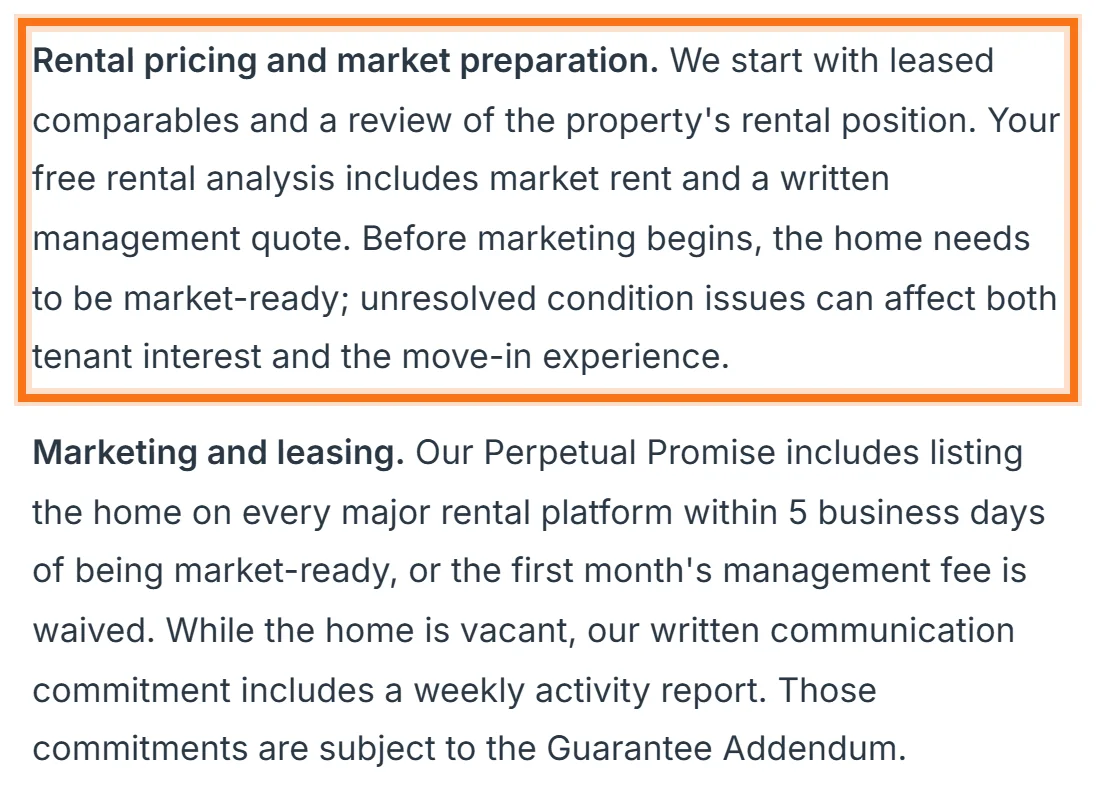
- Advice before you spend: our free rental analysis includes notes on any make-ready items worth doing, and our property management page says we will tell you which make-ready items raise rent and which do not, before you spend the money.
- Coordination: our turnovers page describes make-ready coordination (paint, clean, repair, refresh) sequenced so the property is photo-ready fast, with marketing starting before the work finishes.
- Approvals and proof: work under your pre-approved spending limit goes ahead; larger jobs come with a description, photos and a recommendation; the original invoice is in your portal; every completed repair over $500 gets photo or video proof.
- Listing: live on every major rental platform within 5 business days of being market-ready, or the first month's management fee is waived (subject to the Guarantee Addendum).
- Your own vendor: usually yes, if insured and reliable.
Published coordination rates are 3% to 5% of cost for make-ready on Investor Special and 4.9% (Standard) or 5% (Full Service) of cost for maintenance; how a make-ready is billed on your plan is confirmed in writing before you sign. See pricing, or call 682-593-7033.
The takeaway: Spend on what shows in a listing photo and survives a tenant, do the work in order, test every item against your own quote and the rent it supports, and list the day the house is market-ready.
Questions owners ask
Should I replace carpet with LVP everywhere?
Living areas often, bedrooms a judgment call. Worn carpet in living spaces shows in every listing photo, while carpet in good condition in bedrooms can usually wait a cycle. Wet areas should not have carpet. Compare with the leased homes near yours before deciding.
Appliances: repair, replace, or skip?
Match the house's tier and make everything work. Whether to supply a refrigerator, washer or dryer depends on what the homes you compete with include, so check the comps. Replace an appliance on age when it is one failure away from an emergency purchase during a tenancy.
Do smart locks and video doorbells raise rent?
They can add appeal, and they photograph well, but they do not replace the basics. The rekey rule in Property Code 92.156 still applies to any lock operated by a key, card or combination, so codes and keys change at every turnover. Handle privacy properly: exterior-facing devices only, disclosed in the lease, and access transferred at move-in.
Can make-ready happen while the old tenant is still in place?
Planning can; the pre-move-out walkthrough described in the move-out inspection guide doubles as scoping, and vendors get scheduled against the surrender date. Work itself waits for possession; overlap the paperwork, not the painters.
What repairs should I make before listing my house for rent?
Fix everything that does not work, then stop. Start with safety items: rekey the locks, confirm the security devices and test the smoke alarms. Then plumbing, electrical and drywall repairs, paint where it is tired in one neutral color, a deep clean and basic curb appeal, and remove any pet or smoke odor at its source. Do the work in that order so trades do not undo each other.
Which upgrades are actually worth doing before renting out a house?
The ones that show in a listing photo and survive a tenant: durable flooring in the main living areas when the carpet is worn, simple light fixtures, a hardware refresh and fence and gate repair if you allow pets. Full kitchen or bath renovations, premium finishes and personal-taste projects rarely repay their cost on a rental. Test each one on your own quote: cost divided by the extra monthly rent it supports.
Can a property manager arrange cleaning, painting, and yard work before listing?
Yes. A manager builds the list on a walk-through, schedules vendors in the order that saves money (repairs, paint, flooring, fixtures, then the deep clean), arranges the yard work, and has marketing ready so the listing follows the clean. Our turnovers page describes make-ready coordination sequenced so the property is photo-ready fast, with marketing starting before the work finishes.
What does Perpetual charge to coordinate a make-ready?
Our price sheet lists make-ready coordination at 3% to 5% of cost on the Investor Special plan (portfolios of 5 or more units), and maintenance coordination at 4.9% of cost on Standard and 5% on Full Service. Coordination is a percentage of the vendor's invoice, and the original invoice is always in your portal. How a make-ready is billed on your plan is confirmed in writing before you sign.
Related services
Property management in Keller, North Richland Hills and Fort Worth. How full-service management works in Tarrant County →