Key takeaways
- A manager can arrange the whole first make-ready: walk-through, written scope, vendor estimates, scheduling and finished photos. You approve the work and pay the vendors.
- Some lines are required before a tenant moves in: security devices (Property Code 92.153), smoke alarms (92.255) and a rekey (92.156); paint on a pre-1978 house falls under EPA's lead-safe rule.
- In Fort Worth, grass and weeds must stay at 12 inches or less on developed and vacant lots, so a vacant house needs yard care before it is listed.
- Approve the first make-ready line by line; a routine repair limit was not written for a whole project.
- Perpetual's price sheet lists make-ready coordination at 3% to 5% of cost (Investor Special) and maintenance coordination at 4.9% (Standard) and 5% (Full Service), always on the vendor's invoice.
Yes. Arranging cleaning, painting, yard work and the small repairs that come with them is part of what a property manager does before a house in Fort Worth, Keller or North Richland Hills is listed for the first time. The manager writes the scope, gets estimates, schedules the trades and photographs the result. You decide what gets done and pay the vendors, and the paperwork should show exactly what each line cost.
This guide is about that first make-ready, before the first tenant: what belongs on the list, which items Texas or the city require, who approves each line, and how the work is billed.
What goes on the first make-ready list in Fort Worth, Keller and North Richland Hills
Here is what a first make-ready usually covers, whether each item is required or a choice, and the rule or reason behind it:
| Item | Required or a choice | Rule or reason | Who decides |
|---|---|---|---|
| Door locks, keyless bolting devices, door viewers, window latches, sliding door locks | Required once a tenant is in possession | Property Code 92.153(a) and (d) | Not optional; you pay (92.153(c)) |
| Rekey of every key, card or combination lock | Required | Property Code 92.156(a): not later than the 7th day after the tenant turnover date | Not optional; best done before keys are handed over |
| Smoke alarms in each bedroom, the bedroom corridor and each level | Required | Property Code 92.255(a); tested at the start of possession (92.258(b)) | Not optional |
| Paint or repairs that disturb paint in a pre-1978 house | Who does it is regulated | EPA: hire only a Lead-Safe Certified firm for work that could disturb lead-based paint | You choose the firm; it must be certified |
| Grass and weeds while the house is empty (Fort Worth) | Required | City of Fort Worth: 12 inches or less on developed and vacant lots | Not optional |
| Heating, cooling, water heater, plumbing, appliances you provide | Needed to work | A tenant reports a failure in week one; fixing it first is cheaper than an emergency call | You, from the estimate |
| Deep clean, paint touch-up or repaint, flooring, landscaping refresh | A choice | Measured against the rent it supports | You, line by line |
How to read this table: the first five rows are not a matter of taste, so budget for them before anything cosmetic. The last two rows are where you and the manager decide what the rent can carry. The full security-device rules are in Texas security device and smoke alarm rules. This is general information, not legal advice.
Who arranges it: the walk-through and the written scope
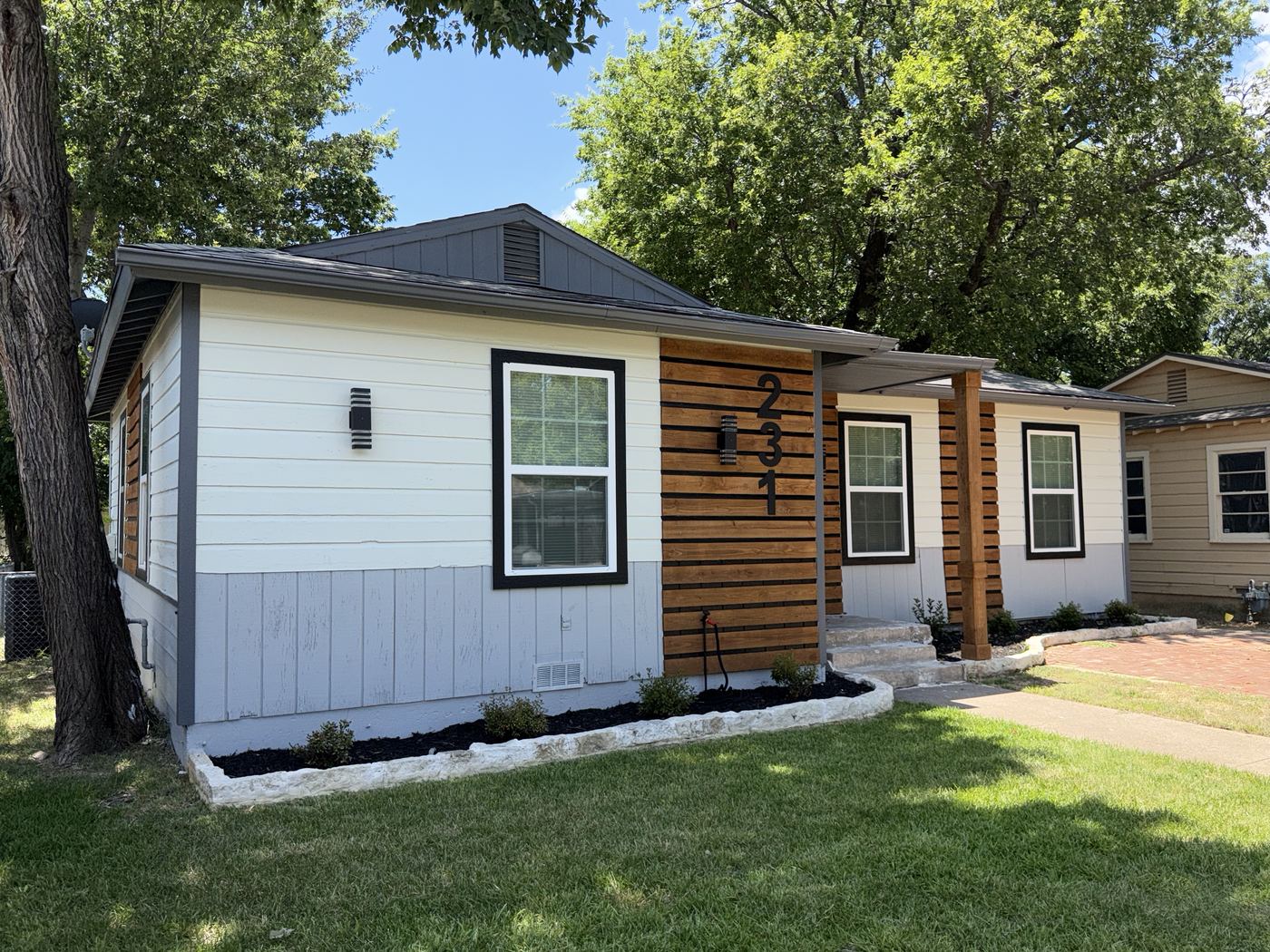
The manager walks every room, the systems, the exterior and the yard, and writes down what the house needs before it can be listed. A useful scope sorts that list into the three groups in the table: what a rule requires, what must work, and what is a choice. For each line it gives a description, a photo where the problem is not obvious, and a vendor estimate.
The manager also sets the order, because trades block each other: repairs that open walls, then paint, then flooring, then fixtures, then the deep clean, with yard work running alongside and the rekey last, before photos. Getting that order wrong costs days, not dollars. You get the scope in writing before any work starts. That is the moment to say what you do and do not want done, and the document you will check the invoices against later.
Who approves: line by line, not just a spending limit
Most management agreements set a spending limit: repairs under it go ahead without asking, anything over it comes to you. That limit was written for a dripping faucet during a tenancy, not for a project. A first make-ready is a set of estimates that can add up to many times a routine limit, so approve it as a list, line by line, in writing.
Ask for three things with the scope: an estimate for each line, the total, and which lines are required rather than optional. Then approve, strike or defer each one. Lines you defer go on a list for the first turnover. How the limit itself should be set is covered in whether a manager can approve expensive repairs without your permission.
Which items raise the rent, and which only cost money
A first make-ready is where owners overspend most, because it is tempting to finish the house to your own taste. The question for each cosmetic line is whether a renter will pay more for it or choose your house sooner because of it. Clean, neutral paint, working fixtures, clean floors and a tidy yard usually pass that test. A new kitchen counter or a remodeled bath often does not, and on a rental it is also a surface that has to survive every future tenant.
Make the call with the rent range in hand. A free rental analysis gives a rent range from leased comparables and make-ready guidance, so each estimate can be weighed against what the house will earn. Which finishes to standardize so later turnovers are cheaper is covered in paint and finishes for rentals.
How the work is billed, with a worked example
You pay the vendors; make-ready is an owner cost under any manager. What differs is whether a coordination charge sits on top and how it is calculated. On our price sheet, the Investor Special (portfolios of 5 or more units) lists make-ready coordination at 3% to 5% of cost, Standard lists maintenance coordination at 4.9% of cost, and Full Service lists maintenance coordination at 5% of cost. Coordination is a percentage of the vendor's invoice, and the original invoice is always in your portal.
Illustrative only, not a quote. Say the approved first make-ready comes to a painter at $2,400, a cleaner at $350, a yard crew at $275 and a handyman at $480: $3,505 in vendor invoices. At 4.9% the coordination line is $3,505 x 4.9% = $171.75 (rounded); at 5% it is $175.25; at 3% it is $105.15. Each fee should be a separate line you can recalculate from the invoices. The Standard and Full Service lines are labeled maintenance coordination, so ask that your written quote say how a first make-ready is charged.
With no rent coming in yet, agree before work starts how invoices get paid: from funds you place with the manager or paid by you directly. See owner reserves and disbursements.
Using your own painter or cleaner, and houses built before 1978
You can usually bring your own vendor. Our maintenance page says you can use your own handyman or vendor if they are insured and reliable, and we will tell you honestly if one is causing problems. Tell the manager before the schedule is set, so your painter is slotted in after the repairs and before the cleaners, and remember that a delay on your vendor's side becomes a delay to your listing.
Houses built before 1978 add a rule for whoever paints. EPA's renovation, repair and painting page for property managers says those homes are likely to contain lead-based paint and that a company not certified itself should "hire only a Lead-Safe Certified firm" for maintenance, repair or painting work that could disturb it. Under 40 CFR 745.83, small jobs that disturb 6 square feet or less of painted surface per room inside, or 20 square feet or less outside, are minor repair and maintenance, but window replacement and demolition of painted surfaces never are. Ask any painter for the firm certification before the work starts; the federal lease disclosure for those homes is covered in our paint and finishes guide.
What you should have when the work is done
When the last vendor leaves, you should be able to see the finished house and every dollar it cost. That means after photos, each vendor's original invoice, any coordination charge recalculated from those invoices, and confirmation of the required items: devices installed, locks rekeyed, smoke alarms tested. Keep those records with the property file; the move-in condition report at the start of the tenancy is measured against the same condition.
Then the listing should follow without a gap. If you are deciding when to bring a manager in, when to hire a property manager before the house is rent-ready covers the timing, and how quickly a house can be made ready covers the order of trades and the turnover version of this work.
How Perpetual handles a first make-ready
Perpetual Property Management is broker-owned and manages homes in Keller, North Richland Hills, Fort Worth and nearby. Before you spend the money, we tell you which make-ready items actually raise rent and which do not, and the free rental analysis includes make-ready guidance alongside the rent range and a written quote. Our price sheet lists a property enrollment inspection on every plan: $125 on the Investor Special, $49 on Standard, and included with onboarding on Full Service.
We work with qualified plumbers, electricians, HVAC and general trades repeatedly. Routine repairs under your pre-approved limit get fixed fast; anything larger comes to you with a description, photos and a recommendation. For a first make-ready, ask that every line above your limit reach you that way before it starts.
The original vendor invoice is always in your portal, and under the Perpetual Promise, subject to its Guarantee Addendum, every completed repair over $500 gets photo or video proof, and if a fee is not in the agreement, you do not pay it. Once the house is market-ready, it is live on every major rental platform within 5 business days, or we waive the first month's management fee. How the first make-ready is charged on your plan, and how invoices are paid before rent starts, are confirmed in writing before you sign. See our maintenance coordination page or call 682-593-7033.
The takeaway: For the first listing, separate the required items from the rent-raising ones and the nice-to-haves, approve each line in writing, and make sure any coordination charge is a stated percentage of the vendor's own invoice.
Questions owners ask
Can I use my own painter or cleaner instead of the manager's vendors?
Usually yes. Our maintenance page says you can use your own handyman or vendor if they are insured and reliable, and we will tell you honestly if one is causing problems. Tell the manager before the schedule is set so your vendor fits the order of work. On a house built before 1978, EPA's guidance for property managers is to hire only a Lead-Safe Certified firm for painting or repairs that could disturb lead-based paint.
Does the property manager charge extra for coordinating make-ready work?
Some managers do, some build it into other fees; what matters is that it is written down before the work starts. On Perpetual's price sheet, coordination is a percentage of the vendor's invoice: make-ready coordination 3% to 5% of cost on the Investor Special, maintenance coordination 4.9% on Standard and 5% on Full Service. Illustrative only: on $3,505 of invoices, 5% is $175.25.
How much does make-ready usually cost?
It depends on the house, so any number given without a walk-through is a guess. A clean house with good paint may need only the required items, a deep clean and yard work. A house after a long owner occupancy may need paint throughout, flooring and a long repair list. Ask for a written scope with an estimate per line, and decide from that, not from an average.
Will the manager handle make-ready between every tenant, not just the first time?
Yes, that is the turnover make-ready, and it follows the same steps: move-out inspection, scope, estimates, approval, scheduling and photos. Our turnover process sequences paint, cleaning, repairs and refresh so the house is photo-ready fast, and marketing starts before the work finishes. Charges for tenant-caused damage beyond normal wear are handled through the deposit itemization.
Who pays for make-ready work before a rental is listed?
The owner does, under any management arrangement. You approve the estimates and pay the vendor invoices, either from funds you place with the manager or directly. A coordination charge, if your agreement has one, should be a stated percentage of the vendor's invoice shown as its own line, with the original invoice available to you.
Does a house need new locks and smoke alarms before it is listed?
Not for the listing, but for the tenant. Property Code 92.153 lists the security devices a dwelling must have once a tenant is in possession, 92.156(a) requires a rekey not later than the 7th day after the tenant turnover date, 92.255 requires a smoke alarm in each bedroom, in the corridor serving the bedrooms and on each level, and 92.258(b) requires a test at the start of possession. Putting them in the first make-ready avoids a scramble at move-in.
Related services
Property management in Keller, North Richland Hills and Fort Worth. How full-service management works in Tarrant County →