Key takeaways
- Turnover cost = lost rent + make-ready + coordination + leasing fee + rekeying + vacant-house bills, less lawful deposit deductions.
- At $2,000 a month, each vacant day is about $67; 21 days is $1,400 before a single invoice.
- The deposit clock runs alongside: refund or itemized deductions within 30 days after surrender (Property Code 92.103, 92.104).
- Locks are rekeyed at the landlord's expense by the seventh day after each tenant turnover (Property Code 92.156).
- In an illustrative comparison, planning ahead and marketing early saved 36 vacant days, $2,400 of rent.
What does a rental turnover cost, and how long does it take? It costs the rent you lose for every vacant day, plus the make-ready invoices, any coordination fee, the leasing fee for the next tenant, rekeying and the bills while the house is empty, less whatever the deposit lawfully covers. For a house in Fort Worth, Keller or North Richland Hills, the vacant days are usually the line that grows fastest, so the timeline decides the cost.
Below: a worksheet with every cost line in the order it hits, the deposit clock, the decisions that shorten the gap, and an illustrative timeline done two ways.
The turnover cost worksheet, line by line
Here is every cost line of a turnover in the order it hits, how to calculate it with your own numbers, and an illustrative example for a house renting at $2,000 a month that stands empty for 21 days (illustrative only, not a quote):
| Cost line | When it hits | How to calculate it | Example at $2,000 rent |
|---|---|---|---|
| Lost rent | From the last paid day to the next lease start | Rent / 30 x vacant days | $2,000 / 30 x 21 = $1,400 |
| Make-ready work (repairs, paint, cleaning, yard) | The first days after move-out | The total of your vendor quotes | Your quotes |
| Coordination fee, if your agreement has one | With each invoice | Invoice total x the agreed rate | At 5%: $50 per $1,000 of invoices |
| Rekeying | By the 7th day after the next tenant moves in | Your locksmith's quote | Your quote |
| Utilities, lawn and HOA while empty | Every vacant day | Your monthly bills / 30 x vacant days | Your bills |
| Leasing fee for the next tenant | When the new tenant is placed | Rent x the placement percentage | 50%: $1,000; 75%: $1,500 |
| Less: lawful deposit deductions | Within 30 days after surrender | Tenant-caused damage and lease charges, not normal wear and tear | From the move-out inspection |
How to read this table: only the first line grows with every day the house sits, which is why the timeline matters more than any single invoice. The last line reduces your cost only for what the tenant is legally liable for under the lease; normal wear and tear stays with you (Property Code 92.104(b)). The placement percentages in the example are from our price sheet and the 5% is only an example rate; use the rates in your agreement.
A turnover in order, and what each step costs
A turnover runs from the tenant's notice to the next tenant's move-in. In order, with the cost each step adds:
- Notice and the renewal decision. No cost yet, but every week of warning is a week of marketing you can use.
- Walk-through before move-out. The make-ready scope and quotes, written while the tenant still lives there.
- Move-out and move-out inspection. Keys back; the inspection produces both the deduction list and the scope.
- Make-ready. Your vendor invoices, plus any coordination fee in your agreement.
- Marketing, showings and screening. The leasing fee when a tenant is placed.
- Move-in. Rekeying by the seventh day after the turnover date (Property Code 92.156(a)), smoke alarms tested at the start of possession (92.258(b)), and a new move-in report.
Under every step runs the lost rent. The stage-by-stage clock and the order of the trades are in how quickly can a property manager get the house ready for the next tenant?
What decides how long the house sits
Five things decide how long the house sits, and most of them are yours to control:
- Condition at move-out. Nail holes and a worn carpet are days of work; pet damage and a neglected yard are weeks.
- How fast the scope is decided. A week spent deciding about carpet is a week of vacancy before any work starts.
- Approvals. A spending limit agreed in advance lets routine items go ahead without waiting for you.
- Time of year. See does the time of year affect how quickly a house rents in Fort Worth?
- Price. A house listed above the market sits however good the make-ready was. See can I choose the rental price, or does the manager decide?
Why the vacant days are the line to watch
Owners count the paint and the carpet and forget the days, but the days are the line that keeps growing. At $2,000 a month, each vacant day is about $67 of rent you do not receive: $2,000 / 30 = $66.67. A week is about $467; 21 days is $1,400. That is income not received, not cash paid out, but it is a cost all the same.
So a decision that costs a little more and saves days is often the cheaper one. Compare daily rent times the days saved against the extra cost. What a vacant month really costs runs the full vacancy arithmetic.
The deposit clock that runs during the turnover
While the house is being turned, a Texas deadline runs in the background. Under Property Code 92.103(a), the landlord must refund the security deposit on or before the 30th day after the tenant surrenders the premises. Under 92.104, the landlord may deduct damages and charges the tenant is legally liable for under the lease, may not keep any part for normal wear and tear, and must send the balance with a written description and itemized list of deductions (with one exception in 92.104(c) for unpaid rent that is not in dispute).
Three more rules shape the clock. The landlord does not have to refund or itemize until the tenant gives a written forwarding address (92.107(a)). A lease clause making advance notice of move-out a condition of the refund works only if it is underlined or in conspicuous bold print (92.103(b)). And missing the 30 days creates a presumption of bad faith (92.109(d)), with liability of $100 plus three times the amount wrongfully withheld plus attorney's fees (92.109(a)).
For the turnover, this means the move-out inspection does double duty: it writes the make-ready scope and the deduction list from the same photos. The move-out inspection guide and Texas security deposit rules cover the details. This is general information, not legal advice.
Write the scope before the keys come back
The biggest time saver is walking the house a few weeks before move-out, while the tenant still lives there. The point is not the deposit; that is decided after surrender. The point is to write the make-ready scope, get quotes and book vendors so work starts the day after the keys come back.
No Texas statute sets a notice period for a landlord's entry, so the lease's access clause decides how and when the walk-through happens. Ask the tenant, give the notice the lease requires, and agree a time.
The make-ready bill: repair or improvement
Make-ready is where owners overspend out of nostalgia or underspend out of habit, and both lengthen the vacancy. When the turnover is a new kitchen, a roof or flooring through the whole house, see who can supervise a major renovation between tenants. Three rules keep the scope sensible: decide the big items (carpet, paint, appliances) before move-out so materials are ordered the day the house is empty; do whole rooms rather than patches, because touch-up paint in a different sheen photographs badly; and skip upgrades that will not change the rent. The make-ready guide and paint and finishes for rentals go deeper.
The same line matters at tax time. IRS Publication 527 says an expense for repairing or maintaining a rental may generally be deducted if it does not have to be capitalized, while an improvement, one that results in a betterment, restores the property or adapts it to a new use, must be capitalized.
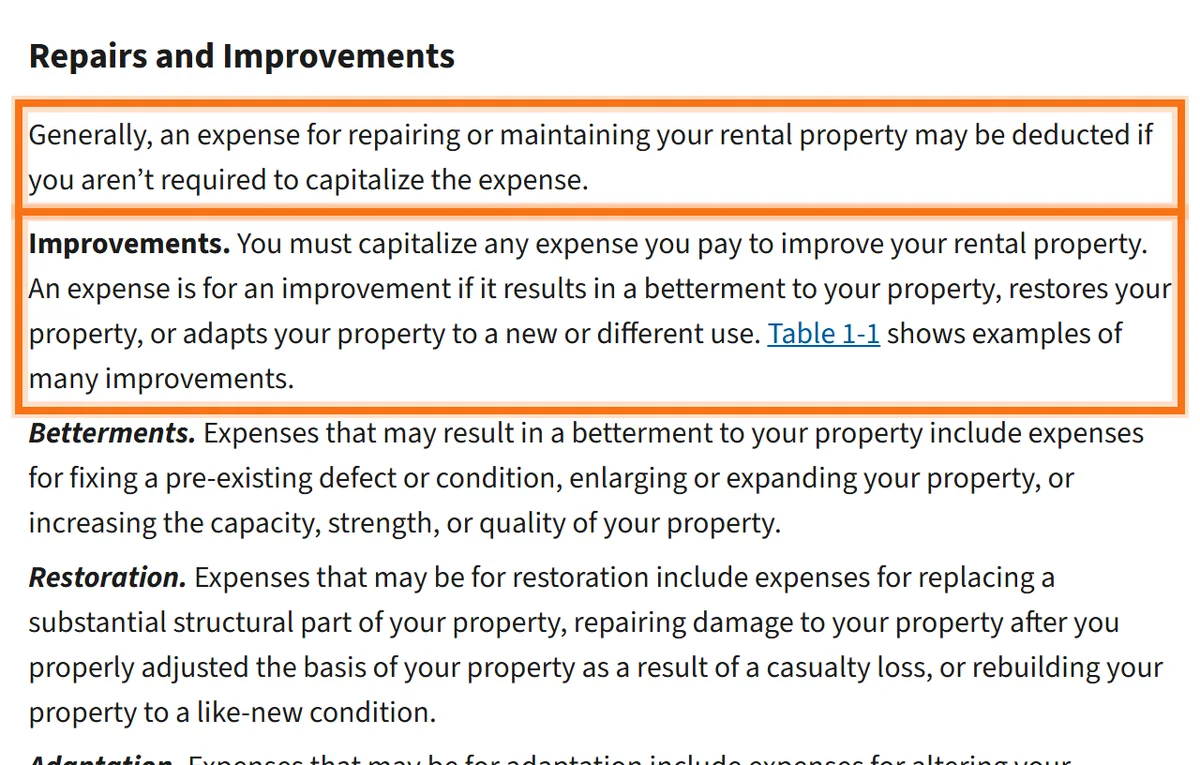
So keep every make-ready invoice with a clear description of the work, and let your CPA decide which side of the line each one falls on. This is general information, not tax advice.
Market the house before it is empty
The second big time saver is marketing before the house is finished, or before it is empty. If the tenant leaves on the 30th and the house will be ready ten days later, the listing can go live weeks earlier with an availability date, and showings can start once the house is presentable.
Pre-leasing has conditions. Showing an occupied house depends on the lease's access clause and the tenant's cooperation. And the new lease needs a start date with room for the make-ready to run a few days long. The full method is in pre-leasing a rental before move-out; our marketing page describes occupied showings as scheduled with proper legal notice and coordination with the current tenant (marketing and showings).
An illustrative timeline, done two ways
Here is the same house turned over two ways. Illustrative only, not a quote or a promise of any timeline; it assumes a house in average condition renting at $2,000 a month.
Reactive. The tenant leaves on day 0. The owner walks the house on day 3 and starts calling vendors. Quotes arrive by day 8; paint runs days 12 to 15; carpet is ordered on day 15 and installed on day 22. Cleaning on day 24, photos on day 25, listing live on day 26. Showings and screening take a few weeks, and the next tenant moves in around day 50.
Planned. The walk-through happens two weeks before move-out; the scope is set and the carpet ordered. The listing goes live a week before move-out with an availability date. After move-out: trash-out day 1, paint days 2 to 4, carpet day 5, yard and systems day 6, cleaning day 7. An applicant approved during the work moves in around day 14.
The difference is 36 vacant days, or 36 x $2,000 / 30 = $2,400 of rent, and nothing in the planned version needed a bigger budget. It needed a calendar.

Track three numbers every turnover
Track three numbers each time: days from move-out to ready, days from listing to signed lease, and total make-ready cost. After two or three turnovers the pattern shows which step is slow. Ask any manager you interview how they track those numbers. How vendors are chosen and kept is in the vendor bench.
How Perpetual handles this
Here is what our site states about turnovers and what they cost under our plans:
- Early notice: renewal conversations start well before lease end, typically 60 to 90 days, so if the tenant is leaving, marketing starts early (renewals and turnovers).
- Move-out: a 360-degree condition inspection at every move-in and move-out, measured against the move-in baseline, with documented deposit handling.
- Make-ready: paint, clean, repair and refresh, sequenced tightly so the home is photo-ready fast. Our price sheet lists make-ready coordination at 3% to 5% of cost on Investor Special, and maintenance coordination at 4.9% (Standard) and 5% (Full Service) of cost, a percentage of the vendor's invoice with the original invoice in your portal. Repairs under your pre-approved limit go ahead; larger items come to you first.
- Marketing: it starts before the work finishes; the home is live on every major rental platform within 5 business days of being market-ready or we waive the first month's management fee, and while it is vacant you get a written activity report every week.
- Placement: 50% of one month's rent on Full Service and Investor Special, 75% on Standard. If a tenant we place defaults and is removed, or breaks the lease, within the first 6 months, we find a new tenant with no additional leasing fee.
The guarantees above are in the Perpetual Promise, subject to the Guarantee Addendum. Our renewals page names the number we work to: days vacant per turnover. How make-ready work is billed on Standard and Full Service, and how vacant-house utilities and lawn care are handled on your house, are confirmed in writing before you sign. To plan your next turnover, request a free rental analysis or call 682-593-7033.
The takeaway: Count the vacant days as a cost, write the make-ready scope before the keys come back, market the house before the work is finished, and keep the 30-day deposit clock in view. Your own quotes and your rent fill in the rest of the worksheet.
Questions owners ask
How quickly can a property manager get the house ready for the next tenant?
It depends on the condition at move-out, how fast the scope is decided, approvals, the season and the price. The biggest time savers are walking the house before the tenant leaves, so vendors are booked for the day after the keys come back, and marketing before the house is empty, with an availability date. The stage-by-stage timing is in our make-ready timing guide.
What is included in rental turnover costs?
Lost rent for every vacant day, the make-ready invoices, any coordination fee in your agreement, rekeying, utilities and lawn care while the house is empty, and the leasing fee for the next tenant, less what the deposit lawfully covers. At $2,000 a month each vacant day is about $67, so lost rent often becomes the largest line.
Should I replace carpet at every turnover?
Only if it is worn, stained or damaged beyond cleaning, or if a durable alternative would reduce future turnover cost. Decide before move-out so the material can be ordered the day the home is empty rather than adding a week to the vacancy.
Can I show a rental while the current tenant is still living there?
Usually, if the lease's access clause allows it and the tenant cooperates. No Texas statute sets a notice period for a landlord's entry; the lease decides. Showing before move-out with an availability date is one of the most effective ways to shorten the gap, as long as the new lease leaves room for the make-ready to run a few days long.
How can I reduce turnover costs?
Inspect before move-out so repairs are scoped and vendors booked in advance, run vendors in a fixed sequence, and market the home before it is empty. Price it to the market from the first day, and keep good tenants longer so turnovers happen less often. Lost rent is the largest line, so every day saved is worth more than most make-ready savings.
How do I avoid spending too much on repairs between tenants?
Decide the big items, such as carpet, paint and appliances, before the tenant leaves, do whole rooms rather than patches, and skip upgrades that will not change the rent. Remember the daily cost of vacancy: a repair that shortens the gap is often cheaper than one that delays it. Keep every invoice with a description of the work for your CPA.
Who pays to rekey the locks between tenants in Texas?
The landlord. Property Code 92.156(a) requires a security device operated by a key, card or combination to be rekeyed at the landlord's expense no later than the seventh day after each tenant turnover date. A deduction from a tenant who left in breach of a written lease is allowed only if the lease has an underlined or bold provision authorizing it (92.156(e)). This is general information, not legal advice.
Related services
Property management in Keller, North Richland Hills and Fort Worth. How full-service management works in Tarrant County →