Key takeaways
- The rule goes by the original year built. Check your address in the Tarrant Appraisal District record.
- Before the tenant signs: the EPA pamphlet, what you know, any reports, and a signed and dated disclosure.
- You do not have to test for lead or remove it. "No knowledge" is a valid answer when it is true.
- Keep the signed form at least 3 years from the start of the lease.
- Repainting or renovating a pre-1978 rental falls under a separate EPA rule: use a Lead-Safe Certified firm for paint-disturbing work.
Renting out a house in Fort Worth, Keller or North Richland Hills that was built before 1978? Yes, you need a lead-based paint disclosure. Before the tenant signs the lease, federal law requires you to give them the EPA lead pamphlet, tell them about any lead-based paint or hazards you know of, hand over any reports you have, and include a signed disclosure with the lease. You do not have to test the house or remove anything.
This guide covers which houses and leases count, what to hand over and in what order, what goes on the form and who signs it, how to answer when you do not know, renewals, record keeping, and the separate rule for repainting and repairs.
Does my house count, and which leases are exempt?
The federal rule (40 CFR Part 745, Subpart F) covers "target housing": housing built before 1978. What matters is the original construction year. A remodel, new windows or a fresh coat of paint does not change it.
Around Tarrant County, many homes in the older parts of Fort Worth, Haltom City, Richland Hills and the original neighborhoods of North Richland Hills and Hurst were built before 1978. Newer subdivisions in Keller and far north Fort Worth were mostly built after. Check the year for your own address, even if you think you know when the neighborhood went up.
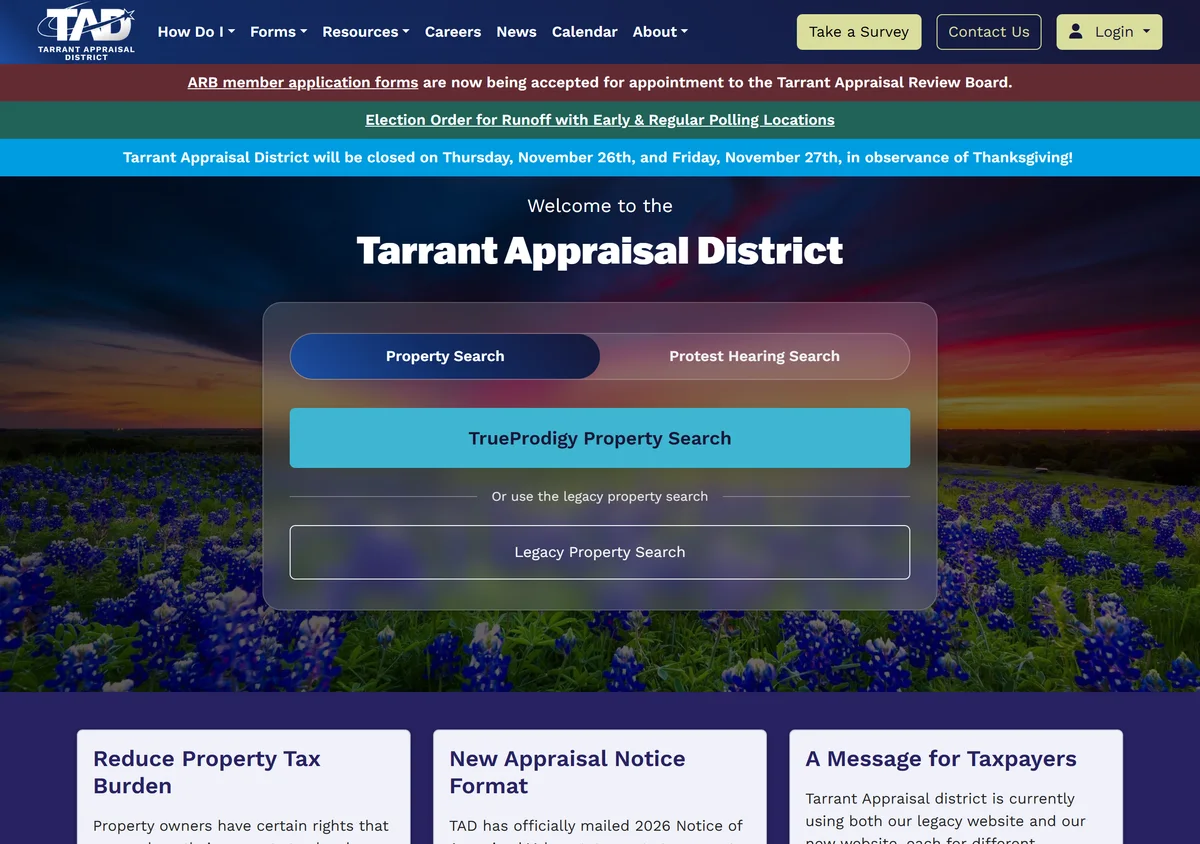
The quickest source is the Tarrant Appraisal District record, which lists the year built for each account. Your closing documents and the seller's disclosure from your purchase are two more places to look.
Lead disclosure: is your lease covered?
| Your situation | Covered? | What to do |
|---|---|---|
| House built in 1977 or earlier | Yes, unless one of the rows below applies | Put the disclosure and the EPA pamphlet in the lease packet. |
| House built in 1978 or later | No | Keep the record you used to confirm the year. |
| Year built unknown | Find out before you decide | Check the appraisal district record, your closing documents and the prior seller's disclosure. |
| A certified inspector found the home free of lead-based paint | No | Keep the report with the lease file. |
| Lease of 100 days or less with no renewal or extension possible | No | Check the lease wording. If it can renew or extend, the exemption is gone. |
| Renewal with the same tenant, everything disclosed before, nothing new learned | No repeat disclosure | Pull the earlier signed form and confirm you have received no new report since. |
| Studio, efficiency or a single rented room (a "0-bedroom dwelling") | No, unless a child under 6 lives or is expected to live there | A whole house with bedrooms does not fit this exception. |
How to read this table: find the first row that matches your house. For nearly every single-family rental we see that was built before 1978, the answer is the first row: a standard 12-month lease is covered. Housing reserved for the elderly or for persons with disabilities is also outside the rule unless a child under 6 lives or is expected to live there.
What do I hand the tenant before they sign?
The timing is the part owners miss. Everything below has to happen before the tenant is obligated under the lease. Paperwork handed over in a move-in folder after signing is late.
- Give the EPA pamphlet. The approved pamphlet is Protect Your Family From Lead in Your Home. It explains lead hazards in general; your disclosure covers this particular house.
- Disclose what you know. If you know of lead-based paint or a lead-based paint hazard in the home, say so, with what you know: how it was determined, where it is, and the condition of the painted surfaces. If you know of none, you say that.
- Hand over any records or reports. An inspection report, a risk assessment, a prior seller's disclosure that names a finding: the tenant gets copies, and the form lists them. If there are none, the form says none.
- Tell your agent the same things. A property manager or leasing agent has to receive the same information, because the agent shares responsibility for getting the disclosure done.
- Sign and date with the lease. Owner, tenant and any agent sign and date the disclosure, as an attachment to the lease or inside it, in the same language as the lease.
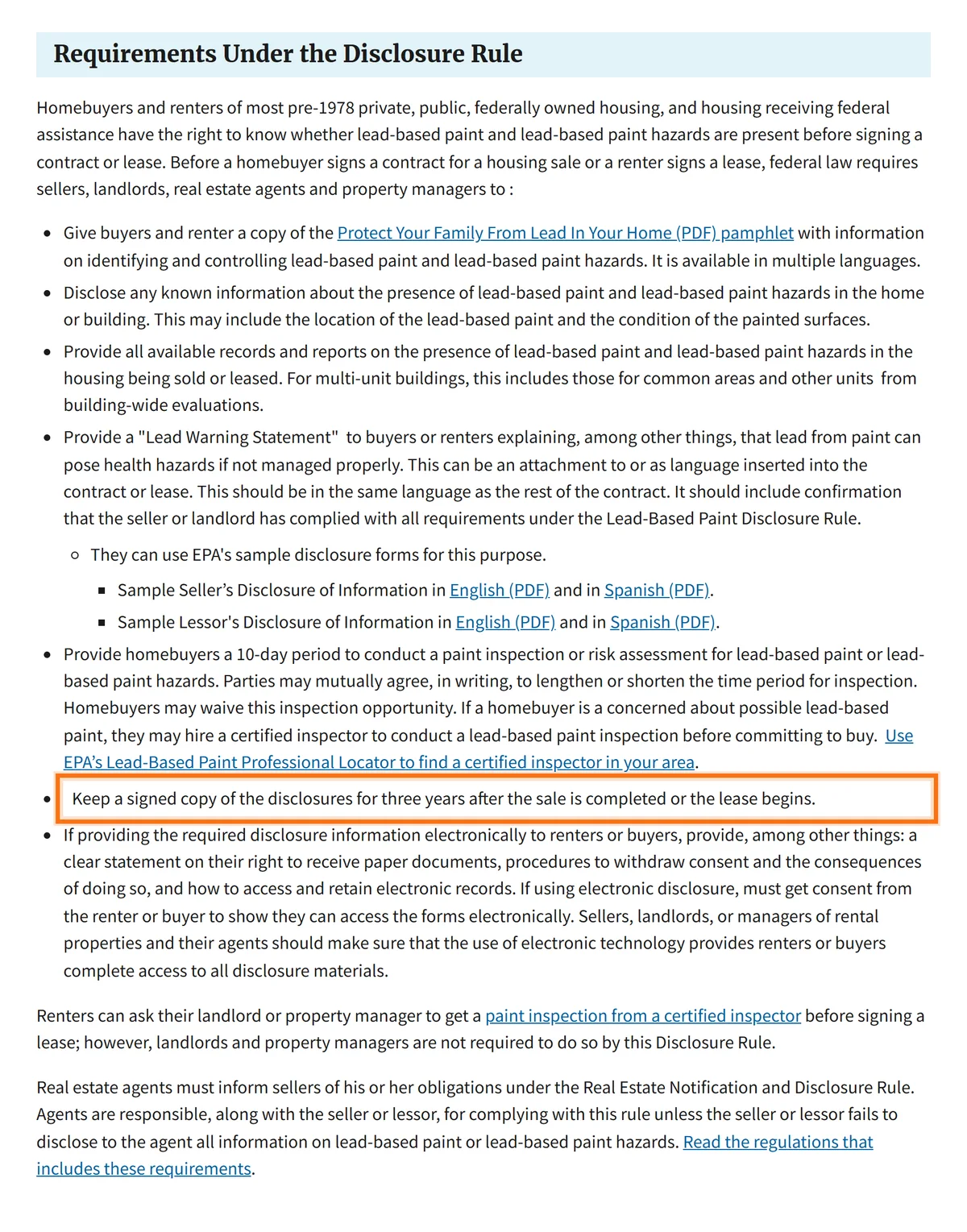
If the packet goes out electronically, EPA's page (pictured above) lists extra steps, including the tenant's consent to receive it that way and a clear statement of their right to paper copies.
What goes on the disclosure form, and who signs it?
The form is short. It opens with the Lead Warning Statement, which the rule gives word for word:
Housing built before 1978 may contain lead-based paint. Lead from paint, paint chips, and dust can pose health hazards if not managed properly. Lead exposure is especially harmful to young children and pregnant women. Before renting pre-1978 housing, lessors must disclose the presence of known lead-based paint and/or lead-based paint hazards in the dwelling. Lessees must also receive a federally approved pamphlet on lead poisoning prevention.
What each part of the form records
| Part of the form | Who completes it | What it says |
|---|---|---|
| Lead Warning Statement | Whoever prepares the lease | The required wording above, unchanged. |
| Owner's disclosure | The owner (the "lessor") | Known lead-based paint or hazards, with the details available, or "no knowledge". |
| Records and reports | The owner | A list of the reports given to the tenant, or a statement that none are available. |
| Tenant's acknowledgment | The tenant (the "lessee") | That the tenant received the disclosure, any reports and the pamphlet. |
| Agent's acknowledgment | The property manager or leasing agent, when one is involved | That the agent told the owner about the owner's obligations and knows the agent's own duty to see them met. |
| Certification | Owner, tenant and agent | Signatures and dates, each certifying their own statements are accurate to the best of their knowledge. |
How to read this table: each row is a block on the form, and each block has its own signer. The most common mistake is a mismatch between the second and third rows: the owner checks "no reports" while a report sits in the purchase file. Match the list on the form to the documents the tenant actually received.
You do not have to write your own. EPA publishes a sample lessor form, and the lease addenda Texas agents and managers commonly use follow the same federal wording.
What if I have no idea whether the house has lead paint?
Then you say so, and that is a complete answer. The rule states that nothing in it "implies a positive obligation on the seller or lessor to conduct any evaluation or reduction activities." In plain words: the disclosure rule does not make you test for lead, and it does not make you remove it. It makes you share what you know.
Before you check "no knowledge," look in three places:
- Your purchase file. The seller's lead disclosure from your own closing, and any inspection report that mentions paint.
- Records from a previous manager. A past disclosure form signed for an earlier tenant may list a report you have forgotten.
- Contractor paperwork. A renovation firm that tested painted surfaces before a job may have left you the result.
If any of them names a finding, that is now something you know. Disclose it with its source and location, and attach the document. A report limited to the exterior trim is a report about that trim; describe it that way.
"No knowledge" has to be true on the day the tenant signs. An owner who has a report and checks "no knowledge" anyway is the case the penalties were written for.
Do I need a new disclosure at renewal or for a new tenant?
Same tenant, renewal: not if two things are true. You gave this tenant everything the rule requires the first time, and no new information has reached you since. Pull the original signed form to confirm the first, and think back over the lease term for the second. If a contractor's test result or a new inspection report arrived mid-lease, give the tenant the updated disclosure before they sign the renewal.
New tenant: yes, every time. The last tenant's signature proves delivery to the last tenant only. The incoming tenant gets the pamphlet, the current disclosure and any reports before signing.
Missing file: if you cannot find the old signed disclosure, treat the renewal like a new lease and do the full packet again. It takes a few minutes and closes the gap.
What do I keep, and for how long?
The owner and any agent each keep a copy of the completed disclosure (or the lease that contains it) for at least 3 years from the start of the lease. The clock runs from the day the leasing period begins, not from the signing date.
We suggest keeping more than the minimum in one place: the signed form, the exact reports you supplied, and proof of when the tenant received them. File it by property address and lease start date. If you change managers, ask for a copy of each signed disclosure along with the lease, the same way you would ask for the documents a new property manager needs.
What changes when I repaint or renovate a pre-1978 rental?
A second federal rule applies to the work itself: EPA's Renovation, Repair and Painting (RRP) rule. It covers renovations done for compensation in pre-1978 housing, and EPA treats work in a rental as covered. For a job that disturbs paint, hire an EPA Lead-Safe Certified firm and ask to see the certificate.
Three details decide whether a job falls under it:
- Size. Minor repair and maintenance that disturbs 6 square feet or less of painted surface per room inside, or 20 square feet or less outside, is not a "renovation" under the rule. Jobs in the same room within 30 days count as one job.
- Type of work. Window replacement and demolition of painted surfaces never count as minor, whatever the size.
- Testing. The rule does not apply where a certified inspector, risk assessor or certified renovator has determined that the surfaces being worked on are free of lead-based paint.
For a covered job, the firm must give the owner, and an adult occupant when the house is rented, EPA's Renovate Right pamphlet no more than 60 days before work starts. So when you scope a repaint between tenants, ask the painter one question first: what will you sand, scrape or remove, and how much of it? Our guides to paint and finishes for rentals and the make-ready between tenants cover the rest of that job.
What can a missed disclosure cost?
The rule's enforcement section is blunt. A person who knowingly violates it is liable to the tenant for three times the damages the tenant incurred, and the liability is joint and several, so an owner and an agent can each be held for the full amount. A court can add costs and attorney fees. Federal civil and criminal penalties are also possible, in amounts adjusted for inflation each year.
If you discover after signing that the disclosure was skipped, do not backdate anything. Gather what the tenant actually received and when, give the tenant the complete packet now, and ask a Texas attorney how to document the correction. This guide is general information, not legal advice.
How Perpetual handles the lead disclosure
We are a local, broker-owned company managing single-family rentals in Fort Worth, Keller and North Richland Hills. As part of tenant placement and leasing, we prepare the lease with the addenda each home needs: pet, HOA, yard, smoking, pool, the inventory and condition form, the Texas floodplain notice and, for a home built before 1978, the lead-based paint disclosure.
What we ask from you at the start is the paper only you have: the seller's disclosure from your purchase and any lead report. With those in hand, the form reflects what you know, and the tenant signs it with the lease, not after.
On the repair side, work is done by vetted, insured vendors, the original vendor invoice sits in your owner portal, and every completed repair over $500 comes with photo or video proof. If you are comparing companies for an older house, our guide to choosing a property manager for an older rental home lists the questions to ask each one, and lease addenda for Texas landlords and what a Texas residential lease must include cover the rest of the packet.
Renting out an older home in Tarrant County? Call 682-593-7033 or request a free rental analysis. You get a rent figure from comparable leased homes and a written management quote, with every fee confirmed in writing before you sign.
The takeaway: For a pre-1978 rental the disclosure is a few pages and a few minutes, done before the lease is signed: the pamphlet, what you know, any reports, three signatures, and a copy kept for 3 years.
Questions owners ask
Do I have to test for lead before renting out my house in Texas?
No. The federal disclosure rule says it creates no obligation to conduct any evaluation. You disclose what you know and hand over any reports you have.
Do I have to remove lead paint before I rent the house?
The disclosure rule does not require removal. If you hire someone to disturb painted surfaces in a pre-1978 rental, the separate renovation rule applies to how that work is done.
My house was built in 1965 but fully remodeled. Do I still need the disclosure?
Yes. The rule goes by the original construction year. Only a certified inspector's finding that the home is free of lead-based paint takes a pre-1978 lease out of the rule.
Does the lead disclosure apply to a month-to-month lease?
Yes, if the home is covered. The short-term exemption is for leases of 100 days or less where no renewal or extension can occur, and a month-to-month lease can continue.
Who signs the form if I use a property manager?
The owner, the tenant and the agent each sign and date it. The manager completes the agent's acknowledgment; the owner's statement about what is known stays the owner's.
What if the tenant refuses to sign the acknowledgment?
The rule requires the tenant's signed and dated acknowledgment as part of the lease. Find out what the tenant is unsure about, confirm they have every document, and do not finish the lease signing without it.
Is there a Texas form for the lead-based paint disclosure?
The requirement is federal. EPA publishes a sample lessor disclosure form, and the lease addenda commonly used by Texas agents follow the same wording.
How long do I keep the signed lead disclosure?
At least 3 years from the start of the lease. The owner and any agent each keep a copy.
Property management in Keller, North Richland Hills and Fort Worth. How full-service management works in Tarrant County →