Key takeaways
- The start has nine steps: documents, first call, rental analysis, written quote, agreement, handover, lease, deposit, utilities.
- Nothing should commit you until you sign the management agreement; ask whether any earlier step costs money.
- Get the rent estimate and every fee in writing before you sign anything.
- A vacant house and a house with a tenant follow the same order; steps 6 to 9 look different.
- Have the lease, deposit record and keys ready at signing and the handover goes faster.
To get started with a property management company, work through nine steps in order: gather the documents, make the first call, get a written rental analysis, get a written quote, read and sign the management agreement, hand over keys and records, and then settle the lease, the security deposit and the utilities. Owners in Fort Worth, Keller and North Richland Hills follow the same sequence whether the house is empty or rented.
Below is each step, a table of what to have ready and when, how a vacant start differs from a takeover with a tenant in place, and how the steps run with us.
The start, in nine steps
Each step depends on the one before it, so the order matters more than the speed:
- Gather the documents. The basics about the house, and the lease and deposit record if a tenant is in place.
- Make the first call. Describe the house and your situation; ask how the company works.
- Get the rental analysis. A written rent range built from homes that actually leased nearby.
- Get the written quote. Every fee, in dollars or percentages, on paper.
- Read and sign the agreement. The contract that turns the quote into obligations on both sides.
- Hand over keys and records. Access, codes, warranties and, for a tenant in place, the tenant file.
- The lease. A new lease after a tenant is placed, or the existing lease carried over.
- The deposit. Collected from a new tenant, or transferred with the records.
- The utilities. On in your name while the house is empty, transferred at move-in.
Steps 1 to 4 should commit you to nothing; ask whether any of them costs money. Step 5 is the decision. Steps 6 to 9 are the manager's work with your paperwork. What happens in the weeks after you sign is covered in what happens in the first 30 days after you sign.
Step 1: what to have ready, and when
You do not need everything for the first call. You need it by the step where it is used. Here is what to gather, why the manager asks for it, and when:
| What to have ready | Why the manager needs it | When it is needed |
|---|---|---|
| Address, property type, bedrooms and baths | The rental analysis and the quote are built on them | First call |
| Vacant or occupied, and the lease end date if a tenant is in place | It decides whether the start is a placement or a takeover | First call |
| The rent you charge now, or the rent you hope for | The analysis tests it against leased comparables | First call |
| A list of known problems (roof, HVAC, water heater, plumbing) | Make-ready advice and the quote depend on condition | First call or the walkthrough |
| HOA name and its leasing rules, if there is an association | Some associations restrict or register leases | Before the agreement |
| The current lease, addenda and the tenant's payment record | An existing lease stays in force and its terms carry over | Signing day (tenant in place) |
| The security deposit amount and where it is held | The deposit has to be accounted for at move-out | Signing day (tenant in place) |
| Keys, garage and gate openers, lockbox and alarm codes | Access for inspection, vendors and showings | Handover |
| Utility accounts in your name (electric, water, gas, trash) | Make-ready and showings need power and water | Handover (vacant house) |
| Insurance declarations page and any appliance or system warranties | Claims and warranty repairs go faster with them on file | Handover |
How to read this table: the first four rows are enough to start, and none of them needs a document. The rows marked "signing day" and "handover" are where owners usually lose time, because a lease, a deposit record or a garage opener has to be found. If a tenant is in place, gather those now, before the first call.
Be candid about known problems: make-ready advice is only as good as what you describe. A fuller item-by-item list is in what documents to give a new property manager.
Step 2: the first call
The first call is a two-way interview, and nothing said on it commits you. The manager should ask about the house, whether it is vacant, your goals and how much repair spending you are comfortable approving without a call. You should ask how the company prices a rental, how repairs are approved, how often the house is inspected, how and when you are paid, and what the agreement says about leaving.
Listen for specifics. "We handle everything" is not an answer. "Repairs under the limit you set are done without a call, anything larger comes to you with a description, photos and a recommendation" is. If the person cannot describe the process in plain terms, that is the process you would live with.
Tell the manager your situation too: relocating, inherited, switching companies or tired of tenant calls. A full question list is in 15 questions to ask a property manager before you sign, and what to ask to see at a first meeting is in your first consultation with a property manager.
Step 3: the rental analysis
Before you sign, you should receive a written rent estimate built on homes that actually leased near yours, not just listings still sitting on the market. It should name the comparable homes, what they rented for and how yours compares on size, condition and location, and it should give a range rather than one hopeful number.
Use it two ways. First, as a check on the manager: an estimate far above the comparables is a sales pitch, not an estimate. Second, as a budget: with a realistic rent, the management fee and your own costs, you can see whether the numbers work before anyone has your keys. What a free rental analysis should include lists the parts, and how to tell if a rent estimate is realistic gives the checks.
Steps 4 and 5: the written quote, then the agreement
Step 4, the quote. Ask for a written quote that lists every fee the company can charge: the monthly fee, tenant placement, lease renewal, any setup or enrollment charge, inspections, maintenance coordination or markup, eviction coverage and the cost of leaving. Then ask how the monthly fee works in a month with no rent. A fee that is not on the quote is the one to ask about. Setup and onboarding fees explains the start-up line in detail.
Step 5, the agreement. The management agreement turns the quote into obligations. Read it before you sign, away from the sales conversation, and check that every fee on the quote appears in it. Then read the term and how either side ends it, the repair approval limit, any reserve, who holds the security deposit, and whether a sale triggers any obligation to the company. What to look for in a management agreement goes clause by clause.
Step 6: signing and the handover of keys and records
Signing is the point where the manager starts working, so step 6 is about giving it what it needs to operate the house. For a vacant house that means keys, garage and gate openers, any lockbox or alarm codes, the HOA contact and rules, utility account details, your insurance declarations page and appliance or system warranties.
For a house with a tenant, add the tenant file: the signed lease and every addendum, the deposit amount and where it is held, the rent ledger showing what the tenant has paid, and any open repair requests. If another manager has these, the new company usually requests them after you give notice under your old agreement.
Expect an inspection near the start to record the condition of the house: the baseline every later inspection and repair is measured against. Your own jobs from here are answering approval requests, keeping landlord insurance current and reading the monthly statement.
Steps 7 to 9: the lease, the deposit and the utilities
The lease. If the house is vacant, the manager prepares the lease for the tenant it places, with the addenda your house needs, such as HOA rules, a pool or pets. Who signs it and how is explained in who prepares and signs the lease. If a tenant is already in place, the existing lease does not end because management starts. It carries over, and the manager reads it for the rent, the end date, the renewal terms and who pays which utilities. How a manager takes over mid-lease covers that path.
The deposit. For a new tenant, the deposit is collected at lease signing. For a tenant in place, the deposit the tenant already paid has to move with the records, because it is owed back, less any lawful deductions, when that tenant leaves. Write down the amount and where it sits today. Who holds deposits once management starts, and in what kind of account, is a clause to read in the agreement.
The utilities. A vacant house needs power and water for cleaning, repairs and showings, so the accounts usually stay in your name until move-in. At move-in the tenant opens accounts in their own name for whatever the lease makes the tenant's job. Who handles utilities while the rental is empty goes through the gap months.
Vacant house or tenant in place: how the steps differ
The nine steps are the same for every owner, but steps 3 and 6 to 9 change with one fact: whether a tenant lives in the house today. Here is how each affected step differs:
| Step | Vacant house | Tenant already in place |
|---|---|---|
| Rental analysis | Sets the asking rent for the first lease | Checks the current rent against leased comparables for the renewal |
| Handover | Keys, codes, utilities kept on for make-ready and showings | Lease, deposit, tenant records and keys transfer to the manager |
| Lease | A new lease is signed with a tenant the manager places | The existing lease continues until it ends or is renewed |
| Deposit | Collected from the new tenant at lease signing | The deposit already paid moves with the records |
| Utilities | In your name until the tenant's move-in, then transferred | Stay as the lease already sets them |
| First fee events | Tenant placement fee when a tenant is placed | No placement fee until a future tenant is placed |
How to read this table: a vacant start is a placement, so the steps after signing end with a new lease and a new deposit. A start with a tenant in place is a takeover, so the steps after signing are about moving an existing lease, deposit and payment routine to the manager without a missed rent payment. Read the right column of the quote for your situation.
How the nine steps run with Perpetual
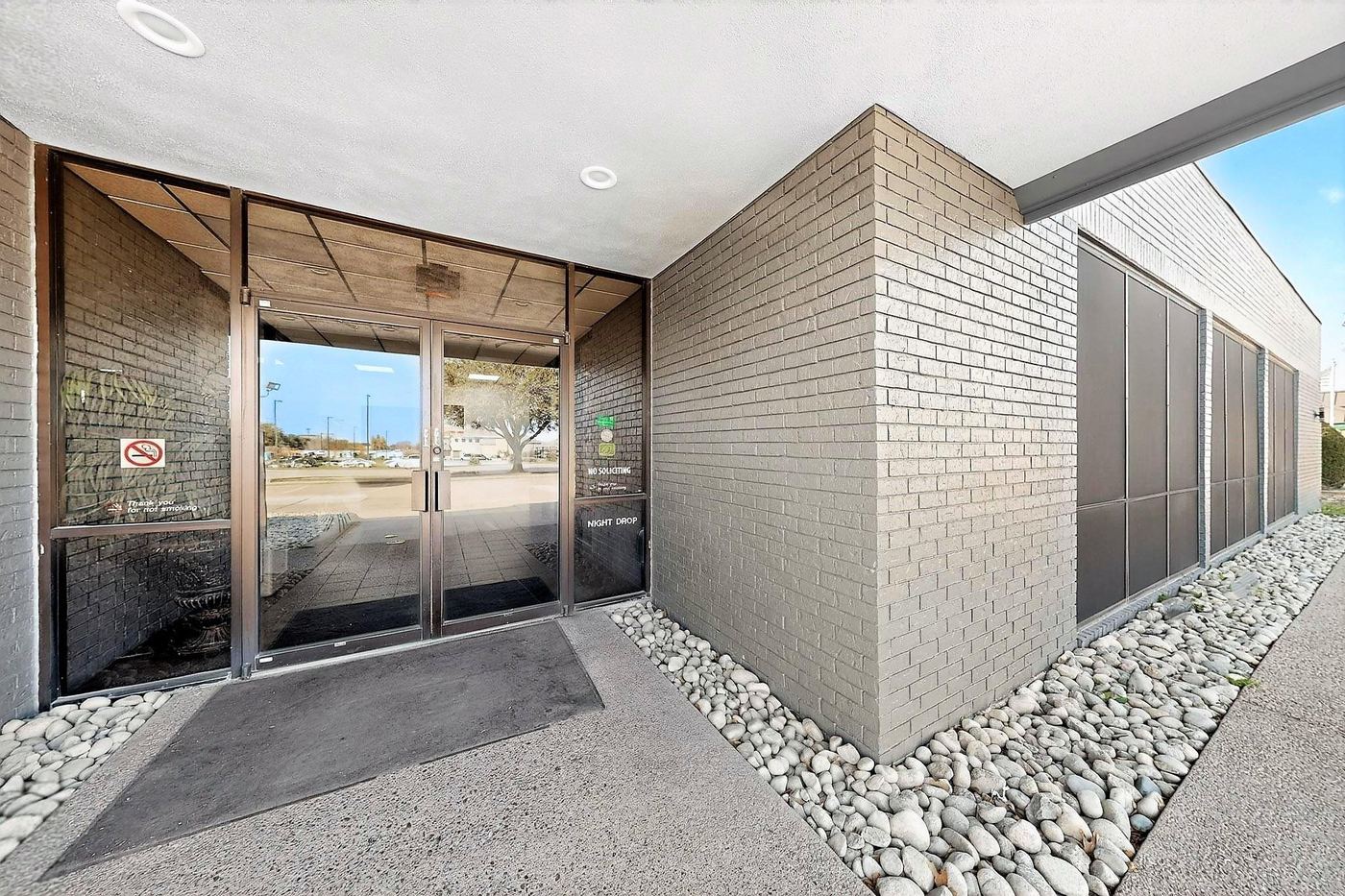
Perpetual Property Management is broker-owned, with our office at 5755 Rufe Snow Dr in North Richland Hills, and we manage rentals in Keller, North Richland Hills, Fort Worth and the surrounding Northeast Tarrant County communities. Here is how the nine steps run with us, as our own pages describe them:
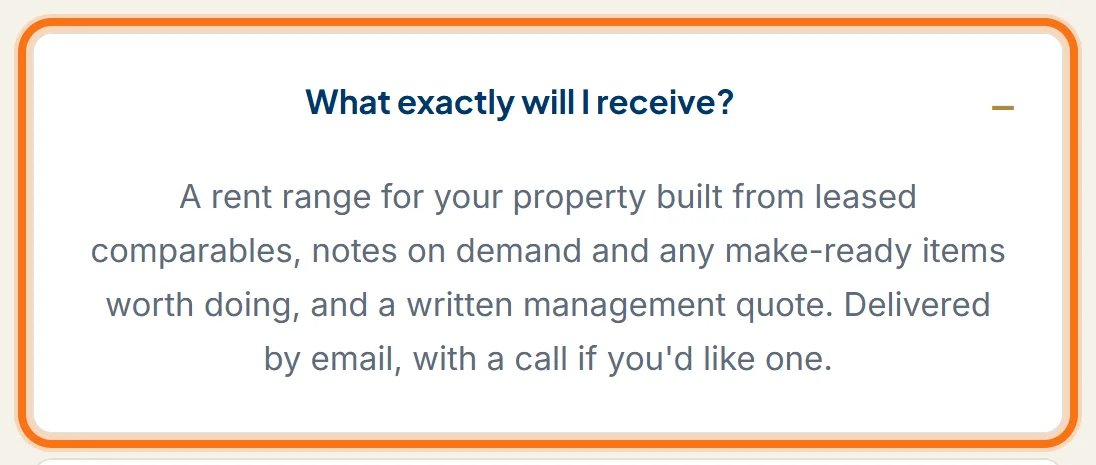
- Steps 1 to 3: you submit the short rental analysis form, which takes about 60 seconds, we research the property and the neighborhood comparables, and you receive the analysis within one business day: a rent range from leased comparables, demand notes, make-ready guidance and a written management quote, with an optional 15-minute call. It is free whether or not you hire us.
- Steps 4 and 5: our price sheet lists three plans: 7% of monthly rent (Investor Special, portfolios of 5 or more units), 9% (Standard) and 10% (Full Service). The final fee is set after the rental analysis, plans are negotiable case by case, every number is confirmed in writing before you sign, and if a fee is not in the agreement, you do not pay it.
- Step 6: the property enrollment inspection ($125 on Investor Special, $49 on Standard, included with onboarding on Full Service) establishes a condition record as management begins. With a tenant in place, the lease, deposit and records transfer to us and the tenant gets new payment and maintenance instructions. If you are switching, we handle the coordination with your current manager after you give notice.
- Steps 7 to 9: we use Texas-compliant lease documents with property-specific addenda, hold and account for deposits per the Texas Property Code, complete a photo-documented move-in condition report, and coordinate the utilities transfer and key handover at move-in.
You set a pre-approved spending limit for repairs, and the five written guarantees in the Perpetual Promise are part of every management agreement, subject to the Guarantee Addendum. What our pages do not spell out, such as the agreement's term and how it ends and any reserve we hold, is confirmed in writing in the management agreement before you sign. To start with step 3 today, request a free rental analysis or call 682-593-7033.
The takeaway: Getting started is nine steps in a fixed order: gather the basics, call, get the analysis and the quote in writing, read the agreement, hand over keys and records, then settle the lease, deposit and utilities.
Questions owners ask
Do I need to meet the property manager in person before signing?
Not necessarily. Someone from the company should understand the house before quoting, from the rental analysis and, where needed, a walkthrough or video. Owners who live out of town often handle the whole start remotely and send keys. What matters is that you have read the agreement, seen every fee in writing and spoken with the person who will handle your property.
How long does it take to sign with a property management company?
It depends mostly on you: how quickly you gather the basics, read the quote and return the agreement. The manager's side of steps 3 and 4 can be quick; ask each company how soon the analysis and quote arrive. Do not let speed push you into signing an agreement you have not read. Steps 1 to 4 commit you to nothing.
What does it cost to start with a property manager?
Ask each company for a written list of what you pay before the first rent arrives and what you pay in a month with no tenant. Companies differ: some charge a setup or enrollment fee, a leasing fee is charged when a tenant is placed, and some agreements ask for a starting repair reserve. The written quote and the agreement should list every one.
Can I start with a property manager if I still live in the house?
Yes. Steps 1 to 5 can run while you still live there: the rental analysis, the quote and the agreement do not need an empty house. Plan the make-ready and listing for after you move out, and do not set a tenant's move-in date until your own move-out date is firm.
What should I have ready before calling a property manager?
For the first call: the address, property type, bedrooms and baths, whether the house is vacant or rented, the current or hoped-for rent, any HOA, and a list of known problems. If a tenant is in place, also find the lease, the deposit record and the payment history now, because they are needed on signing day.
Do I need a new lease when a property manager takes over?
No. An existing lease stays in force when management starts; the manager takes it over, reads it for the rent, end date and renewal terms, and gives the tenant new payment and maintenance instructions. A new lease is signed when the current one ends and the tenant renews, or when a new tenant is placed.
Property management in Keller, North Richland Hills and Fort Worth. How full-service management works in Tarrant County →