
Key takeaways
- The owner pays utilities between tenants. Under management they are paid from the owner's funds as the management agreement sets out.
- Electric, water and gas usually stay on during a turnover: showings, cleaners, summer humidity and winter pipes all depend on them.
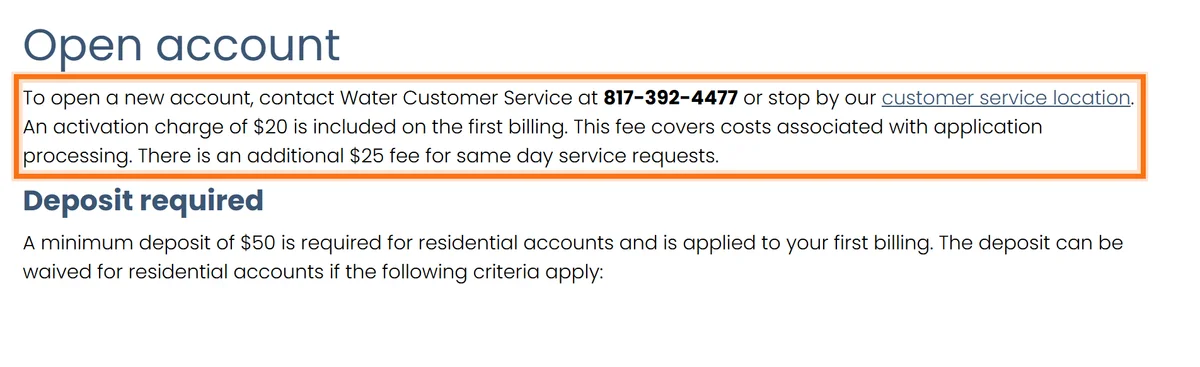
- Open the owner's account behind the tenant's closing date. In Fort Worth a new water account means a $20 activation charge, $25 more for same-day service and a deposit of at least $50.
- A landlord may not interrupt utilities a tenant pays directly to the provider, except for bona fide repairs, construction or an emergency (Property Code 92.008).
- For a long vacancy, Fort Worth Water's advice is to turn the water off at the gate valve on the resident's side of the meter box and have a plumber prepare the pipes.
Who handles utilities while the rental is empty? The owner pays for them, and whoever manages the house makes sure each account moves out of the tenant's name and into the owner's without a gap. On a rental in Fort Worth, Keller or North Richland Hills, that usually means keeping the electric, water and gas on for showings, cleaning and protection, then moving everything to the next tenant on move-in day.
This guide covers what stays on and what can end, the handoff at move-out and move-in, what Fort Worth charges when a water account has to be opened, freeze steps from official sources, and how the costs reach your statement.
Utility by utility: on or off while the rental is vacant
For a normal turnover measured in weeks, here is what usually stays on, why, and who arranges it:
| Utility | During the vacancy | Why | Who arranges it |
|---|---|---|---|
| Electric | On, in the owner's name from the tenant's move-out date | Air conditioning in summer, heat in winter, lights for cleaners and showings | Owner, or the manager if the management agreement says so |
| Water and wastewater | On | Cleaning, plumbing checks, irrigation and freeze protection | Owner or manager, with the city water utility |
| Gas | On where the furnace or water heater uses it | Heat in a freeze and hot water for the make-ready | Owner or manager |
| Internet and cable | Off | The tenant's own accounts; nothing in the house depends on them | The tenant cancels |
| Alarm monitoring | Owner's choice | A monitored smoke alarm adds protection in an empty house | Owner decides |
| Irrigation | On a schedule, adjusted for winter | Keeps the yard presentable; a freeze or rain sensor stops it running in the cold | Owner or manager |
How to read this table: every "On" row stays connected because the house, the make-ready or the showings depend on it, and keeping it on usually costs far less than a reconnection or a repair. Who arranges each line is a management agreement question, so check yours rather than assuming. If the house will sit empty for months with nobody checking it, the water row changes: see the freeze section below.
The handoff at move-out: open yours before theirs closes
Utilities in the tenant's name stay the tenant's until they close the accounts at move-out, and until then the service is theirs: Property Code 92.008 says a landlord or a landlord's agent may not interrupt or cause the interruption of utility service a tenant pays directly to the utility company, unless it results from bona fide repairs, construction or an emergency. Nothing gets switched off to hurry a move-out.
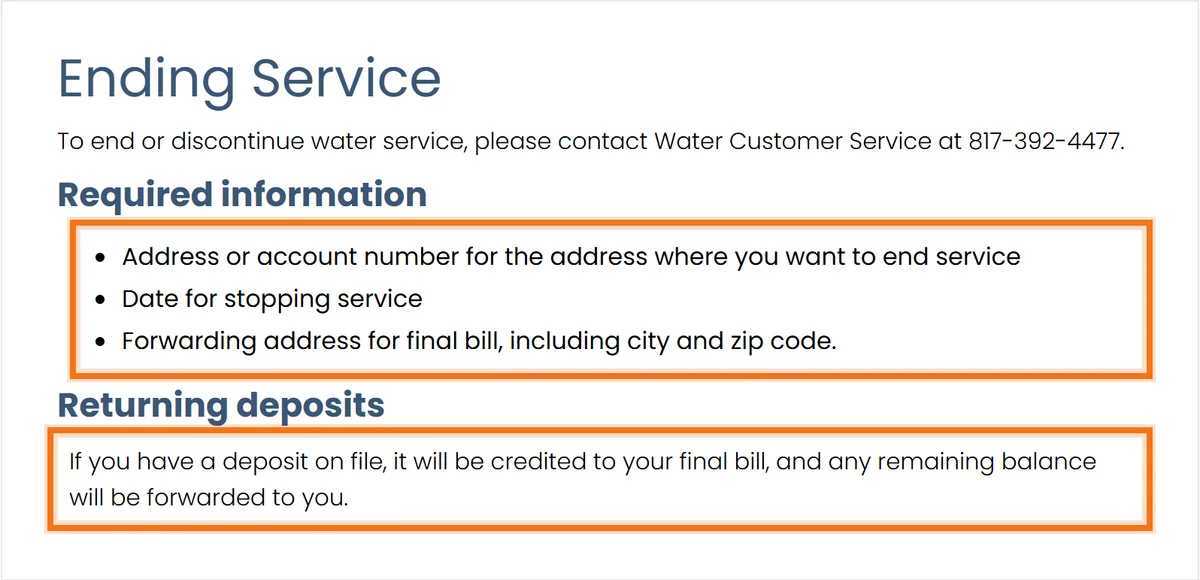
What the tenant's closing does not do is start service for the next person. When a Fort Worth water customer ends service, the city asks for the address, the date for stopping service and a forwarding address for the final bill, and credits any deposit on file to that final bill.
So the owner's account is opened to start on the tenant's stop date. Ask the tenant for their stop dates in writing, note the meter readings on move-out day if you can, and call each provider before that date. If you have a manager, ask whether service reverts to an owner or company account automatically, or whether someone has to call each time.
Why electric, water and gas stay on in a vacant rental
Electric stays on. In a North Texas summer the air conditioning keeps humidity down, which protects floors and finishes and keeps the house from smelling closed up at showings. In winter the heat protects the pipes. Cleaners, painters and showings need lights and outlets.
Water stays on during a normal turnover. Cleaners need it, plumbing has to be checked, and the yard needs it in summer. Gas stays on where the furnace or water heater uses it.
Freezes are where official advice matters. The Texas Department of Insurance says that if you leave a house before a freeze, turn off the water at the shutoff valve and leave the heat on. Fort Worth Water says that if a house must be left vacant for a long period, turn off the water at the gate valve on the resident's side of the meter box and have a plumber prepare the pipes. The full winter checklist is in preparing a Texas rental for a hard freeze.
Thermostat settings and the services that can end
Internet and cable belong to the tenant and simply end. Alarm monitoring, if you had it, is your call. Irrigation can stay on a schedule, but Fort Worth Water's freeze guidance recommends a rain or freeze sensor so the system does not run in cold weather, and turning the controller off at the backflow when you winterize it.
The thermostat is where the savings are. In summer, set the air conditioning high enough not to cool an empty house but low enough to control humidity; in winter, warm enough to protect the pipes. A smart thermostat that can be checked remotely makes it easy to confirm the system is still running after a storm or an outage. The exact settings depend on the house; there is no official number for a vacant rental.
Who pays, and how it reaches your statement
Vacancy utilities are a property expense, separate from any management fee. Under management they are paid from the owner's funds, from rent held in the account or from the reserve, as the management agreement sets out, and they should appear on the monthly statement with the provider, the service period and the amount.
A final bill the previous tenant left unpaid belongs on the tenant's own account, which is why the stop date and the move-out readings matter: they draw the line between their usage and yours. If the lease makes the tenant responsible and the bill was charged to you anyway, a deduction from the deposit goes to the tenant with a written description and itemized list (Property Code 92.104). Whether you still pay management fees while the house is empty is a separate question.
What a gap really costs: Fort Worth water as an example
Why timing matters is easiest to see on a real fee schedule. Fort Worth Water lists these charges and rules for residential accounts:
| Fort Worth Water charge | Amount | When it applies |
|---|---|---|
| Activation charge on a new account | $20 | Included on the first billing of a newly opened account |
| Same-day service request | $25 extra | When service is requested for the same day |
| Residential deposit | At least $50 | Applied to the first billing; can be waived with 12 consecutive months of on-time utility service, as the city defines it |
| Transfer charge | $20 | On the first bill at a new address when a customer moves service within Fort Worth |
How to read this table: a new owner account carries the activation charge and the deposit whenever it is opened. What advance planning avoids is the gap: a house with no water for the cleaners and the extra same-day fee to fix it. The city asks for the information at least one day before the desired activation, including the name of the present property owner. Electric and gas work differently, with whichever provider serves the address, so call each one before the move-out date. In Keller, North Richland Hills and other Tarrant County cities, check the city's own utility page for its fees.
Utilities are one part of looking after an empty house
Keeping the power on only helps if someone confirms the systems are actually running. During a vacancy, someone should look at the house on a set schedule and again after a storm or freeze: the thermostat working, no leaks under sinks or at the water heater, doors and windows secure, mail and flyers cleared, the yard presentable, no sign of entry. An empty house that looks lived in is also a harder target; squatters in a vacant rental house explains why that matters in Texas.
The full routine, including insurance questions when a house sits empty longer than a normal turnover, is in looking after an empty house: vacant checks and utilities under management.
The handoff at move-in
The incoming tenant should know, from the lease and again before move-in, which utilities go into their name and from what date, usually the lease start date. Confirm the transfers are requested before keys change hands, because a house whose electric is still in the owner's name a month later means the owner is paying the tenant's bill.
This starts at screening. Our published criteria list "utilities cannot be placed in a tenant's name" and excessive unpaid utility bills as causes for rejection, because a tenant who cannot open accounts leaves the owner holding them. Readings on move-in day go into the condition report, and the owner's accounts are closed once the tenant's are open. The rest of the sequence is in the move-in process checklist.
How Perpetual handles this
Perpetual Property Management is broker-owned, with our office at 5755 Rufe Snow Dr in North Richland Hills, and we manage homes in Keller, North Richland Hills, Fort Worth and nearby. What our site states that applies to an empty house:
- Weekly reports while vacant. While your home is vacant you get a written activity report every week, with showing feedback and market notes, or we credit that month's management fee.
- Utilities at move-in. Our leasing and move-in service includes move-in coordination with utilities transfer through our tenant resources, and our rental criteria list utilities that cannot be placed in a tenant's name as a cause for rejection.
- Emergency response on every plan, 24/7, for problems such as active leaks or no heat in winter (maintenance coordination).
- Monthly statements in the owner portal, with income, expenses and documents in one place.

Whether vacancy utilities go into your name or a company account, how often an empty house is visited and what each visit covers are confirmed in writing before you sign, along with every fee. To plan the next turnover, call 682-593-7033 or request a free rental analysis.
The takeaway: Keep the power and water on in the owner's name, open the account before the tenant's closes, follow the official freeze steps, and the cost of a vacancy stays a utility bill instead of a repair bill.
Questions owners ask
Should I turn off the water at a vacant rental house?
Not during a normal turnover: cleaners, plumbing checks, irrigation and the make-ready all need it. For a long vacancy the official advice changes. Fort Worth Water says to turn off the water at the gate valve on the resident's side of the meter box and have a plumber prepare the pipes, and the Texas Department of Insurance says to turn off the water at the shutoff valve and leave the heat on if you leave before a freeze.
What temperature should I set the thermostat in an empty rental in Texas?
There is no official number for a vacant rental. In summer, high enough not to cool an empty house but low enough to control humidity; in winter, warm enough to protect the pipes, with the heat left on as the Texas Department of Insurance advises before a freeze. A smart thermostat lets someone confirm remotely that the system is still running.
Can a previous tenant's unpaid utility bill be charged to me?
The bill belongs on the account of whoever held it, which is why the tenant's stop date and the move-out readings matter. Give them to the provider in writing if a charge lands on you. If the lease made the tenant responsible, a deduction from the deposit goes to the tenant with a written description and itemized list (Property Code 92.104).
Who pays for utilities between tenants when I use a property manager?
The owner. Utilities during a vacancy are a property expense, separate from any management fee. Under management they are paid from the owner's funds as the management agreement sets out and should appear on the monthly statement with the provider, the period and the amount.
Should I keep the electricity on in a vacant rental house?
Yes, during a normal turnover. Keeping the electric on in a vacant rental runs the air conditioning that controls summer humidity, the heat that protects pipes in a freeze, and the lights cleaners and showings need. Open the account in the owner's name to start on the tenant's stop date so the house is never without power.
How do I transfer utilities when a tenant moves out?
Before the tenant's final date, ask each provider to start service in the owner's name on that date, so service continues instead of stopping. In Fort Worth the water utility asks for the information at least one day before activation. Note the meter readings that day. At move-in, the lease makes the new tenant responsible from the start date and the readings are taken again.
What happens to the utilities if the rental sits empty for months?
The plan changes from keeping everything on to protecting the house with fewer visits. Follow the official long-vacancy advice for the water, keep enough heat or cooling to protect the house, and set a visit schedule. Check your insurance too; our guide to looking after an empty house covers the questions to ask.
Related services
Property management in Keller, North Richland Hills and Fort Worth. How full-service management works in Tarrant County →