Key takeaways
- An upgrade earns its cost only if it raises the rent, shortens the vacancy or cuts what you replace at each turnover. Write down which one, and how you know.
- Leased comparables, not asking rents, show whether a finish moves the rent for a house like yours.
- Payback months = the upgrade's cost divided by the monthly rent difference the comparables support. Use your own quote.
- IRS Publication 527 says improvements are capitalized, not deducted at once; its Table 1-1 lists flooring, kitchen modernization, a fence, central air and a water heater among them.
- Repairs come first. Upgrades are what you choose after the house is safe, clean and working.
Which upgrades are actually worth doing before renting out a house? The ones a renter notices in a showing or lives with every day, and that last through several tenants: worn carpet replaced with a hard surface, one neutral paint, working lights and fans, blinds, a sound fence, a serviced HVAC system. For a house in Fort Worth, Keller or North Richland Hills, test each one against leased comparables and your own quote, and remember that most count as improvements for tax.
This guide gives the upgrade table, the payback test with illustrative numbers added up twice, the upgrades that rarely pay on a rental, the IRS repair-versus-improvement line, and what our rental analysis covers.
Common upgrades: what each changes for a renter, and how the IRS sorts it
Here are the upgrades owners most often weigh before renting out a house, what each one changes for the person renting it, and whether IRS Publication 527's Table 1-1 lists it as an improvement:
| Upgrade | What it changes for the renter | Repair or improvement (IRS Pub 527) |
|---|---|---|
| Hard-surface flooring in place of worn carpet | Photos, cleaning, pets; fewer replacements at turnover | Table 1-1 lists flooring and wall-to-wall carpeting as improvements |
| One neutral paint color throughout | Brighter photos; touch-ups match at every turnover | Not among Table 1-1's examples; the facts decide, so ask your CPA |
| Light fixtures and ceiling fans | Rooms that look current; air movement in summer | Not listed as such; "wiring upgrades" are |
| Blinds on every window | Privacy on day one, without the tenant buying them | Not listed in Table 1-1 |
| Fence repaired or added | Room for a dog or children; a yard the tenant can use | Table 1-1 lists a fence as an improvement |
| HVAC serviced, or replaced at end of life | Cooling in July, heat in January | Service is maintenance; Table 1-1 lists central air, a furnace and duct work as improvements |
| New kitchen counters and cabinets | A nicer kitchen, if the comparables reward it | Table 1-1 lists kitchen modernization as an improvement |
| Smart lock | Code entry; easier showings and vendor access | Not listed; a "security system" is |
How to read this table: the middle column is the test that matters for rent: if you cannot describe what the upgrade changes for the renter, it is probably for you. The right column decides the tax treatment, and an improvement is depreciated over years rather than deducted in the year you pay. Whether a specific job is a repair or an improvement depends on the facts, so keep the invoice and ask your CPA.
The test to apply before spending anything
Before approving an upgrade, write down which of three things it does, and how you know. Raises the rent: by how much, against which leased comparables? Shortens the vacancy: because renters or showing feedback are rejecting the house for this reason? Cuts future cost: because the current item is replaced at every turnover or fails often? If none has an honest answer, the upgrade is for you, not for the rental.
A second filter is durability. A rental upgrade should survive several tenants with cleaning rather than replacement, which rules out soft, delicate or very taste-specific choices before price comes into it.
Repairs come before any of this. What the Property Code requires and what must work on day one is in repairs to make before listing; this guide starts after the house is safe, clean and working.
Upgrades that usually earn their cost on a rental
These usually pass the test on a long-term single-family rental, because they change what a renter sees in the photos and lives with every day:
- Hard-surface flooring where carpet is worn, at least in living areas and halls. It cleans quickly and spares you replacing carpet after a pet or a spill. The options room by room are in flooring for rentals.
- One neutral paint color and sheen, so every future touch-up uses the same can. Standardizing finishes is covered in paint and finishes for rentals.
- Lighting and ceiling fans where fixtures are dated or missing.
- Blinds on every window and matching hardware: small, visible, and noticed when absent.
- A sound fence and latching gates, since a usable yard matters to renters with children or dogs.
- A serviced HVAC system, or a planned replacement if it is at the end of its life.
Upgrades that rarely pay on a long-term rental
These are good choices for a house you live in and weaker ones for a rental, because the rent rarely moves enough to cover them and a tenant does not treat them as you would:
- Full kitchen remodels. A clean, working kitchen with paint and new hardware may rent close to the same; check the comparables before spending.
- Bathroom remodels. New caulk, grout, a faucet and a vanity top get much of the visual change.
- Pools and spas. They add upkeep, liability questions and safety rules; see renting out a house with a pool.
- High-end appliances, designer tile, bold colors and built-ins. Taste-specific, fragile, or both.
- Landscaping beyond tidy. Elaborate beds need someone paid to keep them.
Efficiency work such as attic insulation pays mostly through comfort and fewer breakdowns, and the lower bill usually goes to the tenant; the arithmetic is in energy efficiency upgrades in a rental.
The payback test on your own quote
Two inputs settle most upgrade questions: what leased comparables say the upgrade is worth in rent, and a real quote for the work. Divide one by the other.
An illustrative example, not a quote: an owner has $4,800 to spend before listing a three-bedroom with worn carpet and a dated but intact kitchen. Option A is new counters. The leased comparables show houses with and without updated counters renting at about the same rent, so the rent difference is $0 and the counters never pay back through rent. Option B is hard flooring in the living areas plus one neutral paint. Suppose the comparables support $100 a month more for houses with hard floors and fresh paint. Payback is $4,800 ÷ $100 = 48 months; checked the other way, 48 × $100 = $4,800, or four years of the higher rent.
Option B also avoids replacing worn carpet at the next turnover, which never shows in the rent. Run the same test with your own comparables and quotes; the numbers above are placeholders, not market figures.
Now, or at the next turnover?
Not every upgrade has to happen before the first tenant. The timing question is simple: will the work be harder, slower or more expensive once someone lives there?
- Do it before listing: anything that changes the listing photos (floors, paint, lighting), anything that needs the house empty (flooring, a full repaint), and anything a renter would otherwise ask for in the first month (blinds, a working fence gate).
- It can wait: items the comparables do not yet reward, such as counters or a bathroom refresh, and replacements of things that still work. A tenancy also tells you what the house actually needs: what gets worn, what breaks, what the tenant asks about.
- Plan, do not wait: systems near the end of their life, such as an old water heater or HVAC unit. Replacing them in an empty house, in a slow season, with competing quotes, is easier than an emergency with a tenant in place.
Work during a tenancy needs access under the lease, and every day of work in an occupied house is a day the tenant lives around it. If you do upgrade between tenants, keep the turnover short: the sequence and the cost of each vacant week are in the make-ready guide.
Repair or improvement: what the IRS says
Upgrades also land in two tax buckets. IRS Publication 527 says an expense for repairing or maintaining a rental may generally be deducted if you are not required to capitalize it, but you must capitalize an expense that results in a betterment, restores the property or adapts it to a new use. Its Table 1-1 lists improvement examples that show up before renting: flooring, wall-to-wall carpeting, kitchen modernization, built-in appliances, a fence, landscaping, central air, a water heater and insulation.
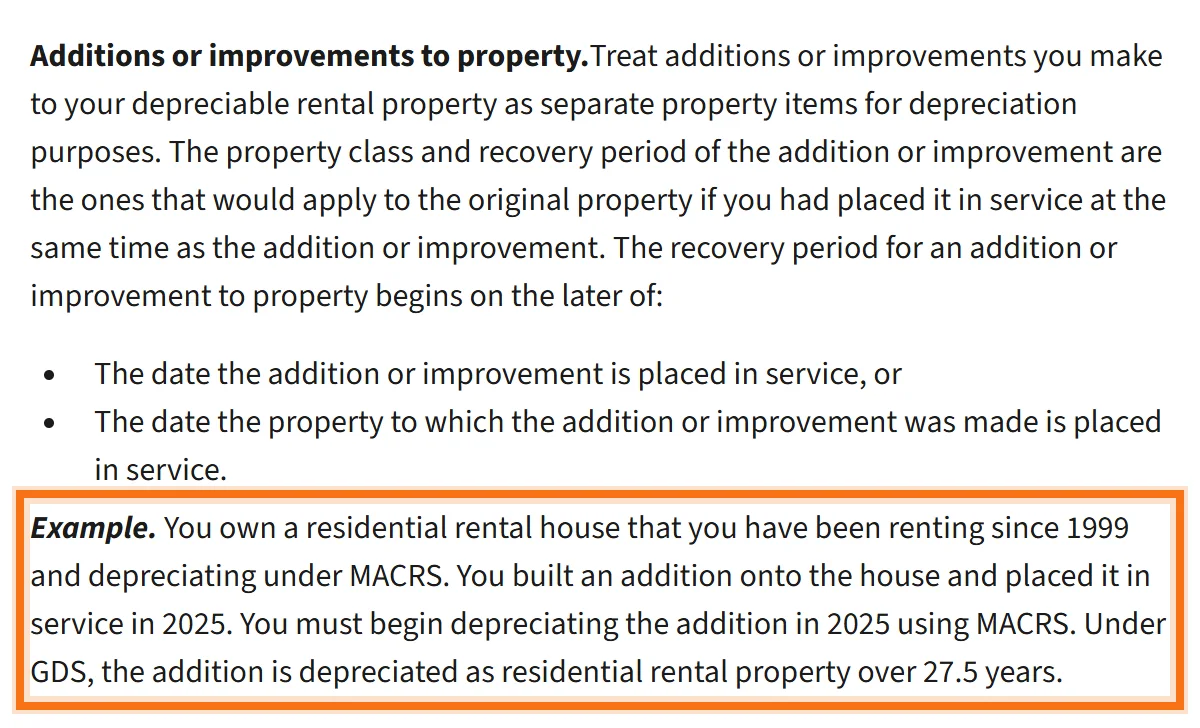
How long you depreciate it depends on what it is: the publication's Table 2-1 lists appliances and carpets at 5 years and fences at 15 years, while an improvement to the house itself follows the house's own recovery period, as the example above shows. The same page says to keep repair and improvement costs separate. This is general information, not tax advice: ask your CPA how your upgrades should be treated.
How Perpetual helps you decide
What our published pages say:
- Before you spend. Our free rental analysis gives a rent range from leased comparables, not asking prices, plus make-ready guidance on which improvements raise rent and which just cost money. Our property management page puts it simply: we'll tell you which make-ready items actually raise rent and which don't, before you spend the money.
- Approvals. Work under your pre-approved spending limit goes ahead; anything larger comes to you with a description, photos and a recommendation.
- Billing. Maintenance coordination is 5% of cost on Full Service and 4.9% on Standard, and make-ready coordination is 3% to 5% of cost on Investor Special, as a percentage of the vendor's invoice; the original invoice is always in your portal. See our price sheet.
The decision is yours. Which upgrades we recommend on your house, and how make-ready work is billed on your plan, are confirmed in writing before you sign. Call 682-593-7033 or request the free analysis.
The takeaway: Spend on what a renter sees, uses and would otherwise ask you to replace, test each upgrade on leased comparables and your own quote, and keep improvement invoices apart for depreciation.
Questions owners ask
Should I install new appliances before renting out my house?
Only if the existing ones are unreliable or missing. Working, matching mid-range appliances are what most renters expect, and premium brands rarely move the rent. If you replace, choose models that are easy to service locally. IRS Publication 527's Table 2-1 lists appliances such as stoves and refrigerators as 5-year property; ask your CPA about the treatment.
Does a fenced yard raise the rent?
It can widen the group of renters who will consider the house, such as those with dogs or young children, more than it moves the number. Check whether comparable leased homes nearby have fences. Repairing an existing fence is usually sensible; IRS Publication 527 lists a fence among improvement examples, so keep the invoice separate.
Is it worth adding a smart thermostat or smart lock to a rental?
A smart lock can make showings and vendor visits easier, but it does not replace the rekey rule: Property Code 92.156(a) requires rekeying within seven days after each tenant turnover, and 92.151 defines rekeying as changing a key, card or combination so a different one is needed. A smart thermostat is a smaller gain. More is in our guide to smart locks and rental technology.
Can I deduct upgrades to my rental in the year I pay for them?
Repairs and maintenance generally can be deducted; improvements that better, restore or adapt the property must be capitalized and depreciated, according to IRS Publication 527. Its Table 1-1 lists flooring, kitchen modernization, a fence and central air as improvement examples. The publication also describes de minimis and routine maintenance safe harbors. Ask your CPA how your upgrades should be treated.
How do I know if an upgrade will raise the rent?
Compare leased comparables, not asking rents: homes near yours that actually leased, with and without the feature. If houses with the upgrade leased for about the same as those without it, the upgrade will not pay through rent. Divide your quote by any rent difference the comparables support to see the payback in months.
Should I renovate the kitchen before renting out my house?
Usually not unless the leased comparables show updated kitchens renting for more. A clean, working kitchen with paint, new hardware and sound counters often rents close to the same. Kitchen modernization is an improvement under IRS Publication 527, depreciated over years rather than deducted at once.
Property management in Keller, North Richland Hills and Fort Worth. How full-service management works in Tarrant County →