Key takeaways
- Must fix: window latches, door locks, keyless bolting devices, door viewers and sliding-door locks (Property Code 92.153), at the landlord's expense.
- Must fix: rekey no later than the seventh day after each tenant turnover date (92.156), and a smoke alarm in each bedroom, tested at move-in (92.255, 92.258).
- Fix now what would trigger the repair duty the day a tenant reports it: conditions that materially affect health or safety, and hot water (92.052).
- Should fix: heating and cooling, plumbing, electrical, appliances you provide, doors and windows; no statute names air conditioning, but a first-week failure costs you anyway.
- Can wait: sound but dated cabinets, counters and baths. Whether an upgrade pays is a separate test.
What repairs should you make before listing your house for rent? On a rental in Fort Worth, Keller or North Richland Hills, sort every item into three groups. Must fix: what the Texas Property Code requires before or at move-in, such as security devices, rekeyed locks and smoke alarms, plus anything that affects health or safety. Should fix: everything the tenant will use. Can wait: dated but sound finishes. Anything beyond repair is an upgrade with its own decision.
This guide gives the groups in one table with the statute behind each must-fix line, then explains how to sort the rest without spending on the wrong things.
Must fix, should fix, can wait: the repair table
Here is how the usual pre-listing repairs sort, with the rule or reason behind each group:
| Repair | Group | Why | Rule or test |
|---|---|---|---|
| Window latches; keyed dead bolt or doorknob lock, keyless bolting device and door viewer on exterior doors; pin lock and handle latch or bar on sliding glass doors | Must fix | Required without a tenant request, at the landlord's expense | Property Code 92.153(a), (c) |
| Rekey every key, card or combination lock | Must fix | Due no later than the seventh day after each tenant turnover date | 92.156(a) |
| Smoke alarm in each bedroom, the hall serving bedrooms, each level | Must fix | Required; tested at the start of the tenant's possession | 92.255(a), 92.258(b) |
| Active leaks, electrical hazards, anything that materially affects health or safety; hot water at 120 degrees | Must fix | The repair duty applies once a tenant reports it, so fix it before | 92.052(a) |
| Heating and cooling, plumbing fixtures, outlets and switches, appliances you provide, doors, windows, garage door | Should fix | A first-week repair request costs a service call and goodwill | Does it work today? |
| Stained or worn-through carpet, marked walls, failed caulk | Should fix | Shows at showings and in photos | See the make-ready guide |
| Dated but intact cabinets, counters, tile, light fixtures | Can wait | Not a repair: nothing is broken | Upgrade test, separately |
How to read this table: the must-fix rows come from the statutes cited and are not a matter of taste; the duties for security devices and smoke alarm installation cannot be waived in the lease (Property Code 92.006(a)). The should-fix rows are judgment about a working house. Anything in the last group is a spending decision, and what pays before renting covers how to test it.
Must fix: what the Texas Property Code requires
Four sets of rules apply to a house you rent out, as the Property Code reads today:
- Security devices (92.153). Without a tenant request, and subject to the exceptions the section lists, a dwelling must have a window latch on each exterior window; a doorknob lock or keyed dead bolt on each exterior door; a sliding door pin lock and a sliding door handle latch or security bar on each exterior sliding glass door; and a keyless bolting device and a door viewer on each exterior door. They are installed at the landlord's expense (92.153(c)) and must be operable throughout the tenant's possession (92.153(h)).
- Rekeying (92.156(a)). Locks operated by a key, card or combination are rekeyed at the landlord's expense no later than the seventh day after each tenant turnover date.
- Smoke alarms (92.255, 92.258). At least one in each separate bedroom; one in the corridor serving several bedrooms; one on each level. The landlord tests each one at the beginning of the tenant's possession.
- Health and safety (92.052). Once a tenant who is current on rent gives notice, the landlord must make a diligent effort to repair a condition that materially affects the physical health or safety of an ordinary tenant, or a failed device supplying hot water of at least 120 degrees Fahrenheit.
Cities can add fire-safety requirements through their building, fire or housing codes (92.252(a)(2)), so confirm with the city for your address. Device detail is in Texas security device rules, and the dated move-in check in who checks smoke alarms and locks before move-in. This is general information, not legal advice.
Should fix: everything the tenant will use
A tenant tests the house in the first week in a way no walk-through does. No Texas statute names air conditioning, and the lease decides much of the rest, but every item below that fails in week one costs you a service call and some goodwill. Check each before listing:
- Heating and cooling: both modes run, filter is new, condensate line is clear, thermostat works. A system near the end of its life should be serviced now and budgeted for.
- Plumbing: no drips or slow drains, toilets flush and refill, the water heater heats, shut-off valves turn, the disposal runs, no soft spots under sinks.
- Electrical: every outlet, switch, fixture and fan works; GFCI outlets trip and reset; the panel is labeled.
- Appliances you provide: every cycle runs, seals are intact, the dishwasher drains.
- Doors, windows and garage: open, close, lock and seal; screens present; the opener works.
- Exterior: gutters clear, no rotted trim, gates latch, irrigation runs if present.
Should fix if worn: what the showing reveals
Once the house is legal and working, repair what a renter sees as damage, not as style:
- Walls: patch holes and repaint rooms with marks or visible patches; paint and finishes for rentals covers choosing one standard.
- Flooring: replace carpet that is stained, worn through or smells; fix loose transitions and damaged planks.
- Caulk and grout: fresh caulk at tubs, showers and counters; clean or re-grout failed tile joints.
- Fixtures: blinds on every window, cabinet hardware present and tight, matching bulbs.
Can wait: dated is not broken
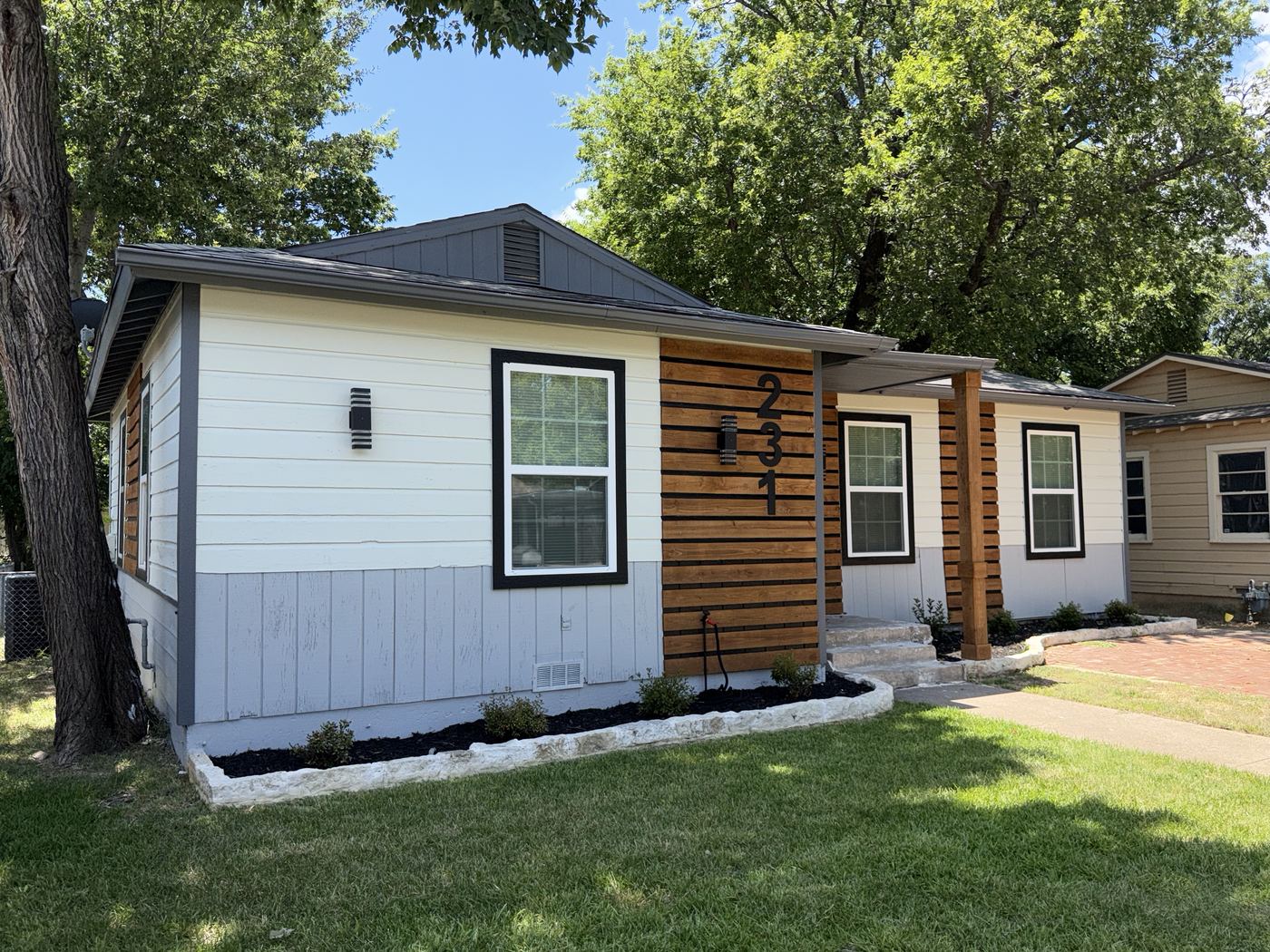
Not every imperfection is a repair. Dated but intact cabinets, a laminate counter in good condition, a clean and working bathroom that is not modern, and an undamaged textured ceiling are all fine for a long-term rental. Nothing about them is broken, unsafe or failing.
When you are tempted to upgrade instead, apply one test: will it raise the rent, shorten the vacancy, or reduce what breaks during the tenancy? If the answer is no to all three, skip it. The arithmetic for the items that pass is in what pays before renting, and for efficiency items in energy efficiency upgrades in a rental.
Sorting your own list in one walk-through
You can build the list yourself in about the time it takes to walk the house twice. Take a phone and a notepad with three columns: must fix, should fix, can wait.
- Exterior doors first. At each one, including the door from the garage into the house, check for a keyed dead bolt or doorknob lock, a keyless bolting device and a door viewer. Anything missing goes in the must-fix column.
- Every window and sliding door. A latch on each exterior window; a pin lock and a handle latch or security bar on each sliding glass door.
- Bedrooms and halls. Count the smoke alarms against 92.255(a), press each test button, and note the year the house was first occupied if you plan to replace any.
- Water. Run every faucet, flush every toilet, look under every sink, and check that the water heater produces hot water.
- Power and climate. Flip every switch, test the GFCI outlets, run heating and cooling.
- Finishes last. Only now note paint, carpet and caulk: should-fix if worn, can-wait if merely dated.
Photograph each must-fix item before and after the work, with the date. Those photos are your record of the house's condition when the work was done, and they make the move-in inspection quicker. If an item does not fit a column cleanly, ask whether it is broken, unsafe or only old; that answer usually decides it.
The order of work, so trades do not undo each other
Trades step on each other when the order is wrong. Work in this sequence: anything that opens walls or ceilings, then plumbing and electrical, then paint, then flooring, then fixtures and hardware, then a professional clean, then photos. Yard work can run alongside. Do the security-device and smoke alarm check after the last contractor leaves, and rekey after anyone with a key or code is finished, keeping within the seventh-day rule in 92.156(a).
If a manager is arranging the vendors, whether a manager can arrange cleaning, painting and yard work before listing explains how that is approved and billed.
How Perpetual helps before a house is listed
Perpetual Property Management manages rentals in Fort Worth, Keller and North Richland Hills. What our published pages say about the work before a house is listed:
- Advice before you spend: our free rental analysis includes notes on any make-ready items worth doing, and we will tell you which make-ready items raise rent and which do not, before you spend the money.
- Enrollment inspection: $125 on Investor Special, $49 on Standard, and included (with onboarding) on Full Service.
- Approvals: routine work under your pre-approved spending limit goes ahead; anything larger comes to you with a description, photos and a recommendation.
- Billing: maintenance coordination is 4.9% of cost on Standard and 5% on Full Service, and make-ready coordination 3% to 5% of cost on Investor Special, charged as a percentage of the vendor's invoice; the original invoice is always in your portal.
- Move-in record: every move-in gets a 360-degree condition inspection, and every completed repair over $500 gets photo or video proof (subject to the Guarantee Addendum).
How the pre-listing work on your house is scoped and billed is confirmed in writing before you sign. See maintenance coordination, or call 682-593-7033.
The takeaway: Fix what the Property Code requires first, then everything the tenant will use, and leave sound but dated finishes alone; test any upgrade separately.
Questions owners ask
Do I have to replace the carpet before renting out my house?
Only if it is stained, worn through, smells or is visibly damaged. Carpet that cleans up well is fine for a long-term rental, and no Texas statute requires new flooring. If you are replacing it anyway, a durable hard surface in the main living areas tends to survive tenants and photographs well.
Should I repaint the whole house or just touch up?
Touch up only if you have the exact paint and the finish is in good shape, because a different sheen or a faded shade shows in daylight. Repaint rooms with marks, bold colors or many patches. Settling on one neutral color and sheen makes every later turnover simpler.
Who is responsible for repairs once the tenant moves in?
The owner keeps the repair duty in Property Code 92.052 for conditions that materially affect health or safety once a tenant who is current on rent gives notice. Under 92.052(b) there is no duty during the lease for conditions the tenant, an occupant, family member or guest caused, unless from normal wear and tear. A lease can shift certain repairs to the tenant only as 92.006 allows.
Can I list the house before the repairs are finished?
You can announce a coming-soon listing with an availability date, but photos should show the finished house and showings should wait until it is safe and presentable. The must-fix items in particular should be done before anyone tours the home, and the smoke alarm test belongs at the start of the tenant's possession.
Can I rent the house as-is and have the tenant make repairs?
Only within narrow limits. Property Code 92.006(e) lets a landlord and tenant agree that the tenant repairs health-and-safety conditions at the tenant's expense only if, among other conditions, the landlord owns only one rental dwelling at the start of the lease, the dwelling is free of such conditions at that point, and the agreement is in a written lease, underlined or in bold, specific and clear. Security device and smoke alarm installation duties cannot be waived. Ask a Texas attorney before relying on it.
Do I have to put a smoke alarm in every bedroom of my rental?
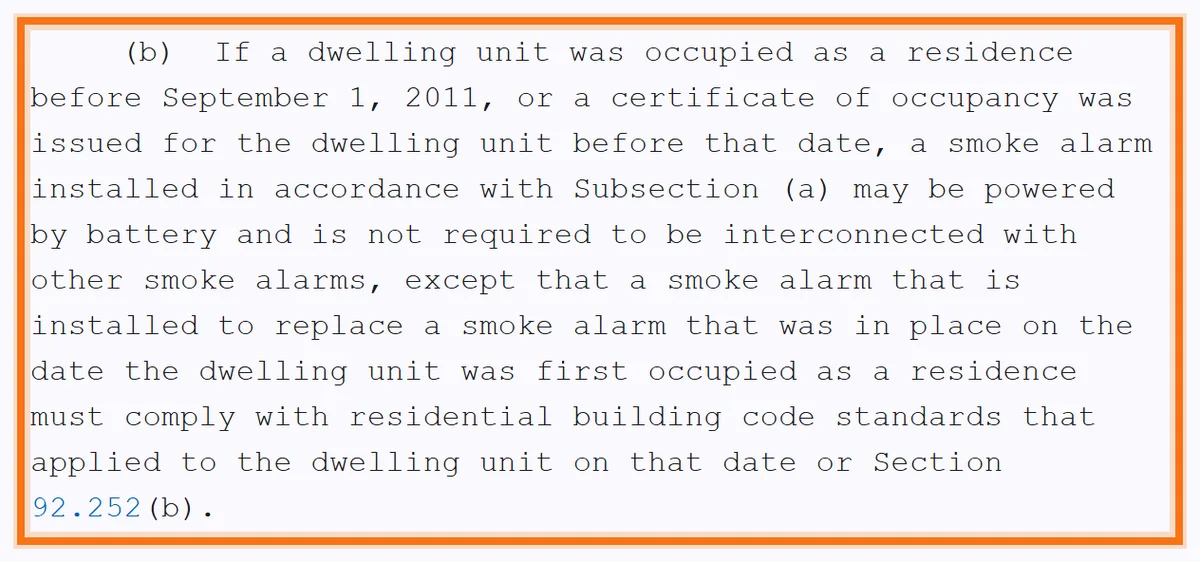
Yes. Property Code 92.255(a) requires at least one smoke alarm in each separate bedroom, one in the corridor serving multiple bedrooms, and one on each level. For a home occupied before September 1, 2011, 92.255(b) allows battery alarms that are not interconnected, but an alarm replacing the original must meet the building code standards that applied when the home was first occupied.
When do I have to rekey the locks before a new tenant?
Property Code 92.156(a) requires the landlord to rekey security devices operated by a key, card or combination, at the landlord's expense, no later than the seventh day after each tenant turnover date. The statute defines the turnover date as the date a tenant moves in after all previous occupants have moved out. Rekeying after the last contractor finishes keeps keys out of other hands.
Property management in Keller, North Richland Hills and Fort Worth. How full-service management works in Tarrant County →