Key takeaways
- A manager runs five stages: before the listing, leasing, the tenancy, the renewal and the move-out.
- At every stage you keep the decisions that spend real money or set the rent.
- Texas sets deadlines inside the cycle: a late fee only after rent is unpaid two full days (Property Code 92.019), rekeying within 7 days of a turnover (92.156), the deposit refund within 30 days of surrender (92.103).
- When you compare companies, ask how each stage is documented, especially rent collection and late payments.
What does a property manager do for a landlord? For a rental in Fort Worth, Keller or North Richland Hills, the manager runs every stage of a tenancy, from the first walk-through and the rent price to the move-out inspection and the deposit refund, and you keep the decisions that spend money or set the rent. The clearest way to see the job is to follow one tenancy from start to finish, stage by stage.
This guide does that, with a table of who does what. For the recurring work inside a single month, see what a property manager does every month, week by week.
Who does what at each stage of a tenancy
Here is the life of one tenancy in five stages, what the manager does at each, what stays your decision, and the Texas rule or document that governs it:
| Stage | The manager | You decide | Rule or document |
|---|---|---|---|
| 1. Before the listing | Walks the house, prices it from leased comparables, lists the make-ready work | Which work to pay for; the asking rent | The rental analysis; smoke alarms (Property Code 92.255) |
| 2. Leasing | Markets, shows, screens every adult, prepares the lease and the move-in report | The screening standards, set up front; the lease terms you want | Written rental criteria; the lease and addenda |
| 3. The tenancy | Collects rent, runs the late process, coordinates repairs, inspects | Repairs above your spending limit | The lease; Property Code 92.019 (late fees); the management agreement |
| 4. The renewal | Checks the market, recommends, makes the offer | Renew or not, and at what rent | The lease term and its notice clause |
| 5. Move-out and turnover | Inspects, itemizes the deposit, rekeys, turns the house | The turnover spending | Property Code 92.103, 92.104, 92.107, 92.156 |
How to read this table: the middle column is the work you are paying for, and the third column is what the fee does not take away from you. If a company cannot tell you who does each item in the first two columns, and where it is written, the work will fall between you on the day it matters.
Stage 1, before the listing: the walk-through, the price and the make-ready
The job starts with someone standing in your house. The manager walks it, notes what must be fixed before a tenant moves in, and gives you a rent range built from homes that actually leased nearby, not asking prices, with the reasoning. You decide the asking rent; a good manager shows you what each choice costs or earns.
Then comes the make-ready: cleaning, paint, yard and repairs, approved by you because you pay for them. Safety items are part of this stage. Texas Property Code 92.255(a), for example, requires the landlord to install at least one smoke alarm in each separate bedroom, with additional rules for shared corridors and multi-level homes. Texas security device and smoke alarm rules covers the full list, and the make-ready guide covers which work pays.
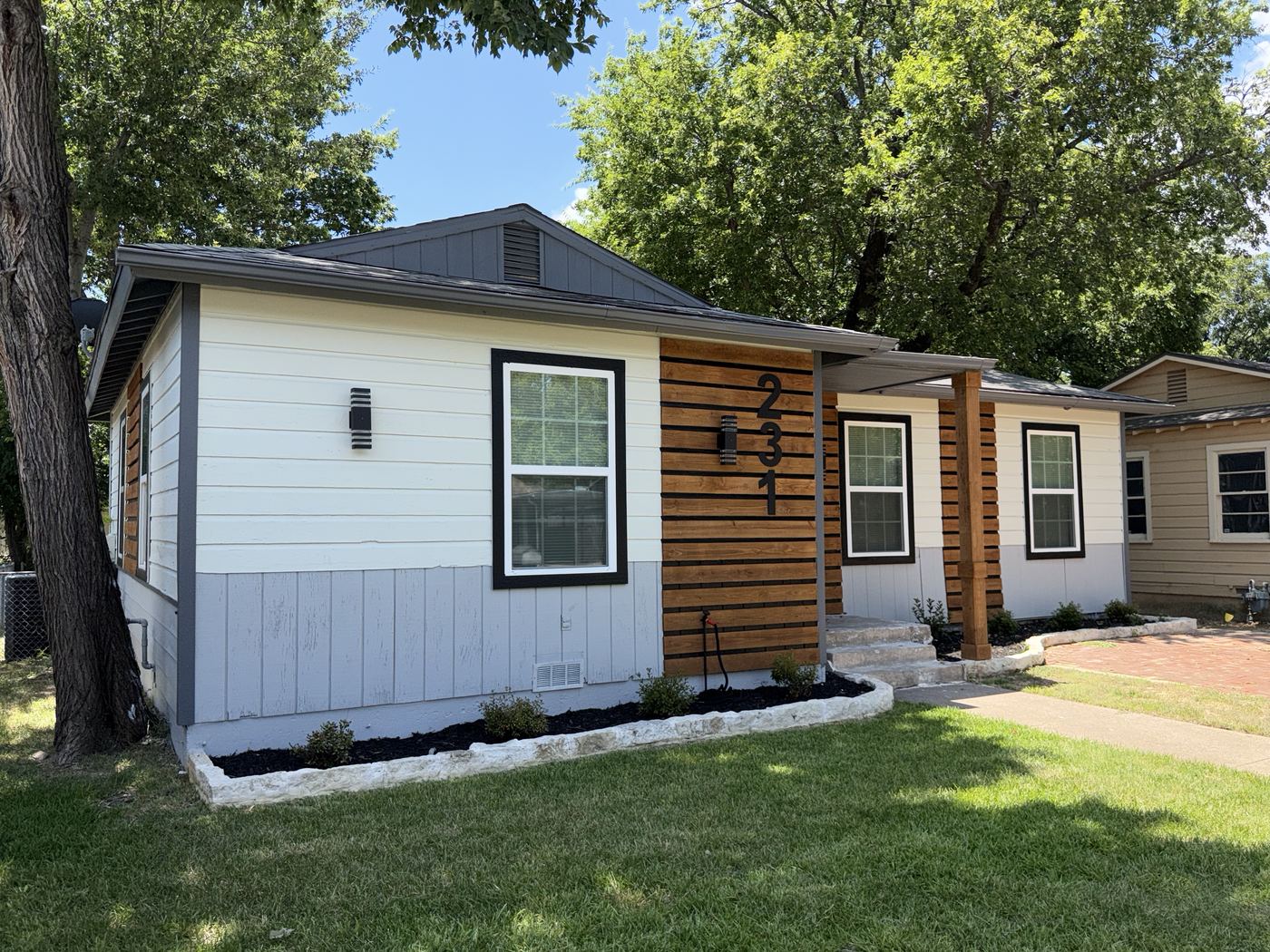
One more decision belongs in stage 1: whether the house is ready to list at all. A manager who lists a house with open repairs is spending your first two weeks of marketing on a version of the home that will not lease at the price you want.
Stage 2, leasing: marketing, screening, the lease and move-in
Once the house is ready, the manager photographs and lists it, answers inquiries, runs showings and takes applications. Every adult applicant is screened against the same written criteria. The standards are yours to agree up front; after that, the manager applies them without exceptions, which is what makes each decision defensible.
The approved applicant signs a Texas lease with the addenda the house needs, such as HOA rules, a pool or pets, and pays the deposit. Before the keys change hands, the manager completes a room-by-room move-in condition report with photos and has the tenant acknowledge it. That report decides most deposit disputes a year or two later. Lease addenda every Texas landlord should consider lists the common ones.
Stage 3, the tenancy: rent, repairs and inspections
Once the tenant moves in, the work becomes a routine: rent collected and posted, the late process run when it is needed, repair requests triaged and sent to a vendor, invoices filed, and a statement and payout sent to you each month. Repairs under your written spending limit go ahead; larger ones come to you first with an estimate. How that limit works is in can a property manager approve expensive repairs without my permission?
The house is also inspected during the tenancy, on the schedule in your agreement, and you receive the report. Inspections catch slow leaks, lease violations and unauthorized pets or occupants while they are still small. The week-by-week view of a single month is in our monthly calendar guide.
Stage 4, the renewal: the recommendation and your decision
Well before the lease ends, the manager checks what comparable homes are leasing for, looks at the tenant's payment history and the condition reports, and brings you a recommendation: renew at the same rent, adjust it, or let the tenant go. The decision is yours. Then the offer goes to the tenant early enough that, if they leave, marketing can start before the house is empty.
If either side ends the tenancy, the notice must follow the lease. Your lease's notice clause, not a guess, decides the timing. Do owners approve lease renewals? covers the decision, and lease termination and non-renewal notices in Texas covers the paperwork.
How to evaluate a company on rent collection and late payments
Owners ask how to evaluate a rental property management company on rent collection and late payments, because that is where a tenancy goes wrong first. Ask four things:
- How do tenants pay? Online payment with automatic receipts leaves a record on both sides.
- What happens on the day rent is late? Ask for the written sequence: reminder, late fee, notice, and who decides each step.
- Is the late fee applied the same way every time? Waived fees teach tenants that the lease is negotiable.
- When do you hear about it? You should know about a missed payment that month, not at year-end.
Check the answers against Texas law. Property Code 92.019(a) allows a late fee only if notice of the fee is in a written lease, the fee is reasonable, and rent has remained unpaid two full days after the date it was originally due. A company that charges on the first day late, or has no written late process at all, fails this test. Who sets late fees and makes sure they are collected? goes further, and what happens when a tenant pays late in Texas covers the notices. This is general information, not legal advice.
Stage 5, move-out: the inspection, the deposit and the turnover
When the tenant leaves, the manager inspects the house against the move-in report, photographs it, and separates normal wear and tear from damage. The deposit has Texas deadlines. Property Code 92.103(a) requires the refund on or before the 30th day after the tenant surrenders the premises; under 92.107 the landlord is not obligated to return it or itemize until the tenant gives a written forwarding address. Under 92.104 the landlord may deduct damages and charges the tenant is legally liable for, may not deduct for normal wear and tear, and must give a written description and itemized list of deductions.
The turnover starts the same week. Property Code 92.156(a) requires keyed, card or combination security devices to be rekeyed at the landlord's expense not later than the seventh day after each tenant turnover date. The move-out inspection explains the itemization. This is general information, not legal advice.
What stays with you as the landlord
Hiring a manager does not stop you being the landlord. Texas Property Code 92.001 defines the landlord as the owner, lessor or sublessor of a dwelling, and says it does not include a manager or agent unless the manager or agent purports to be the owner, lessor or sublessor in the lease. The manager carries out the work; the duties stay attached to you. In practice you still:
- approve make-ready work and repairs above your limit;
- decide the asking rent and each renewal;
- carry the insurance and pay the mortgage and property taxes;
- read the statements and inspection reports;
- decide when to keep, refinance or sell.
How many hours that adds up to is in how passive is a rental, really?, and if you only want a tenant found, full-service management vs. tenant placement only shows what each leaves with you.
How Perpetual handles this
Our FAQ answers the question in one line, and our property management page says one agreement covers the entire life of your rental.
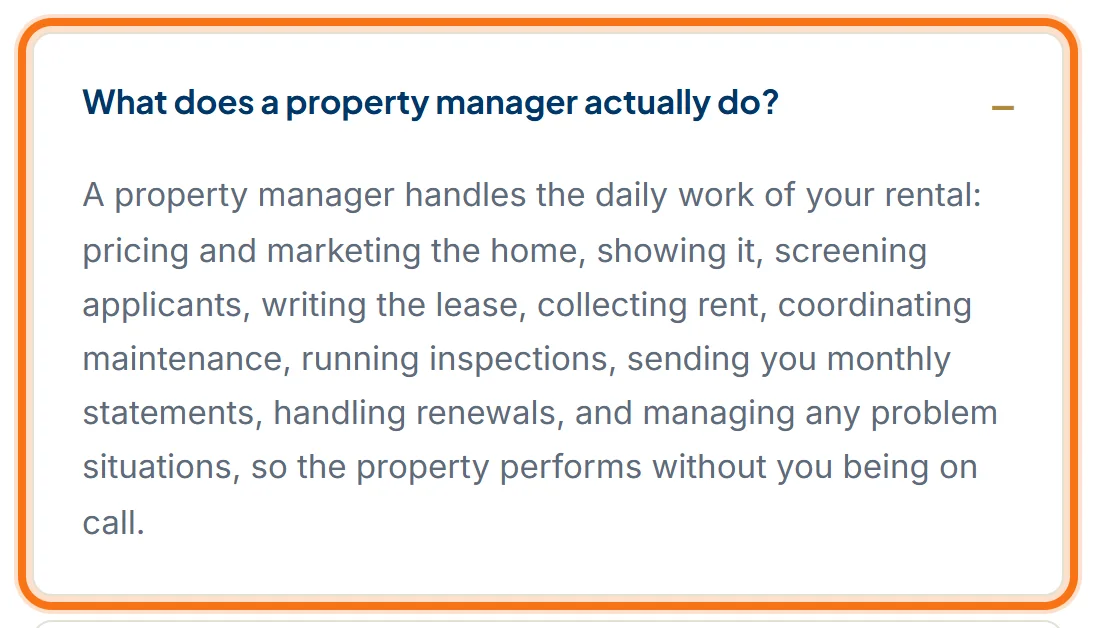
At each stage, what our site states:
- Before the listing: a free rental analysis with a rent range from leased comps, demand notes, make-ready guidance and a written management quote; final pricing is always your call.
- Leasing: live on every major rental platform within 5 business days of being market-ready, or the first month's management fee is waived; every adult screened against written criteria; Texas-compliant lease documents with property-specific addenda; a timestamped, photo-documented move-in report.
- Tenancy: online rent payment, late fees applied per the lease with the same escalation steps for every tenant, repairs under your pre-approved limit, and an annual property inspection on every plan.
- Renewal: a market check and a recommendation, typically 60 to 90 days before lease end, and the decision is always yours.
- Move-out: a 360-degree move-in and move-out condition inspection under our written guarantees.
The fees for each stage are on our price sheet, and anything else is confirmed in writing before you sign. Call 682-593-7033.
The takeaway: A property manager for landlords carries a tenancy through five stages and documents each one; you keep the money and rent decisions. Compare companies by asking how each stage is recorded, and how rent collection and late payments are handled.
Questions owners ask
Does a property manager pay the mortgage, taxes and insurance for a landlord?
Not usually. The manager collects rent, pays the property's operating costs such as repairs, deducts the management fee and sends you the rest. The mortgage, property taxes and insurance normally stay with you unless your agreement says otherwise. Your monthly statement shows what went out.
How much contact will I have with my tenant if I hire a property manager?
Very little. The tenant contacts the manager for rent, repairs and notices, and you hear from the manager when a decision is yours, such as a repair above your limit or a renewal. You see the rest in the statements and inspection reports. Texas Property Code 92.201 also lets the tenant ask for the owner's name and address, so the tenant can learn who owns the house.
What decisions does a property manager make without asking the landlord?
Routine ones inside the limits in your agreement: sending a vendor for a repair under your spending limit, applying the late fee the lease allows, approving an applicant who meets the written criteria you agreed, and scheduling inspections. Decisions that spend significant money, set the rent or end a tenancy come to you first, except for true emergencies where waiting would damage the house.
Do I pay a separate fee at each stage?
Usually there is a monthly management fee during the tenancy, a placement or leasing fee when a new tenant is placed, and often a renewal fee. On our price sheet the monthly fee is 7% (Investor Special, 5 or more units), 9% (Standard) or 10% (Full Service) of monthly rent, tenant placement is 50%, 75% or 50% of one month's rent, and a renewal is $149, $200 or $150. Every number is confirmed in writing before you sign.
How early does a property manager start the renewal?
Early enough that both outcomes have time: if the tenant renews, the new terms are signed before the lease ends; if not, marketing can start while the tenant is still there. Our renewals page says we start the conversation well before lease end, typically 60 to 90 days, with leased comps and a recommendation, and the decision is always yours.
What does a property manager for landlords in Texas do at move-out?
The manager inspects the house against the move-in report, separates normal wear and tear from damage, and sends the deposit refund and any itemized deductions. Property Code 92.103 sets the refund deadline at 30 days after the tenant surrenders the house, and under 92.107 the landlord is not obligated to refund or itemize until the tenant gives a written forwarding address. The rekey is due within 7 days of the turnover (92.156).
How do I evaluate a property management company on rent collection and late payments?
Ask how tenants pay, the written sequence on the day rent is late, whether the late fee is applied the same way every time, and when you hear about it. Under Property Code 92.019 a late fee needs notice in a written lease, must be reasonable, and can apply only after rent has been unpaid two full days after the due date.
Related services
Property management in Keller, North Richland Hills and Fort Worth. How full-service management works in Tarrant County →