Key takeaways
- Full service covers the tenancy: pricing, marketing, screening, the lease, rent, repairs, inspections, renewals and move-outs.
- Insurance, property tax, income tax, HOA dues and the mortgage stay in your name.
- Big repairs such as a roof or HVAC replacement are your decision and your money; the manager recommends and coordinates.
- The IRS instructions say a property manager must report the rent paid over to the owner on Form 1099-MISC; the return is still yours.
- Anything the agreement does not list is not included: mark each item before you sign.
Full-service property management leaves out the jobs of ownership: landlord insurance, property tax and any protest, your income tax return, HOA dues, the mortgage, capital repairs, legal counsel in a dispute and the sale. The manager runs the tenancy and can help on each of these, but the decision and the money stay with you. For a rental in Fort Worth, Keller or North Richland Hills, the agreement is where that line is drawn.
This guide gives you the remaining list as a table, then one short section per item. What the included side looks like next to a leasing-only service is in full-service management vs. tenant placement.
The owner's remaining list under full-service management
Here are the eight jobs that usually stay with the owner, what a manager may still do on each, and where the management agreement should say so:
| Job | What stays with you | What the manager may still do | Where the agreement says it |
|---|---|---|---|
| Landlord insurance | Buying the policy, paying the premium, deciding whether to file a claim | Photos of damage, the tenant's account, vendor estimates, access for the adjuster | Insurance clause; any claim-handling service and its fee |
| Property tax and protest | Reading the appraisal notice, paying the bill or escrow, deciding whether to protest | Rent history and repair invoices to support a protest | Usually silent, which means it is yours |
| Income tax and Form 1099 | Your return, depreciation, repair vs. improvement choices, your CPA | Monthly statements, invoices, and the Form 1099-MISC for rent paid over to you | Accounting and reporting clause |
| HOA dues and assessments | Dues, special assessments, fines billed to the owner, your vote | Passing rules to the tenant, forwarding violation letters, arranging the cure | HOA clause; whether any bill is paid from rent |
| Mortgage | Payments, lender notices, the loan's occupancy terms | Usually nothing beyond paying you on schedule | Disbursement clause |
| Capital repairs | Deciding on and paying for a roof, HVAC system, water heater or flooring | A recommendation, bids, scheduling with the tenant, the invoice in your file | Spending limit and approval clause |
| Legal counsel | Hiring and paying an attorney; you are the party in a lawsuit | The file: lease, ledger, notices, photos, messages | Eviction clause and what it excludes |
| Selling the house | When and whether to sell, and with which broker | Records for buyers; showings arranged under the lease | What happens to management at a sale |
How to read this table: the second column never moves to the manager, whatever the plan is called. The third column is help you may get, and the fourth tells you where to confirm it. If the agreement is silent on a row, treat that row as yours until a written answer says otherwise.
Landlord insurance: your policy, your claim
The policy is in your name, you pay the premium, and the decision to file a claim is yours. A house you once lived in usually needs a landlord policy instead of a homeowner policy; the differences are in landlord insurance vs. homeowners insurance, and what your policy covers is a question for your insurance agent.
Where a manager helps is the evidence: dated photos, the tenant's account of what happened, vendor estimates, and access for the adjuster. Whether the manager takes on more than that, and at what fee, belongs in the agreement. How that cooperation works in practice is in will a property manager coordinate with your insurer. This is general information, not insurance advice.
Property tax, the protest and your income tax
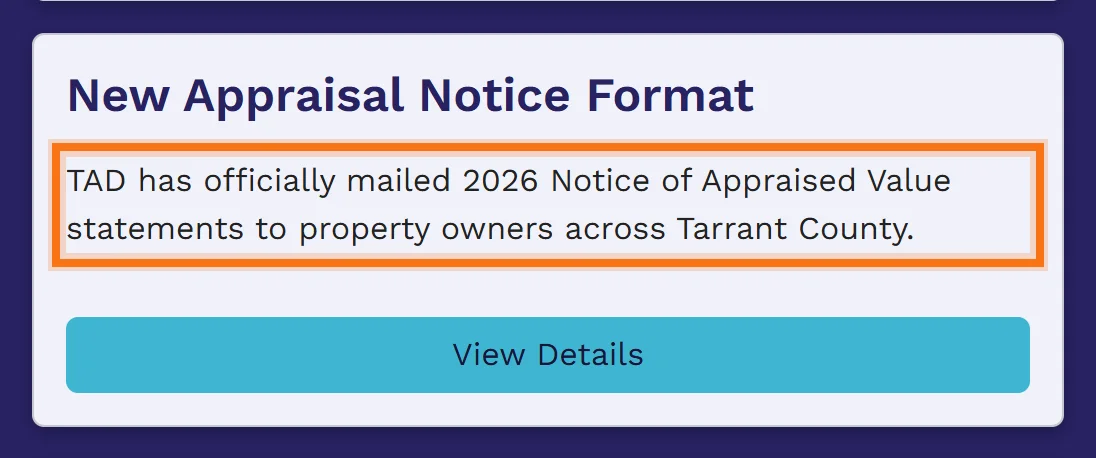
Property tax. The appraisal district deals with the owner. In Tarrant County, the appraisal district's own home page says it mailed the 2026 notices of appraised value to property owners, and it invites owners to provide evidence and file a protest online. The bill is paid by you or through your mortgage escrow, not out of the management account, unless your agreement says otherwise.
A manager can still help a protest with what it already holds: the rent history, the condition at the last inspection, and invoices for repairs the house needed. How the tax side of a rental works is in rental property taxes in Texas.
Income tax. The IRS Instructions for Forms 1099-MISC and 1099-NEC (revised December 2026) say the real estate agent or property manager must use Form 1099-MISC to report the rent paid over to the property owner, and that for tax years beginning after 2025 the reporting threshold rises to $2,000. The form and your statements feed your return; the return, depreciation and the repair-or-improvement call are yours and your CPA's. This is general information, not tax advice.
HOA dues and the mortgage
HOA. The association bills the owner, so dues, special assessments and fines charged to the lot are yours, and so is the vote. The manager handles the tenant side: giving the tenant the rules, forwarding a violation letter, arranging the mowing or the trash cans. Whether dues are ever paid from rent depends on the agreement. Leasing rules are checked before the listing goes live; see HOA rules and your rental property.
Mortgage. Rent is paid out to you, and you pay the lender. If your loan has occupancy terms or asks for notice when the home becomes a rental, read your loan documents and ask your lender; a manager cannot answer that for you. Paying the loan from the management account would put the payment at the mercy of a late rent month, so ask how the agreement handles it before you assume either way.
Capital repairs: the manager recommends, you decide and pay
A spending limit lets the manager fix routine items without calling you. A roof, an HVAC system, a water heater, flooring through the house or a fence line is different: your money, your timing and often your financing.
What you should expect from the manager on a capital item:
- A recommendation with the reasons: the age of the system, its repair history, the risk of waiting.
- Bids, with the vendor's own pricing visible.
- Scheduling with the tenant once you approve it.
- The invoice and any warranty in your file afterward.
What you should not expect is a capital decision made without you. If the house needs a roof and you are not ready, the manager's job is to tell you plainly what waiting means for the tenant and for the policy, then follow your decision. The health-and-safety repair duty does not wait for that decision; see Texas landlord repair obligations.
Legal counsel: your manager is not your lawyer
A manager can carry the routine paperwork of a failed tenancy, but it is not a law firm. A tenant who sues, a dispute with a contractor, an injury claim or a contested eviction calls for an attorney who represents you, and the bill is yours. Where the line falls between what a manager may do in justice court and what needs a lawyer is covered in can a property manager handle an eviction and when you need a landlord attorney.
The manager's contribution is the file: the lease, the ledger, inspection photos, notices with proof of delivery, and the message history. A complete file makes the attorney's work shorter. Ask any manager how records are kept and where routine steps end. This is general information, not legal advice.
Remodels and selling the house
Ordinary repairs and the make-ready between tenants sit inside full service. A kitchen remodel, a garage conversion or a whole-house renovation does not, even if the manager coordinates the trades. If the agreement says nothing about project work of that size, ask whether it is offered and how it is priced before you assume it comes with the monthly fee.
Selling is a separate decision. Managing a rental and listing it are different services, and the management agreement may say what happens to management when you sell. If your manager is also a brokerage, you can choose to list with it, but nothing requires you to. More in does hiring a property manager mean I have to use them to sell.
How to find the line in any management agreement
Every management agreement has a scope of services section, and often a clause saying anything not listed is not included. Read both, then mark each row of the table above as included, excluded or available for a fee.
Where the agreement is silent, ask in writing and keep the answer:
- Will you pay HOA dues or the mortgage from rent if I ask, and what does it cost?
- What is my repair spending limit, and what happens above it?
- What do you do when there is an insurance claim, and is there a fee?
- Do you manage remodels, and at what fee?
- Which eviction steps do you handle, and when do you refer me to an attorney?
Whether paying for all of this makes sense for one house is a separate question; the arithmetic is in is property management worth it.
What Perpetual's full service covers, and what stays with you
Our full-service management page says one agreement covers the entire life of your rental: rental pricing from leased comparables, marketing and showings, screening every adult against written criteria, Texas-compliant leases and move-in documentation, online rent collection and owner disbursements, maintenance coordination with agreed limits, inspections with photo reports, monthly statements in the Owner Portal, and renewals, turnovers and eviction coordination if ever needed.
From our price sheet and FAQ, on the items in this guide:
- Repairs: spending limits are agreed with you in advance; routine items get fixed fast, and larger items come to you with a recommendation.
- Invoices: maintenance coordination is a percentage of the vendor's invoice (5% of cost on Full Service), and the original invoice is always in your portal.
- Evictions: eviction service is included on Full Service and optional at $7.95 per month on the other plans.
- Selling: Perpetual Realty Group is our affiliated brokerage, if you want one team when you buy or sell.
Every number is confirmed in writing before you sign, and if a fee is not in the agreement, you do not pay it. Whether we pay HOA dues from rent or handle an insurance claim beyond documentation is also confirmed in writing in your management agreement. Call 682-593-7033 or request a free rental analysis.
The takeaway: Full service runs the tenancy; ownership still runs through you. Before you sign, put the eight items in the table next to the agreement and mark each one included, excluded or available for a stated fee.
Questions owners ask
What services are usually left out of full-service property management?
Usually eight things: buying insurance and deciding on claims, property tax and any appraisal protest, your income tax return, HOA dues and assessments, the mortgage, capital repairs such as a roof or HVAC replacement, legal counsel in a dispute, and the decision to sell. The manager can help on each with records and coordination, but the decision and the money stay with you.
Will a property manager pay my HOA dues or mortgage from the rent?
Only if your management agreement says so. Rent is normally paid out to you, and you pay your own lender and association. If you want a manager to pay a bill from rent, ask in writing what it costs and what happens in a month when rent is late or the reserve is low, and get the answer into the agreement.
Does full-service management include handling insurance claims?
Usually only the documentation side: photos, the tenant's account, vendor estimates and access for the adjuster. The policy and the claim are in your name, and the decision to file is yours. If a manager offers more, the agreement should say what and at what fee. This is general information, not insurance advice.
Who decides to replace the roof or air conditioner on a managed rental?
You do. The manager's job is to recommend, with the system's age and repair history, to get bids, to schedule the work with the tenant once you approve it, and to put the invoice in your file. A spending limit covers routine repairs; a capital item comes to you.
Can my property manager represent me in court?
A manager can carry routine paperwork, but it is not a law firm. A contested eviction, a tenant lawsuit, a contractor dispute or an injury claim needs an attorney who represents you. Our guides on handling an eviction and on when you need a landlord attorney cover where the line falls. This is general information, not legal advice.
Who protests the property tax appraisal on a managed rental?
The owner, unless the agreement says otherwise. The Tarrant Appraisal District mails the notice of appraised value to property owners, and its site invites owners to provide evidence and file a protest online. A manager can supply rent history, inspection notes and repair invoices that support your case.
Does a property manager send me a 1099 for the rent?
The IRS instructions for Form 1099-MISC say a property manager must use that form to report the rent paid over to the property owner, and for tax years beginning after 2025 the reporting threshold is $2,000. Your return, depreciation and deductions stay with you and your CPA. This is general information, not tax advice.
Related services
Property management in Keller, North Richland Hills and Fort Worth. How full-service management works in Tarrant County →