Key takeaways
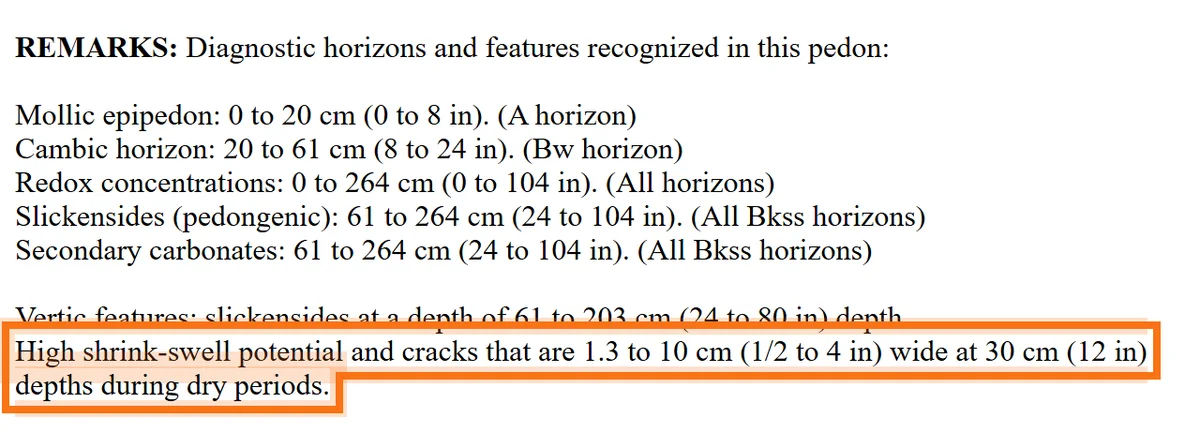
- USDA describes Houston Black clay, a soil of large extent in the Texas Blackland Prairies and the eastern Grand Prairie, as having high shrink-swell potential and cracks up to 4 inches wide during dry periods.
- A slab moves when the soil under one part of it is wetter or drier than the rest; supply and drain lines in or under the slab move with it.
- Warning signs (sticking doors, reopened cracks, gaps at the slab edge, higher water use) are things tenants rarely report, so inspections have to look for them.
- Plumbing work needs a Texas license (Occupations Code 1301.351); the owner exemption in 1301.051 names the owner's homestead, not a rental.
- Property Code 92.052 requires repair of conditions that materially affect a tenant's health or safety after notice; it does not mention foundations by name.
Foundation movement and plumbing leaks are linked in North Texas because of the clay soil many houses sit on: it swells when wet, shrinks and cracks when dry, and the slab and the pipes running through it move with it. If you own a rental in Fort Worth, Keller or North Richland Hills, you cannot change the soil. You can make sure someone looks for the early signs, that plumbing is checked before anyone sells foundation work, and that the lease says who waters and keeps drainage clear.
This guide covers the signs and who to call for each, what USDA says about these soils, the Texas plumbing license rules, watering and drainage, and what the law makes you repair.
Foundation and plumbing warning signs in a Fort Worth area rental
Here are the signs to look for at a rental, what each may point to, and who to call first. None of these alone proves a problem:
| Sign | What it may point to | Call first |
|---|---|---|
| Interior doors that stick or no longer latch | Slab movement near that wall | Foundation evaluation; check plumbing first if other signs agree |
| Diagonal cracks at window or door corners, or cracks that reopen after patching | Movement that is continuing | Foundation evaluation |
| Stair-step cracks in brick, or gaps where brick meets trim | Movement at the slab edge | Foundation evaluation |
| Soil pulled away from the slab, or wide cracks in the yard in dry weather | Dry, shrinking clay at the edge | Watering and drainage fixes; note it for the next inspection |
| Water use or the bill rising with no change in the household | A leak, possibly under the slab | A licensed plumber |
| A warm spot on the floor, or sound of running water with fixtures off | A hot or cold supply leak | A licensed plumber, promptly |
| Slow drains or backups in more than one fixture | A blocked or broken drain or sewer line | A licensed plumber |
How to read this table: the first three rows are movement signs, the last three are plumbing signs, and they often appear together. When both kinds show up, have the plumbing checked before anyone quotes foundation work, because a leak under the slab can be what is moving it.
Why North Texas clay moves, in USDA's words
The U.S. Department of Agriculture's official description of Houston Black clay, a soil it calls "of large extent" in the Blackland Prairies and the eastern part of the Grand Prairies of Texas, records "high shrink-swell potential" and cracks 1/2 to 4 inches wide at a depth of 12 inches during dry periods. It also notes that water enters the soil rapidly when it is dry and cracked, and very slowly when it is moist.
For a house on a slab, that behavior is the whole story. When the soil under one side of the house is drier or wetter than under the other, it shrinks or swells unevenly and the rigid slab bends a little. Edges and corners dry out first, which is why doors on outside walls stick and why cracks appear above windows and door frames.
Not every lot sits on the same soil, and USDA's description is of one soil series, not of your yard. Which soil is under your house is a question for the engineer or foundation evaluator who looks at it. The practical point holds either way: uneven moisture around the slab is what you can control.
Why a tenant rarely reports the early signs
Tenants report what bothers them: a leak they can see, a toilet that will not flush, no hot water. A door that needs a shove or a hairline crack over a window is an inconvenience to them, not a reason to call. That is why the signs in the table at the top have to be looked for at inspections, photographed in the same spots each time and compared.
Water use is the easiest sign to check from a distance. If the tenant pays the water bill, ask them to tell you about any unexplained jump. Fort Worth Water's MyH2O portal and app let residential customers see the previous day's use in hourly increments, set alerts, and detect continuous water flow, which the city describes as indicating a possible leak. Other cities have their own utility tools; ask yours. How often a rental should be inspected is covered in rental property inspections: how often.
How slab movement and plumbing leaks feed each other
In a slab house, supply lines and drain lines run in or under the concrete. When the slab shifts, the pipes are stressed with it, and a joint or a line can start leaking where nobody can see it.
A supply leak tends to show itself: higher water use, a meter that moves with every fixture off, a warm spot on the floor. A drain leak is quieter, and the water it releases goes into the soil directly under the slab, which can swell the clay there and add to the movement. That is the loop to break: movement causes leaks, and leaks cause movement.
So the order matters. When movement signs appear, ask a licensed plumber to check the supply and drain lines before foundation work is quoted, and again after it is done, since lifting or leveling a slab can stress the lines. A foundation company that does not ask about the plumbing is a reason to get a second opinion; our guide on asking for a second quote before a major repair explains how to compare the two.
Who may work on a rental's plumbing under Texas law
Plumbing in Texas is licensed by the Texas State Board of Plumbing Examiners. Occupations Code 1301.351 says a person, other than a responsible master plumber, may not engage in plumbing unless the person holds the proper license, registration or endorsement and the work is supervised and controlled by a person licensed under that chapter. Drain cleaners and drain cleaner-restricted registrants, as section 1301.002 defines them, also work under the supervision of a responsible master plumber.
Owners sometimes ask whether they can fix a rental's plumbing themselves. Section 1301.051 says a property owner is not required to be licensed to perform plumbing in the property owner's homestead. It names the homestead and does not mention rental property, so do not rely on it for a house you rent out. For leak tests, sewer line work and anything inside or under the slab, use a licensed plumber and keep the invoice with the house's records. Our guide on checking a contractor's license and insurance shows how to confirm one. This is general information, not legal advice.
Watering and drainage: the cheap prevention, and who does it
The aim of foundation watering is even moisture around the slab through the year, so the soil does not shrink away from the edge in a dry summer and swell back in a wet season. A soaker hose a short distance from the slab, on a timer in dry months, is the usual approach; your foundation evaluator can say what suits your house.
Drainage is the other half. Downspouts should discharge away from the slab, the ground should fall away from the house, and beds along the house should not trap water against it. Gutters full of leaves put water exactly where it should not go. Large trees close to the house pull moisture from one side; that is a reason to water that side more, not necessarily to remove the tree.
Who does each of these on a rental is a lease question. No Texas statute assigns foundation watering to the tenant, so if you want the tenant to water or keep gutters and downspouts clear, the lease has to say so in plain words, and you should supply the hose and timer. See lawn care and landscaping in rentals for how yard duties are usually split.
Getting an evaluation before anyone sells a repair
When signs add up, ask for an evaluation, not a repair quote. A thorough one includes a measurement of the slab's level across the whole house, a look at drainage and grading, the plumbing results, and a written opinion on whether the movement is active or old and stable.
For significant findings, an independent structural engineer's report is often worth its fee: the engineer is not selling the repair, and the report gives you something to compare foundation companies' proposals against. Keep it, the plumbing results and any repair warranty with the house's records; a buyer or a future evaluator will ask for them.
Then decide with everything in front of you: repair now, fix drainage and watering and monitor, or get a second opinion. Monitoring means photographing the same doors, cracks and slab edges at each inspection and comparing.
What Texas law makes you fix, and keeping the tenant informed
Property Code 92.052(a) requires a landlord to make a diligent effort to repair or remedy a condition that materially affects the physical health or safety of an ordinary tenant, or that arises from a failure to provide and maintain a device that supplies hot water of at least 120 degrees Fahrenheit, once the tenant gives notice to the person or place where rent is normally paid and is not behind on rent. The statute does not mention foundations or slabs by name.
A slab leak that cuts off water, a sewer backup or a failed water heater can fall under it; a hairline crack usually does not. Section 92.052(b) adds that, unless caused by normal wear and tear, the landlord has no duty during the lease to repair a condition caused by the tenant, an occupant, family member or guest.
Repairs under a slab can mean crews, noise and cutting into floors. Give the tenant a schedule and one contact, and follow the lease's access terms. Who should hear what at each stage of the job is in how a manager communicates with owners during major repairs. If part of the house cannot be used for a while, any rent adjustment is a lease and attorney question. A leak at night is handled first and investigated second; see what happens with a water leak in the middle of the night, and for the longer episode, water leaks and mold in Texas rentals. This is general information, not legal advice.
How Perpetual handles foundation and plumbing issues
Perpetual Property Management manages homes in Keller, North Richland Hills, Fort Worth and nearby. Our inspection program includes move-in documentation, scheduled interior inspections during the tenancy and a move-out inspection, with photo reports to your owner portal and action items that feed straight into maintenance coordination with a recommendation. Every plan includes an annual property inspection.
Maintenance is coordinated with vetted, insured vendors, as our city pages put it: plumbers, electricians, HVAC and general trades we work with repeatedly. Routine repairs under your pre-approved limit get fixed fast; anything larger comes to you with a description, photos and a recommendation, and the decision is yours. The vendor's original invoice is always in your portal, and under the Perpetual Promise, subject to its Guarantee Addendum, every completed repair over $500 gets photo or video proof there.
How watering and drainage are assigned in the lease for your house, and how often we inspect during the tenancy, is confirmed in writing before you sign. See inspections and reporting or call 682-593-7033.
The takeaway: Clay soil, slab and pipes move together. Have someone look for the early signs at every inspection, check the plumbing with a licensed plumber before foundation work, put watering and drainage duties in the lease, and fix anything that materially affects the tenant's health or safety promptly after notice.
Questions owners ask
Is foundation repair the landlord's responsibility in Texas?
No Texas statute names foundations. Property Code 92.052 requires a landlord to make a diligent effort to repair a condition that materially affects an ordinary tenant's physical health or safety after proper notice, and a foundation or slab problem that causes such a condition falls under it. Movement that causes no such condition is the owner's decision, but the house is your asset. The lease can assign routine care such as watering. This is general information, not legal advice.
Does a tenant have to water the foundation?
Only if the lease says so. No Texas statute assigns foundation watering to a tenant. If you want the tenant to water the foundation or keep downspouts and gutters clear, write it into the lease in plain words, supply the soaker hose and timer, and check at inspections that it is happening.
How do I know if my rental has a slab leak?
Common signs are water use rising with no change in the household, a meter that moves with every fixture off, a warm spot on the floor, or new movement signs with no obvious cause. A licensed plumber can test the supply and drain lines to confirm it. Fort Worth Water customers can also use the MyH2O portal, which can detect continuous water flow that the city says indicates a possible leak.
Should I buy a rental in DFW that has had foundation repair?
A house with a past foundation repair can still be a sound rental if the repair is documented. Ask for the repair warranty and whether it transfers, the engineer's report if there is one, level measurements after the repair, and any plumbing test results. Then set up watering and drainage from the day you close. For the rest of the pre-purchase checks, see our guide on evaluating a rental before buying.
Can a property manager help identify foundation problems before they get worse?
Yes, if someone inspects the inside of the house and knows what to look for. Tenants rarely report a sticking door or a hairline crack. A manager can photograph the same doors, cracks and slab edges at each inspection, compare them, and recommend a plumbing check or an evaluation when the signs add up. At Perpetual, inspection findings come to you as a photo report with recommended actions.
Can I do the plumbing repairs on my rental house myself in Texas?
Be careful. Occupations Code 1301.351 generally requires a license to engage in plumbing. Section 1301.051 exempts a property owner doing plumbing in the property owner's homestead; it does not mention a rental house. For a rental, use a licensed plumber and keep the invoice with the house's records. This is general information, not legal advice.
Does USDA say North Texas soil is expansive?
USDA's official description of Houston Black clay, a soil of large extent in the Texas Blackland Prairies and the eastern Grand Prairies, records high shrink-swell potential and cracks 1/2 to 4 inches wide at 12 inches deep during dry periods. It describes one soil series, not every lot, so ask the engineer or evaluator what is under your house.
Property management in Keller, North Richland Hills and Fort Worth. How full-service management works in Tarrant County →