Key takeaways
- An owner's death generally does not end the lease: the tenant stays and keeps paying.
- A durable power of attorney covers incapacity, but it ends at death. A will, transfer on death deed, LLC agreement or trust covers what comes after.
- Under Property Code 92.105 the new owner becomes liable for the tenant's deposit, so its amount and location must be on record.
- A one-page rental file and an emergency contact on file with your manager make the first call easy.
- With a manager in place, rent collection and repairs keep running while your family sorts out authority.
Own a rental house in Fort Worth, Keller or North Richland Hills and wondering what happens to it if you die or can no longer manage your affairs? The tenant's lease generally continues, and the rent goes to whoever lawfully controls the property. Set up a durable power of attorney for incapacity, have an estate planning attorney put the plan for after your death in writing, and give your manager an emergency contact and a one-page rental file.
This guide covers what happens to the tenant, the security deposit and the manager, the documents that decide who can act, what changes for co-owned, LLC and trust homes, the rental file, and who does what in the first 30 days.
What happens to the tenant and the lease
An owner's death generally does not end a lease. The tenant stays, the rent stays the same, and the lease runs to its end date on the same terms. What changes is who is entitled to the rent: whoever lawfully controls the property, usually the executor or administrator of the estate, the heirs, or a successor trustee if the house is in a trust.
The tenant's practical risk is confusion. A tenant who suddenly gets a call from a relative asking for rent to be sent somewhere new should check that request through a contact they already know. Where a manager is in place and its agreement lets it keep collecting, the tenant keeps paying the way they always have, and nothing changes on their side of the door.
If the lease ends during the transition, a renewal needs someone with authority to sign it. That is a common gap: the tenant wants to renew, the family is not yet sure who can decide, and the house risks a vacancy nobody chose.
The security deposit when ownership changes
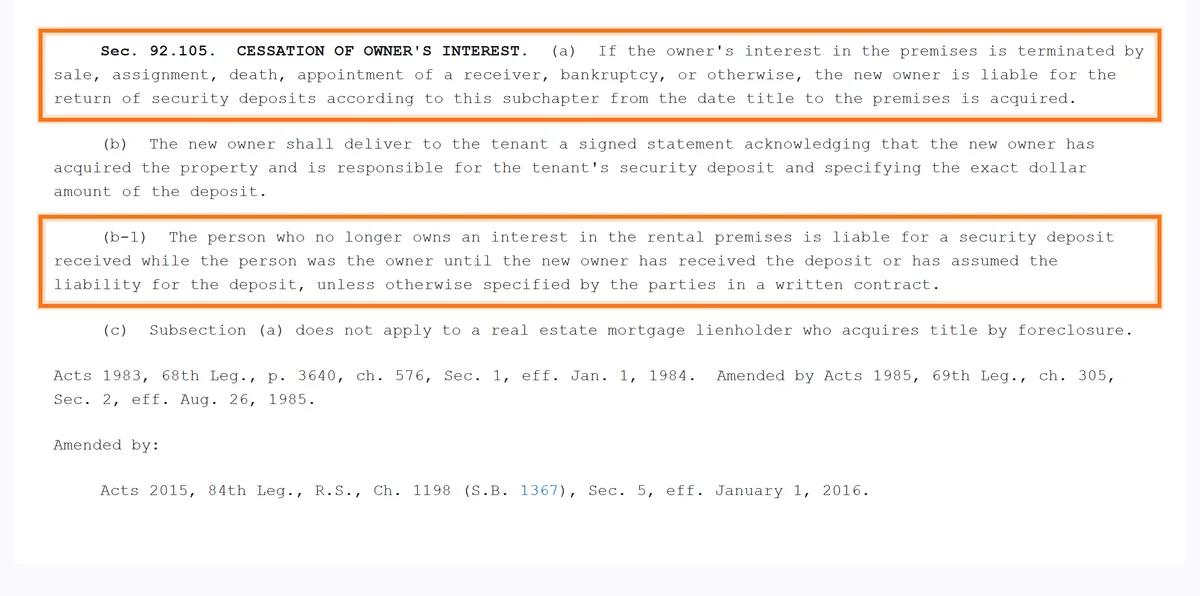
Texas law speaks to this directly. Under Property Code Section 92.105, when an owner's interest ends by sale, assignment, death, receivership, bankruptcy or otherwise, the new owner is liable for returning the tenant's security deposit from the date they acquire title. The new owner must give the tenant a signed statement saying they acquired the property, that they are responsible for the deposit, and the exact dollar amount.
The person who no longer owns the property stays liable for a deposit received while they owned it until the new owner has received the deposit or assumed the liability, unless a written contract says otherwise. For a family, that means one thing: know exactly how much the deposit is and where it is held, so it can be handed over and the tenant can be told in writing.
When we manage a home, the deposit amount, the lease and the move-in condition report sit in the records the next authorized person can review, so the handover is a reconciliation, not a search.
The documents that decide who can act
Two different moments need two different answers. While you are alive but unable to manage your affairs, someone needs authority to approve a repair or sign a renewal. After your death, someone needs authority over the house itself. One document rarely covers both, which is why an estate planning attorney should look at the rental specifically, with real examples: replacing a water heater, renewing a lease, changing where the rent goes.
Documents to discuss with your attorney, and what each one does
| Document or record | What it does | What it does not do | Who prepares it |
|---|---|---|---|
| Durable power of attorney | Lets the agent you choose act within the powers you grant, and keeps working if you become incapacitated | Give anyone authority after your death: a power of attorney ends when you die | You and your attorney (Texas has a statutory form) |
| Will | States who receives your property and can name the executor you want | Give anyone authority to manage the rental while you are alive | You and your attorney |
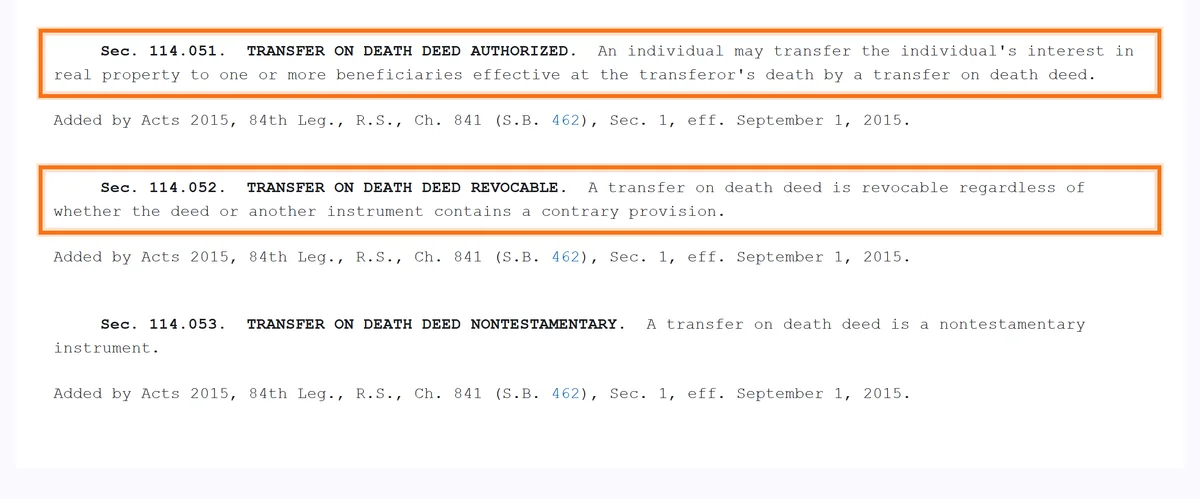
| Transfer on death deed | Passes the house to the beneficiaries you name, effective at your death; you can revoke it during your life | Give the beneficiary any say in the house while you are alive | You and your attorney; recorded in the county |
| LLC company agreement | Decides who manages the LLC, and so a house the LLC owns, if a member dies | Cover a house that is still titled in your own name | The members with their attorney |
| Living trust | Lets a successor trustee handle a house the trust owns, under the trust's terms | Cover a house that was never deeded into the trust | You and your attorney |
| Emergency contact on file with your manager | Gives the manager someone to call, who knows where your rental file is | Give that person authority to sign, approve work or receive rent | You give it to the manager |
How to read this table: read each row against the house's actual title, which is on the deed. A transfer on death deed means nothing for a house the LLC owns, and the LLC agreement means nothing for a house in your own name. The last row is not a legal document at all, but it is the one that makes the first phone call go well. This guide is general information, not legal advice; your attorney picks the tools for your situation.
On the incapacity side, Texas Estates Code chapter 751 governs durable powers of attorney, and chapter 752 contains the statutory form. Ask your attorney whether the power should take effect immediately or only on incapacity, and what your agent will need to show a manager or a bank.
If you own the house with someone, through an LLC or in a trust
Co-owned. Bring the deed and the management agreement to your attorney and ask who can approve work or sign a renewal if one owner is unavailable, and whose instructions the manager follows if the surviving owner and a relative disagree. Our guide to co-owned rentals covers naming one decision-maker.
LLC. The company keeps existing after a member dies, and its company agreement decides who runs it. Make sure the manager has the LLC's exact name on the agreement and the name of the person who would step in. If you are thinking about moving the house into an LLC anyway, discuss it together with the estate plan; our overview of an LLC for a rental property in Texas lists the questions.
Living trust. The successor trustee steps in under the trust's terms. Confirm with your attorney that the house was actually deeded into the trust, and decide what the successor trustee will show the manager.
The one-page rental file your family can use under pressure
The legal documents decide who can act. A one-page rental file decides how fast they can act. Keep it with your estate papers and give your contact a copy.
- The house and the lease: address, lease end date, monthly rent, deposit amount and where it is held, where the signed lease and addenda are.
- The people: your property manager and their phone number, your emergency contact, your attorney, your insurance agent.
- The bills that keep coming: the mortgage servicer, the insurance policy number, the HOA, the property tax account with the Tarrant County Tax Office, any utilities in your name. Put the mortgage and insurance on autopay and note which account pays them.
- Where the paperwork is: the deed, the management agreement, the will, the power of attorney, the LLC or trust documents.
- What the agreement says: read your management agreement for what happens if you die, and write one line about it. If it is silent, ask your manager now.
Then test it: ask your contact to find the file and the manager's number without your help. Whatever they cannot find is what to fix. Our list of documents a new property manager needs doubles as a checklist for the file.
Who does what in the first 30 days
The first 30 days after an owner dies, by role
| Who | What to do first | What to confirm before changing anything |
|---|---|---|
| Tenant | Keep paying under the lease through the usual channel; report repairs as usual | Any new payment instruction, through a phone number or portal already known |
| Property manager | Read the agreement, gather the lease, rent ledger, deposit record and open repairs; keep the house running | Who has authority to give instructions, what the agreement allows meanwhile, where owner funds may lawfully go |
| Family or executor | Call the manager, find the rental file, ask the attorney who has authority; check that mortgage, insurance, HOA and tax payments still go out | Who can approve expenses or sign a renewal, and when the tenant needs written instructions |
How to read this table: in the first month the house does not need decisions so much as continuity. The tenant keeps paying, the manager keeps repairs moving and holds the money where the agreement says, and the family works out authority with the attorney. The two things to flag on the first call are an open repair and a lease that ends soon.
Why a manager makes this easier for your family
When a pipe bursts during a North Texas freeze, the tenant needs someone who answers at 2 a.m. while the family is still finding the will. That is the practical case for a manager: the house keeps running on its own records while the people around it sort out authority.
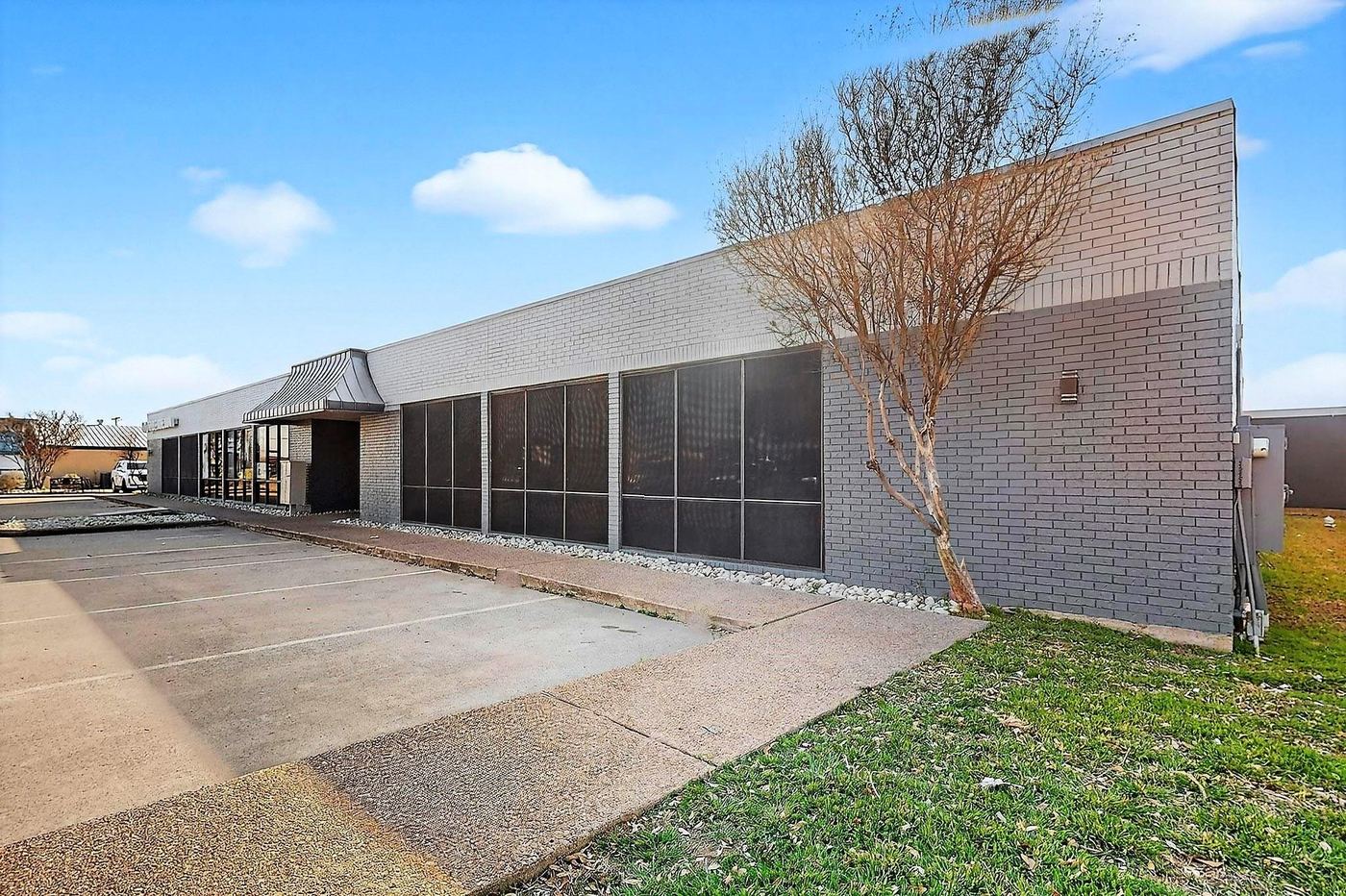
We manage single-family rentals in Fort Worth, Keller and North Richland Hills from our office on Rufe Snow Drive in North Richland Hills. Every plan includes 24/7 emergency response, an annual property inspection and an online owner portal with the statements and the original vendor invoices. A 360-degree condition inspection at every move-in and move-out, and photo or video proof for every completed repair over $500, mean the person who takes over can see what was done without relying on anyone's memory.
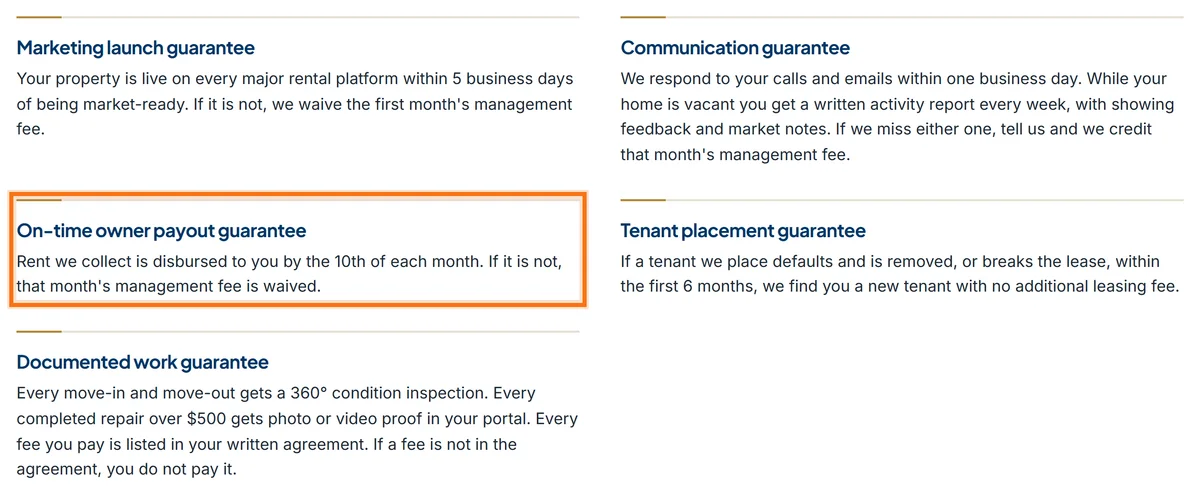
Our Perpetual Promise pays out rent we collect by the 10th of each month, or that month's management fee is waived. If an owner dies or becomes incapacitated, collecting from the tenant continues; paying out is held to where the agreement and the person with authority direct it, so the money never goes to the wrong account.
Once someone has authority, we can keep managing for the estate or the heirs. If they are deciding whether to keep or sell, our free rental analysis prices the house from comparable leased homes, and inherited a house: rent it or sell it walks through the choice. Our published price sheet lists Full Service at 10% of monthly rent, Standard at 9% and Investor Special at 7% for five or more units, with every fee confirmed in writing.
Call 682-593-7033 or request a free rental analysis with a written management quote. Tell us whether the house is occupied and who manages it now.
The takeaway: The lease keeps going without you; the authority to run it does not. Put the documents in place with an attorney, write the one-page rental file, and make sure your manager knows who to call.
Questions owners ask
Does my tenant have to move out if I die?
No. The lease generally continues on the same terms until it ends. The rent goes to whoever lawfully controls the property, such as the executor, the heirs or a successor trustee.
Can the person named in my power of attorney keep collecting rent after I die?
Not under the power of attorney, which ends at death. The same person can act after your death only in another role, such as executor or successor trustee.
Can my agent approve a repair if I am in the hospital?
A durable power of attorney can let your agent approve work if it is in effect and grants that power. Ask your attorney to check the wording and your manager what they need to see.
What happens to the tenant's security deposit when the owner dies?
Under Texas Property Code 92.105 the new owner becomes liable for returning it from the date they acquire title and must give the tenant a signed statement with the exact amount. The deposit should be handed over with the records.
Does an emergency contact get access to my owner portal?
No. An emergency contact is someone the manager can call. Access to statements, invoices or payouts needs authority your manager can verify.
Can my family keep the same property manager?
Yes, once someone has authority. We can continue managing for the estate or the heirs. Read your current management agreement now so your family knows what it allows in the meantime.
What is a transfer on death deed in Texas?
A deed under Texas Estates Code chapter 114 that passes real property to the beneficiaries you name at your death. You can revoke it during your life, and it gives the beneficiary no rights while you are alive.
Is it different if the tenant dies?
Yes. A tenant's death raises separate questions about the lease, access and belongings; see our guide on what happens when a tenant dies in a Texas rental.
Property management in Keller, North Richland Hills and Fort Worth. How full-service management works in Tarrant County →