Key takeaways
- Request the lease and addenda, tenant ledger, security deposit and its record, keys, open work orders and the tenant's repair requests.
- A change of manager is not a change of owner: Property Code 92.105 covers a new owner, so you stay answerable for the deposit.
- TREC rule 535.146 requires a broker to account monthly for trust money and keep trust account records for four years.
- Fix in order: safety and unanswered repair notices, the money, the tenant's new contact details, then deferred upkeep.
- The tenant's lease stays in force: what the old manager signed is what you enforce until it ends.
A badly managed rental in Fort Worth can be taken over in the middle of a lease, usually without losing the tenant. The takeover starts with an audit of what the old manager holds: the lease, the tenant ledger, the security deposit, keys and open repairs. The fixes follow in order: safety and unanswered repair notices first, then the money, then the tenant's contact details, then the house. Owners in Keller and North Richland Hills follow the same order.
Below: the audit as a table, the signs that a house was neglected, the deposit and trust money rules, the order of repair, the tenant, and what waits until the lease ends.
The takeover audit: what to request from the old manager, and why
Here is what to request in writing from the outgoing manager when you take a neglected Fort Worth rental away from them, and why each item matters:
| Item | What to request from the old manager | Why |
|---|---|---|
| The lease | The signed lease, every addendum and renewal, and the names of everyone on it | It sets the rent, the due date, notice periods and who may live there; you enforce it as signed |
| The tenant ledger | Every charge, payment, late fee and credit since the lease began | Shows what the tenant owes or has prepaid; a balance has to be understood before it is carried forward |
| The security deposit | The amount, where it is held and the funds themselves, with the deposit record | You stay answerable for the deposit as the owner; Property Code 92.106 requires accurate deposit records |
| Trust account accounting | The last monthly accounting of your money and the final disbursement | TREC rule 535.146 requires a monthly accounting when there is activity and payment within 30 days of a written demand |
| Repair history | Open work orders, unpaid invoices, and every repair request the tenant sent | An unanswered notice of a health or safety condition starts the Property Code 92.056 clock |
| Condition records | The move-in condition report and any inspection photos | They are the baseline for deposit deductions at move-out |
| Keys and access | Every key, code, garage remote and lockbox, plus HOA and utility contacts | Access for the first inspection and for emergencies; missing items become a handover issue |
How to read this table: the first two rows decide what the tenant owes, the next two decide what money exists, and the last three decide what work is waiting. Ask for all of it in one written request, and keep a copy; the follow-up if the old manager stalls is in when your old property manager won't release keys or records.
Who can take over, and what to look for in the one who does
A licensed brokerage can take over a rental mid-lease. TREC rule 535.4 says a person who has authority to use your rent to pay for management services, decide where to deposit it, or sign checks or withdraw money from a trust account controls the rent and must be licensed; check the license of anyone you consider with how to verify a Texas property manager's license.
For a neglected house, look for three things before you sign:
- They ask for the documents before they quote: the lease, the ledger, the deposit record and open work orders.
- They tell you how they will check the house and when you will see the result.
- They read your current agreement's notice terms with you before you give notice, so you know whether to switch now or wait.
The mechanics of leaving a manager are in switching property managers: the complete playbook. If the old manager has simply gone quiet, start with my property manager won't respond.
What "badly managed" looks like from the owner's seat
Owners often cannot name the problem, only the feeling. These patterns usually mean the house has been neglected rather than merely under-communicated:
- The tenant has your phone number and uses it, because the manager stopped answering.
- Statements show rent received, but the amount drifts, or late fees appear and disappear without explanation.
- You cannot remember the last inspection, or the report had no photos.
- Repairs are never done, or done repeatedly for the same thing.
- The lease on file is expired, missing addenda, or names someone other than the person living there.
- The deposit on the ledger does not match the lease.
Any two of these justify a takeover. Several together mean real exposure: unanswered repair notices, a deposit you may have to fund, and rent nobody has reconciled. The audit is how that exposure gets measured. A wider list is in property management red flags.
Reading what the audit finds
Once the records arrive, read them in the order of the table. Start with the lease: is it current, signed by everyone living there, and does it carry the addenda the house needs? If the term has ended, read what the lease says happens next, because that decides the notice rights; how a new manager reviews your existing lease covers that reading.
Then match the ledger to the bank deposits and the lease rent. Then compare the deposit on the lease with the deposit record and the money actually transferred. Then list every repair request with its date and whether it was answered. Finally, inspect the house with dated photos, testing smoke alarms and the security devices Property Code 92.153 requires, such as a keyless bolting device and a door viewer on each exterior door.
The output is a findings list in four groups: safety and legal, money, the tenant, and the house. That list sets the order of repair.
The deposit and trust money: what Texas rules say when a manager changes
Property Code 92.105 deals with a change of owner, not of manager: if the owner's interest ends by sale, assignment, death, receivership, bankruptcy or otherwise, the new owner becomes liable for returning security deposits, and the person who no longer owns the property stays liable for a deposit received while they owned it until the new owner has received it or assumed the liability, unless a written contract says otherwise. Changing managers is not on that list. You remain the owner, so the deposit obligation stays with you, whatever the old manager did with the money.
The landlord must keep accurate records of all security deposits (92.106) and refund the deposit on or before the 30th day after the tenant surrenders the premises (92.103). If the old manager cannot produce the full amount, you will still answer for it at move-out, so recovering a shortfall is an early money task, not a move-out task.
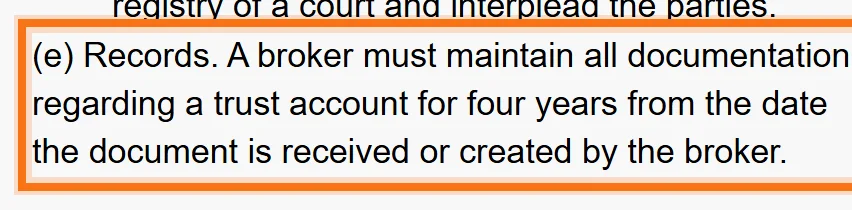
The old manager's broker has duties too. TREC rule 535.146 treats rent and security deposits held for you as trust money, requires a monthly accounting to you if there has been activity, and says that when a party makes a written demand for trust money, the broker must pay it to the party entitled to it within a reasonable time, not later than the 30th day after the demand. Records must be kept for four years:
Under Occupations Code 1101.652, TREC may discipline a license holder who fails to surrender to the owner, without just cause, a document the owner requested, or fails within a reasonable time to properly account for or remit money belonging to another person. The full reconciliation is in switching managers mid-lease: deposits, unpaid rent and repair bills. This is general information, not legal advice.
The order of repair: safety first, money second, the tenant third, the house last
Everything the audit finds gets fixed, but not in the order it was found:
- First: safety and unanswered repair notices. Property Code 92.052 requires a diligent effort to repair a condition that materially affects the physical health or safety of an ordinary tenant, once the tenant has given notice and is not delinquent in rent. Under 92.056, seven days is presumed a reasonable time to repair, and a landlord who is liable may face the tenant's remedies, including ending the lease or repair and deduct. A smoke alarm the tenant reports must be inspected and repaired within a reasonable time (92.258).
- Second: money. Reconcile the ledger, recover or fund the deposit, and set up rent collection with a clear date and method.
- Third: the tenant. New contact and payment details in writing, as below.
- Fourth: the house. Deferred upkeep that is not urgent, scheduled or left for the next turnover.
Owners often want the visible things fixed first. The order exists because a missed repair duty costs more than a worn fence. More in Texas landlord repair obligations.
The tenant: new contact details, in writing
A tenant in a neglected rental may be frustrated, behind because nobody followed up, or convinced the owner does not care. Reset that in writing: who manages the house now, where rent goes from which date, and how to submit a repair request. Then listen to the tenant's list of what went unanswered, and say plainly what will be fixed and in what order, without promising more than the lease supports.
The written notice also keeps you inside Property Code 92.201, under which a landlord discloses to the tenant, by one of the methods it lists, the name and street address of an off-site company primarily responsible for managing the dwelling. If you gave that information in the lease or in written rules and it becomes incorrect, 92.203 makes the landlord liable if it is not corrected by the seventh day after the tenant's written notice; the remedies in 92.205 include a judgment for one month's rent plus $100 and the tenant ending the lease. Two things to avoid: blaming the old manager in writing, and waiving rent or fees before the ledger is reconciled.
What cannot be fixed until the lease ends
A takeover does not rewrite the tenant's lease. If the old manager signed a lease with no pet addendum and the tenant has a pet, the lease as signed governs until it ends. If the rent is below what similar homes lease for, it stays until the lease allows a change. If the lease is silent on lawn care, the yard is a conversation, not a demand. The job is to document each gap, enforce what the lease does say, and prepare a renewal that corrects the rest.
If the tenancy is already month to month, Property Code 91.001 lets either side end it by notice; where the rent-paying period is at least a month, the tenancy ends on the later of the day in the notice or one month after the notice is given, unless the parties agreed otherwise in a signed instrument. Whether to offer a new lease now or keep a paying tenant and fix the paperwork at renewal is a judgment call; see should I let a good tenant stay month to month.
What fixing it costs, in categories rather than numbers
An honest figure only comes after the audit. What you can know in advance are the categories, so the first statement holds no surprises:
- Compliance catch-up: security devices, smoke alarms, and any repair a tenant reported that is still open.
- Deferred repairs that became urgent while nobody looked.
- A deposit shortfall, if the old manager cannot produce the full amount.
- Rent corrections either way: rent the tenant owes, or a low rent that stays until the lease ends.
- The new manager's onboarding, including any enrollment inspection, which should be on the written quote.
None of this is a reason to wait; most of it grows with time. In Fort Worth, a rental with fire safety or public health and sanitation code violations falls under the city's mandatory registration, at $200 a year per unit, so safety items have a city cost as well; see do I need to register my rental in Fort Worth.
How Perpetual takes over a rental from another manager
Our switching page sets out how we take over a rental from another manager, in order:
- The agreement first. We start with your current agreement's notice and termination terms, and we will be honest if it makes waiting the better decision.
- Notice and coordination. You give notice; after that, we handle the coordination with the current company.
- The records. We request the lease and related documents, security deposit, keys, tenant ledger, property records and open work orders, and separate open repair bills from completed work and pending requests.
- The tenant. Tenants receive instructions on where to pay rent and how to submit maintenance requests, through a portal that takes photos.
- The enrollment inspection establishes a condition record as management begins: included on Full Service, $49 on Standard and $125 on Investor Special.
- Your first statement is the checkpoint for transferred balances and charges.
If keys or documents are missing, our page says that becomes a handover issue to address directly. You set a pre-approved spending limit; larger jobs come to you with a description, photos and a recommendation. Management is 10%, 9% or 7% (Investor Special, 5 or more units) of monthly rent, and any fee connected to the takeover is confirmed in writing before you sign. See property management in Fort Worth and our written guarantees, or call 682-593-7033.
For the services, the fees on each plan and the north Fort Worth neighborhoods we serve from our North Richland Hills office, see our Fort Worth property management page.
The takeaway: Get the records before you fix anything: lease, ledger, deposit record, keys, open work orders and the tenant's written requests. Then fix safety and repair notices first, money second, the tenant's contact details third and the house last, and enforce the lease you inherited until it ends.
Questions owners ask
Who can take over a badly managed rental in Fort Worth?
A licensed brokerage can take it over mid-lease; TREC rule 535.4 requires a license for anyone who controls the rent for you. Look for one that asks for the lease, ledger, deposit record and open work orders before quoting, explains how it will check the house, and reads your current agreement's notice terms with you first.
Will I lose my tenant when I change property managers?
Usually not. The lease stays in force, and the tenant needs clear written instructions: who manages the house now, where to pay rent from which date, and how to request repairs. Listen to what went unanswered, say what will be fixed and in what order, and do not blame the old manager in writing.
Can a new property manager change my tenant's lease?
Not during the current term. The lease the old manager signed stays in force until it ends; the new manager enforces what it says and prepares a corrected renewal. If the tenancy is month to month, Property Code 91.001 lets either side end it by notice, so a new lease can be offered sooner.
What happens to the security deposit when I switch managers?
Property Code 92.105 covers a change of owner, not of manager, so you stay answerable for the deposit as the owner. Request the amount, the record and the funds from the old manager. TREC rule 535.146 requires the broker to pay trust money due within 30 days of a written demand.
How long does it take to fix a badly managed rental?
Safety items and unanswered repair notices come first, because the Property Code presumes seven days a reasonable time to repair. The ledger and deposit follow in the first statement cycle. Lease gaps such as a missing pet addendum or a low rent wait until the lease ends, and cosmetic work is scheduled rather than rushed.
What should I request from my old property manager when I switch?
In one written request: the signed lease and addenda, the tenant ledger, the security deposit with its record, the last trust accounting and final disbursement, open work orders and invoices, the tenant's repair requests, the move-in condition report and inspection photos, and every key, code and remote. Keep a copy of the request.
Do I have to tell my tenant who the new manager is?
Send the new details in writing on the first day. Property Code 92.201 governs disclosure of the name and street address of an off-site management company primarily responsible for the dwelling, and under 92.203 a landlord who gave that information in the lease or written rules is liable if it is not corrected by the seventh day after the tenant's written notice.
Related services
Property management in Keller, North Richland Hills and Fort Worth. How full-service management works in Tarrant County →