
Key takeaways
- Managing a rental for someone else is broker activity in Texas. A sales agent may do it only when sponsored by a licensed broker and acting for that broker (Occupations Code 1101.351).
- A sales agent may not keep a trust account. Rent and deposits go to the sponsoring broker's trust account (TREC rule 535.146).
- The broker is responsible for the agent's property management activity and must set the scope of what the agent may do in writing (TREC rule 535.2).
- Judge both on documents: the broker's name, a sample statement, written criteria, a sample inspection report and one page of fees.
What is the difference between a property management company and an agent who manages rentals on the side? In Texas, less than the first phone call suggests on licensing and more than it suggests on systems. Both must work under a licensed broker, and both must send rent and deposits through that broker's trust account. For an owner in Fort Worth, Keller or North Richland Hills, the real differences are who covers when one person is busy, whether screening and inspections run on written standards, and what you can see each month.
This guide covers what Texas law requires of both, what "managing agent" means, where the two arrangements really differ, when the side arrangement is reasonable, and five questions that sort them out quickly.
Agent on the side vs management company: what to check
Here is what Texas requires of both arrangements, and what to ask each one to show you:
| Question | What Texas rules require of both | Ask the agent | Ask the company |
|---|---|---|---|
| Who is licensed and responsible? | Broker activity needs a license; a sales agent must be sponsored by a broker and act for that broker (Occ. Code 1101.351) | Which broker sponsors you, and has that broker approved this management in writing? | Who is the designated broker, and is the company licensed as a broker? |
| Where do rent and deposits sit? | In a broker's trust account; a sales agent may not keep one (TREC rule 535.146) | Show me the broker's trust account process | Show me how deposits and rent are held and disbursed |
| What do I receive each month? | An accounting at least monthly when the trust account has activity (TREC rule 535.146) | A sample statement | A sample statement and the owner portal |
| Who covers when the person is away? | Nothing in the rules | Who does my tenant call, and can that person approve a repair? | Who answers, and what is the emergency process? |
| What if a mistake costs money? | A business-entity broker needs $1 million E&O insurance if its designated broker owns less than 10% (Occ. Code 1101.355) | Does your broker's coverage include property management? | What coverage do you carry, in writing? |
How to read this table: the second column is the floor the law sets for both, so it does not separate them. The last two columns do. An answer you can see on paper counts; a reassurance does not.
Why the two offers sound the same on the first call
Both will tell you they will find a tenant, collect rent, handle repairs and send you money each month. Both will quote a percentage of rent and a leasing fee. On a thirty-minute call with no documents in front of you, there is almost nothing to separate them.
The separation shows up in questions a first call rarely covers: which broker is responsible, where the deposit will be held, who answers when the person you hired is unavailable, and what a statement and an inspection report look like. Ask for documents, not descriptions. Neither side is being dishonest; they are built for different jobs, and the documents show which job each was built for.
Managing agent vs management company: what the terms mean in Texas
In Texas law the two terms describe two sides of the same role. Managing agent is the role: Property Code 92.207 makes a managing or leasing agent, on-site or off-site, the landlord's agent for notices under the disclosure subchapter and for government notices about health, safety or nuisance violations on the property. If the landlord's name and Texas business address were never given to the tenant in writing, whoever collects the rent fills that role.
Management company is the business: section 92.201 requires a landlord to disclose, as that section provides, the record owner and, if an off-site entity is primarily responsible for managing the dwelling, that company's name and street address. An agent managing on the side fills the managing-agent role too; the system behind the person is what differs.
Licensing: who is responsible for your rental
Managing a rental for someone else is licensed work in Texas. Occupations Code 1101.002 includes in the definition of a broker a person who, for a commission or other valuable consideration, leases real estate for another or controls the acceptance or deposit of rent from a resident of a single-family residential unit. Section 1101.351 says a person may not act as a broker or sales agent without a license, and a licensed sales agent may not engage in brokerage unless sponsored by a licensed broker and acting for that broker.
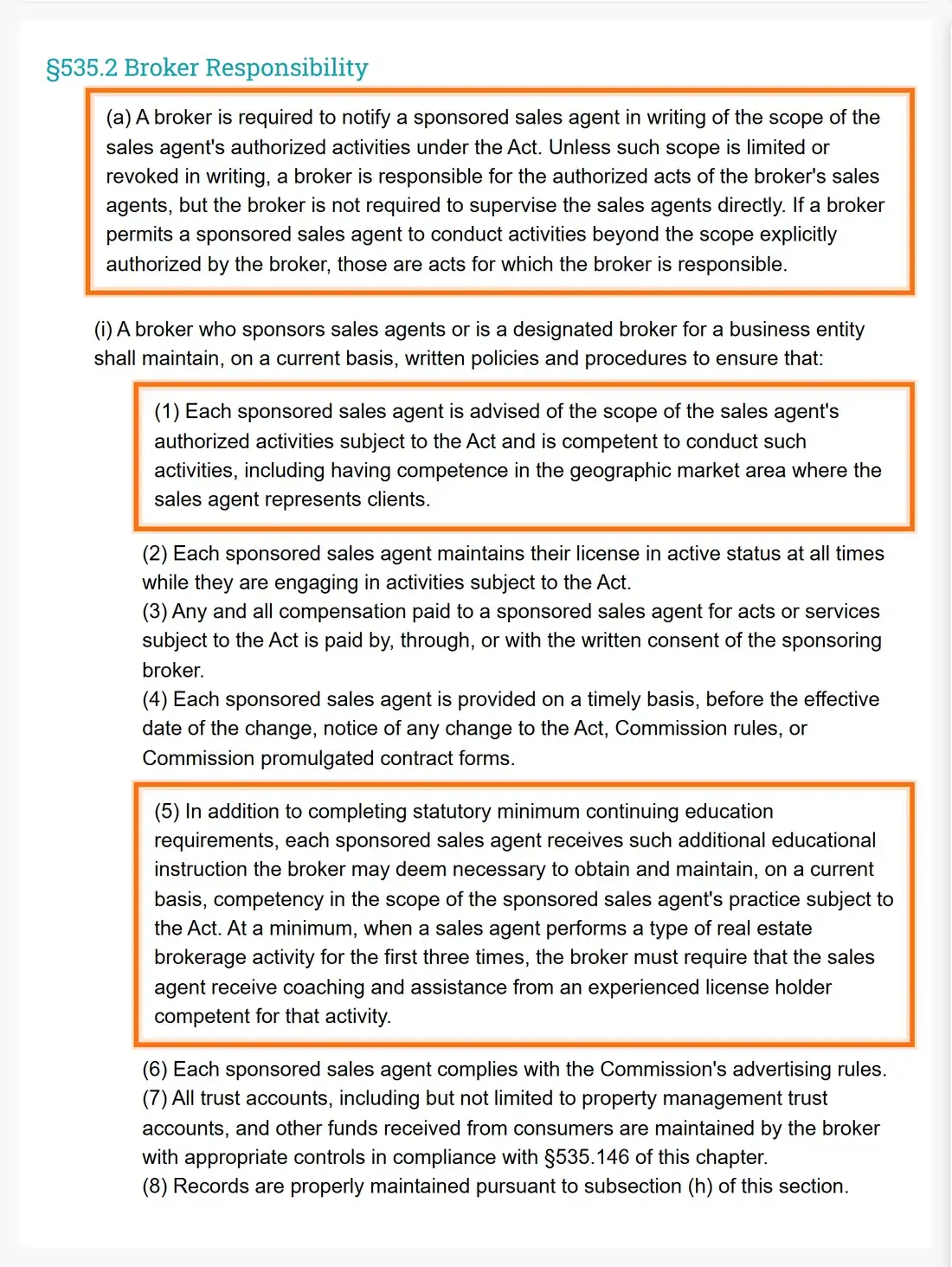
The Texas Real Estate Commission's rule 535.2 puts the responsibility on that broker. The broker must notify a sponsored sales agent in writing of the scope of the agent's authorized activities, is responsible for any property management activity by the agent that requires a license, and must have written policies making sure the agent is competent for the work, including coaching from an experienced license holder the first three times the agent performs a type of brokerage activity:
So the first question for an agent who offers to manage is simple: does your broker know, and is property management inside the written scope your broker gave you? A license search takes minutes; see how to verify a property manager's Texas license. The licensing law does not apply to an owner, or the owner's employee, leasing the owner's own property (section 1101.005).
Trust accounting: where your rent and the deposit sit
TREC rule 535.146 treats rent, security deposits and any money held for another person as trust money. A broker must hold it in a designated trust account and must not mix it with personal or operating money; placing trust money in a broker's personal or operating account is evidence of commingling. A sales agent may not maintain a trust account at all: any trust money an agent receives must be delivered immediately to the sponsoring broker.
That is where side arrangements most often drift. Rent forwarded by personal transfer, or a deposit parked in a business checking account "for now", does not match the rule. The same rule requires the broker to keep a record of every deposit and withdrawal and to give each beneficiary an accounting at least monthly when there has been activity. Ask any candidate for a sample statement; the owner statement explained shows what a complete one contains, and how to know your rent and deposit money is protected covers the questions to ask.
Coverage: what happens when one person is unavailable
An agent who sells houses has two jobs competing for the same hours. When a buyer needs a showing at 6 p.m. and your tenant's water heater fails at 6 p.m., one of them waits. That is the shape of the work, not a character flaw, and vacations and closing weeks create the same gap.
The question to put to anyone, agent or company, is concrete: when you are unavailable, who exactly does my tenant call, and can that person approve a repair within the limit I set? A company should answer with a process, an agent with a name. How the night calls should work is in how property managers handle after-hours emergencies.
Systems: screening, inspections and the lease
Three systems matter, and each can be checked on paper. Written screening criteria applied the same way to every applicant are the protection against a disputed tenant decision; an agent who screens a few applicants a year may not have them written down. Inspections with photos at move-in, during the tenancy and at move-out are what support a deposit deduction. And a current lease with the addenda your property needs (HOA rules, pets, pool) settles most disputes before they start. Ask each candidate for the criteria, a sample inspection report and the lease form.
Maintenance: who calls the plumber, and what it costs
An agent's handyman may be a good tradesperson. The questions are what happens when he is busy, whether he is insured for work in your house, and who finds a plumber at night. Ask both candidates the same billing question: is maintenance passed through at the vendor's price, marked up, or charged a coordination fee, and will I see the vendor's original invoice? The answer should be one written line.
Insurance and risk: who absorbs a mistake
Management mistakes can be expensive: a missed deposit deadline, a disputed screening decision, a delayed repair. Texas sets one floor: under Occupations Code 1101.355, a business entity licensed as a broker must maintain errors and omissions insurance of at least $1 million per occurrence if its designated broker owns less than 10% of the entity. Beyond that floor, coverage is a business choice, so ask to see it in writing.
For an agent managing on the side, ask whether the sponsoring broker's coverage includes property management. If the broker never approved the arrangement, nobody may have asked. Your own landlord policy covers the house, not someone else's handling of your tenant's deposit. More on this in property manager insurance and liability for mistakes.
When the side arrangement is a reasonable choice
An agent managing on the side can work well. It tends to work when:
- The sponsoring broker has approved property management in writing and runs the trust account, and you have seen a statement.
- The agent treats the few doors as a steady part of the business, not a favor.
- You live nearby, know the house, and can step in when the agent is unavailable.
- The tenant is long-term and the home has few systems near the end of their life.
- You have read the lease the agent uses and it fits your property.
If all five are true, the personal attention can be excellent. If two or more are false, you are relying on goodwill where a system should be. If what you really want is only a tenant found and placed, see hiring someone to find a tenant without ongoing management.
Five questions that separate the two in ten minutes
Ask these of anyone offering to manage your home, agent or company, and listen for documents rather than reassurance:
- Which broker is responsible for this, and is property management in writing within your authorized scope?
- Where will my tenant's deposit and my rent be held, and may I see a sample monthly statement?
- When you are unavailable for a week, who does my tenant call, and can that person approve a repair?
- Will you send your written screening criteria and a sample inspection report?
- Will you list every fee, and how maintenance is billed, on one page?
Anyone who manages seriously can produce all five within a day. Texas also requires a license holder to give you the Information About Brokerage Services notice at the first substantive communication (TREC rule 531.20), which tells you who the broker is. More warning signs are in red flags when choosing a property manager.
How Perpetual handles this
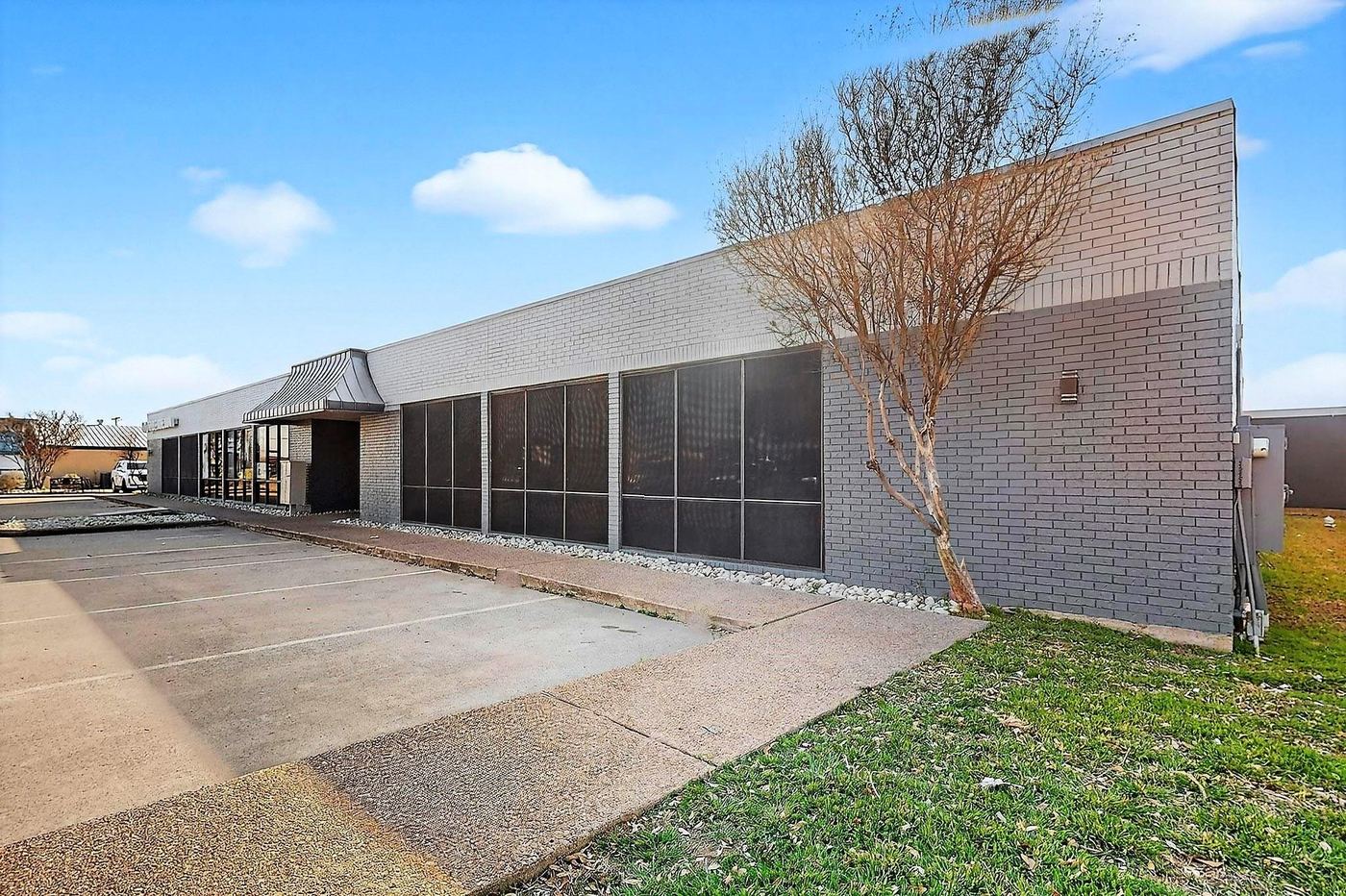
Perpetual Property Management is a broker-owned company in North Richland Hills, a DBA of Perpetual Realty Group, LLC. Justin Brown is a Texas Broker and owns both companies, and our site footer lists the brokerage license (TREC 9008702-BB) and his broker license (TREC 549418-B). We manage homes in Keller, North Richland Hills, Fort Worth and nearby. What our site states that answers the five questions:
- Statements. Monthly statements and disbursement history in the AppFolio Owner Portal, and rent we collect is disbursed to you by the 10th of each month or that month's management fee is waived (our guarantees).
- Coverage. 24/7 emergency response on every plan, and calls and emails answered within one business day or that month's fee is credited.
- Written standards. Every adult screened against our published rental criteria, an annual property inspection on every plan, inspection photo reports in your portal, and a 360-degree inspection at every move-in and move-out.
- Fees on one page. Management at 10%, 9% or 7% of monthly rent by plan, and maintenance coordination as a percentage of the vendor's invoice, with the original invoice always in your portal (pricing).
The insurance we carry and how our trust accounts are set up are confirmed in writing before you sign. Ask us the five questions above, judge us the same way you judge anyone else, and call 682-593-7033.
The takeaway: Texas holds an agent who manages on the side and a management company to the same broker and trust account rules; choose on the documents each can show you, not on the fee or the first call.
Questions owners ask
Can a real estate agent legally manage rental property in Texas?
Yes, if the agent is sponsored by a licensed broker and acting for that broker (Occupations Code 1101.351). Under TREC rule 535.2 the broker is responsible for the agent's property management activity and must set the scope of the agent's work in writing. Confirm the broker has approved it and verify the license.
Is it cheaper to have my agent manage my rental?
The quoted fee may be similar, so compare the whole fee list: the management percentage, the leasing fee, renewal charges and how maintenance is billed. Then compare what the fee buys: coverage when the person is away, written screening and inspection records, and monthly statements. The cheaper quote is not cheaper if you end up doing the missing parts yourself.
What is a trust account in property management?
An account at a bank authorized to do business in Texas where a broker holds trust money, such as rent and security deposits, separately from personal or operating money. TREC rule 535.146 requires it for brokers, bars sales agents from keeping one, and requires an accounting at least monthly when there has been activity.
Who covers my property if my manager quits or is unavailable?
With one person, every vacation, illness or busy week is a coverage gap, so ask who your tenant calls and whether that person can approve a repair. A company should describe its process in writing. Your lease, deposit and records belong to the rental, and Occupations Code 1101.652(a)(5) lets TREC discipline a license holder who fails, without just cause, to surrender a document the owner requests.
When does a management company make more sense than an agent?
When you live far away, the home has older systems, the tenant is new, or you cannot step in yourself when the agent is unavailable. The more of those apply, the more a dedicated system matters.
Should I use a real estate agent or a property manager to rent out my house?
Both must work under a Texas broker, so decide on what each can show you: the responsible broker, a sample statement, written criteria, a sample inspection report and one page of fees. An agent works best when the broker has approved the arrangement and you can step in nearby.
What is the difference between a managing agent and a management company?
In Texas, managing agent describes the role: Property Code 92.207 makes a managing or leasing agent the landlord's agent for certain notices. Management company describes the business: section 92.201 requires the landlord to disclose, on request, the name and street address of an off-site entity primarily responsible for managing the dwelling. A management company acts as the managing agent.
Property management in Keller, North Richland Hills and Fort Worth. How full-service management works in Tarrant County →