Key takeaways
- Syndication: the listing is entered once, in one source, and feeds carry it to the rental sites. Nobody types it into each site by hand.
- Our marketing page names the sites: Zillow, Trulia, HotPads, the Apartments.com network and more, plus our own available rentals page.
- Once the copies are out, each site updates on its own schedule, so a price change or a "leased" status can lag.
- Scammers copy live listings. One official listing page and one application path are the defense.
- Our listing guarantee: live on every major rental platform within 5 business days of market-ready, or the first month's management fee is waived.
Where does a rental listing show up? Wherever the feed sends it. Rental listing syndication means the home is entered once, with its photos, rent, availability and showing link, and that one source pushes copies to the rental sites renters actually search. For a rental in Fort Worth, Keller or North Richland Hills, that is how a renter moving from another state can find the house the same week it goes live.
This guide explains how listing syndication works, where a managed listing goes, what you cannot control once the copies are out, how scammers use them, and how to check your own listing in ten minutes.
Where a managed listing goes, at a glance
Here are the places our marketing page says a listing goes, what a renter does there, and what you, the owner, should check:
| Where the listing appears | What it is | What the renter can do | What to check |
|---|---|---|---|
| Zillow, Trulia, HotPads | Rental search sites that receive the listing by feed | Search, save, send an inquiry | Rent, photos, availability date, pet policy |
| Apartments.com network | A group of rental search sites, also fed | Search and inquire | Same as above, and that the contact is the manager |
| Other major rental platforms | "And more," as our page puts it | Search and inquire | Ask which ones, and check the price matches |
| Our own available rentals page | The official listing every copy should point back to | Book a showing and apply online | That it is the only place applications are taken |
How to read this table: the first three rows are copies; the last row is the source. If a copy disagrees with the source, the source is right, and a copy that asks for money or an application somewhere else is a scam. Which "other platforms" a given home goes to is worth asking in writing.
What is rental listing syndication and how does it work?
Listing syndication is a chain with one start. The listing is created in a source system with the photos, rent, description, availability date and showing instructions. That source sends a feed to a set of destination sites, and each one builds its own copy. Real estate listing syndication for homes for sale works the same way; for rentals, the destinations are the rental search sites.
Each destination formats the copy its own way. It may trim the description, cap the number of photos or add its own information around the listing that the owner never wrote. The copy is the site's; only the source is yours.
An owner who lists alone usually types the home into one or two sites by hand. Those copies do not update each other, so a price change has to be made in every place, by hand, every time. A separate path some brokerages use is the MLS; whether a rental belongs there, and how agents use it, is covered in where a property manager will advertise your rental.
How listing sites syndicate rental ads to multiple platforms
How do listing sites syndicate rental ads to multiple platforms? Through the manager's listing software. The manager keeps one master listing, and the software sends it to every site it is connected to, the same way apartment listing syndication works for a large complex. The same software usually collects every inquiry in one inbox, whichever site it came from, and points renters to one showing calendar and one application.
That inbox is where a manager's control lives. Every inquiry gets the same answer and the same next step, whether the renter found the home on Zillow, on HotPads or on our own listings page. A self-listed home, by contrast, sends calls and messages to the owner's phone from every site at every hour.
Two things to know about the copies. The same home can arrive at a site twice, through two routes, and show slightly different details. And a copy can stay visible for a while after the source is marked leased, until that site processes the change.
Why reach matters more than any single site
Renters do not all search the same way. One uses a single app with a saved search. Another searches a map from out of state. A family relocating for work may have an agent doing the searching. A listing that is missing from one of those places is invisible to that renter, and there is no way to know afterwards whether that was the one who would have signed.
Reach also compresses time. Our marketing page puts it plainly: a rental listing gets most of its attention in its first two weeks. A home that appears everywhere on the first day gets that attention all at once; a home that trickles onto sites one by one never does. On the same page's figure, at $2,000 a month in rent, every week of avoidable vacancy costs about $460 in rent not received. How to market a rental property in DFW covers the rest of the launch.
What you cannot control once the copies are out
Syndication is one-way. Once the feed has carried the listing out, each site owns its copy and refreshes it on its own schedule. The same problems come up again and again:
- A rent change at the source takes time to reach some sites, so inquiries arrive quoting the old number.
- A home marked leased at the source stays up on a site for a while and keeps drawing calls.
- A site trims the description or drops photos past its limit.
- Sites nobody has heard of pick up copies and show stale details long after the home is gone.
None of this can be fixed from the destination side. What works is a disciplined source: change the rent once, in the master listing, and let it carry; close the listing at the source the day the lease is signed; and keep the description tight enough that a trimmed copy still has the facts a renter needs. If your listing shows the wrong price, the fix is at the source, then patience. Is the rent too high or the marketing bad covers what to do when the copies are right and the phone is still quiet.
Scam listings that copy your home
Syndication makes a listing easy to copy, and scammers do. The pattern repeats: they take the photos and description from a live listing, post it somewhere else at a lower rent, say the owner is away and cannot show the home, and ask for a deposit or an application fee by wire or payment app before anyone has seen the inside. The renter loses the money; the owner gets strangers at the door and a house with a story attached.
The defenses are practical:
- One official listing page, named in every copy, and one application path. Ours: every home we manage is on our own listing page, never on Facebook Marketplace or Nextdoor.
- Verified showings. A self-guided tour with identity verification and a one-time code cuts off the fake landlord who claims to have the key.
- A search of your own address every few days while the home is listed, and a report to any site hosting a copy you did not authorize.
- A yard sign with the manager's real phone number, so a renter at the curb can check.
How property managers protect listings from rental scams covers what to do if a renter was already taken in.
How to check where your listing shows up
Whether you self-manage or hire it out, spend ten minutes in the first week checking the listing from the renter's side:
- Search the full address in quotation marks in a search engine and open every result. Note any site showing a different rent or status, or asking renters to contact someone else.
- Search the address directly on Zillow, Trulia, HotPads and Apartments.com. Confirm the photos, rent, availability date and pet policy match the master listing.
- Send an inquiry from one site and see who answers, and how fast.
- Ask your manager for the list of sites the listing went to and, after the lease, where the inquiries came from.
Repeat the search after any price change and again a week after the lease is signed to confirm the copies came down. A listing still live long after leasing is raw material for the scam copies above.
What to ask a manager about syndication
Before you hire anyone to lease the home, ask five questions and get the answers in writing:
- Which sites receive the listing, by name, and through what feed?
- Is there one official listing page, and is every application taken there?
- Where do inquiries go, and how fast are they answered?
- How are showings booked, and how is a stranger kept from getting into the home?
- What happens to the listing on every site the day the home leases?
A clear answer to all five tells you the manager controls the source. A vague one tells you the listing will travel wherever the software sends it and nobody will be watching. The photos and the copy matter as much as the reach: see rental listing photos that rent faster and our marketing and showings service.
How Perpetual handles this
Perpetual Property Management is broker-owned, with our office at 5755 Rufe Snow Dr in North Richland Hills, and we lease and manage homes in Keller, North Richland Hills, Fort Worth and nearby. What our site states about where your listing goes and how it is controlled:
- Syndication across the major rental sites: Zillow, Trulia, HotPads, the Apartments.com network and more, plus our own available rentals page.
- One listing page: every home we manage is on our own listing page, never on Facebook Marketplace or Nextdoor.
- Showings booked from the listing: self-guided and scheduled showings through ShowMojo, with identity verification, and access that is logged, time-limited and monitored. Self-guided tours get a one-time access code.
- Professional photography and a written description, and our rental criteria published so renters know what we verify before they pay a fee.
- A written activity report every week while the home is vacant, with showing feedback and market notes, or that month's management fee is credited.
Your home is live on every major rental platform within 5 business days of being market-ready, or we waive the first month's management fee, subject to the Guarantee Addendum (see our guarantees). What our site does not state, such as whether a particular home also goes into the MLS, the full list of sites behind "and more," and how fast a closed listing drops off each site, is confirmed in writing before you sign. To see a live listing of ours, call 682-593-7033.
The takeaway: Syndication puts one listing on many sites at once, so the owner's job is to keep that one source right, check the copies, and make sure every renter is pointed back to one official page and one application.
Questions owners ask
Where will a property manager advertise my rental?
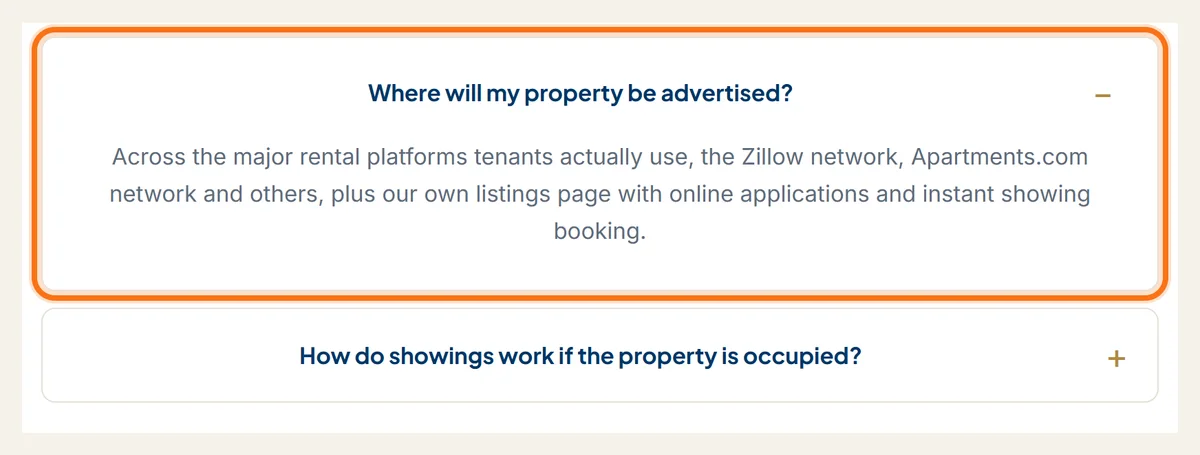
Our marketing page names Zillow, Trulia, HotPads, the Apartments.com network and other major rental platforms, plus our own listings page with online applications and instant showing booking. The listing is entered once and syndicated by feed. Your home is live on every major rental platform within 5 business days of market-ready, or the first month's management fee is waived, subject to the Guarantee Addendum.
Does a rental need to be in the MLS?
Not to be found by renters searching on their own: our marketing page names the rental sites and our own listings page, not the MLS. The MLS is a separate system used by real estate brokers and agents. Whether a particular home also goes into it is a question to ask the manager, and to have answered in writing before you sign.
Why is my rental listing showing the wrong price online?
Because syndication is one-way and delayed. A price change at the source takes time to reach each site, a home can arrive at a site twice through two routes, and some sites keep old copies. Change the price once in the master listing, let it carry, and search the address again a few days later to confirm the copies caught up.
How do property managers protect listings from rental scams?
By keeping one official listing page and one application path, naming them in every copy, verifying identity before any self-guided showing, searching the address for copies while the home is listed and reporting any copy that asks for money elsewhere. Every home we manage is on our own listing page, never on Facebook Marketplace or Nextdoor.
How do I know if my property manager is marketing my rental widely?
Search the address yourself on a search engine and on Zillow, Trulia, HotPads and Apartments.com, confirm the rent and status match, and ask the manager which sites received the listing and where inquiries go. While the home is vacant, our weekly written activity report gives you showing feedback and market notes, so you can see the listing working.
What is rental listing syndication and how does it work?
It is entering a rental listing once and letting a feed send copies to many rental sites, instead of posting it on each one by hand. The manager's software holds the master listing, pushes it to the connected sites, and collects every inquiry in one inbox. A price change or a "leased" status is made once at the source and then carries out to the copies.
Is listing syndication the same for rentals and homes for sale?
The idea is the same: one source, many copies. For a rental managed by us, the source is our master listing and the copies go to rental sites such as Zillow, Trulia, HotPads and the Apartments.com network. Either way, only the source is under your control.
Related services
Property management in Keller, North Richland Hills and Fort Worth. How full-service management works in Tarrant County →