Key takeaways
- The FTC describes the cloned-listing scam plainly: scammers copy a real listing's photos and description, replace the contact information with their own, and repost it elsewhere.
- The FTC's own check for renters is to see whether the home is listed on the rental company's own website; a manager with one official listing page gives renters that check.
- The Texas Attorney General warns renters to be especially cautious about a deposit requested before they see the property in person, and about payment outside the listing website.
- Fakes are reported to local police, the site that carried the ad, ReportFraud.ftc.gov and the attorney general; the FTC says it cannot resolve individual reports.
- Money sent by wire, gift card or cryptocurrency is like cash, the FTC says: once it is gone, the renter probably cannot get it back.
How do property managers protect listings from rental scams? On a rental in Fort Worth, Keller or North Richland Hills, a manager cannot stop someone from copying your photos, but it can make the copy easy to expose: the home published only where the manager puts it, one official listing page with the real contact details, showings and applications through a single verified path, and fast reports when a clone appears.
Below: how the scam works, the warning signs next to the real process, publishing, watermarks and signs, reporting, the renter who already paid, and what we do.
Scam warning signs next to the real process
Here are the warning signs the FTC and the Texas Attorney General describe, and what the real process looks like on the homes we manage, as our own pages state it:
| Warning sign | Who describes it | The real process on our homes |
|---|---|---|
| The same address listed under a different owner or company | FTC | Every home we manage is on our own listing page, never on Facebook Marketplace or Nextdoor |
| A "landlord" who is away and cannot show the home | FTC; Texas Attorney General | Self-guided tours through ShowMojo with identity verification; access is logged, time-limited and monitored |
| A deposit requested before you see the property in person | Texas Attorney General | Choose a home, pick a time, tour it, then apply online |
| Payment by wire transfer, gift card or cryptocurrency, or outside the listing website | FTC; Texas Attorney General | Applications are made online from our own listings page |
| Rent far below other rents in the area | FTC | Rent set from comparable leased homes through a rental analysis |
| A request to send screenshots of your credit scores | FTC | Our written rental criteria are public, so applicants know what we verify before paying a fee |
How to read this table: each row is a test a renter can run in a minute, and each one fails for a clone because the scammer controls the contact details but not the official listing page, the showing system or the application. Your listing is protected to the extent renters can find the real version and check it.
What a cloned listing is
The FTC describes two versions. In the first, scammers copy the pictures, description or virtual tour from a real online listing, replace the agent's contact information with their own, and post the copy on another site, so anyone who calls reaches the scammer. In the second, they invent a listing for a place that is not for rent or does not exist, usually with low rent, an owner who claims to be out of the country, and pressure to pay fast.
The goal is money for an application fee, deposit or first month's rent, or personal information such as a Social Security number and pay stubs. The FTC adds a detail that matters for owners: scammers may set up a self-guided tour copied from landlords who use self-tour services, to look legitimate. That is why the check has to be the official listing, not just a tour.
The damage to you is indirect but real: confused renters at the door, complaints against the real listing, and lost days while a genuine applicant hesitates.
Controlling where the listing appears
A manager decides where the listing goes and keeps one page that is the official version. The FTC tells renters to search the address with the owner's or company's name and to go to the rental company's own website to see if the property is listed there too; if it is not, the ad may be a scam. A manager who lists every home on its own site gives renters exactly that check.
Our marketing syndicates listings across the major rental sites, naming Zillow, Trulia, HotPads and the Apartments.com network, plus our own available rentals page. Our showing page states that every home we manage is on our own listing page, never on Facebook Marketplace or Nextdoor. A renter who finds one of our homes on a marketplace post therefore has a reason to stop. Where a listing travels after syndication is explained in where your rental listing actually shows up.
Watermarks, listing text and the yard sign
Watermarks. A small company mark on the photos does not stop copying, but it makes a clone contradict itself: the photos name one company and the contact names another. Scammers crop marks, so the mark works best placed where cropping would ruin the photo.
Listing text. A line in the description naming the company and saying where applications are accepted survives in clones, because scammers often copy the description whole.
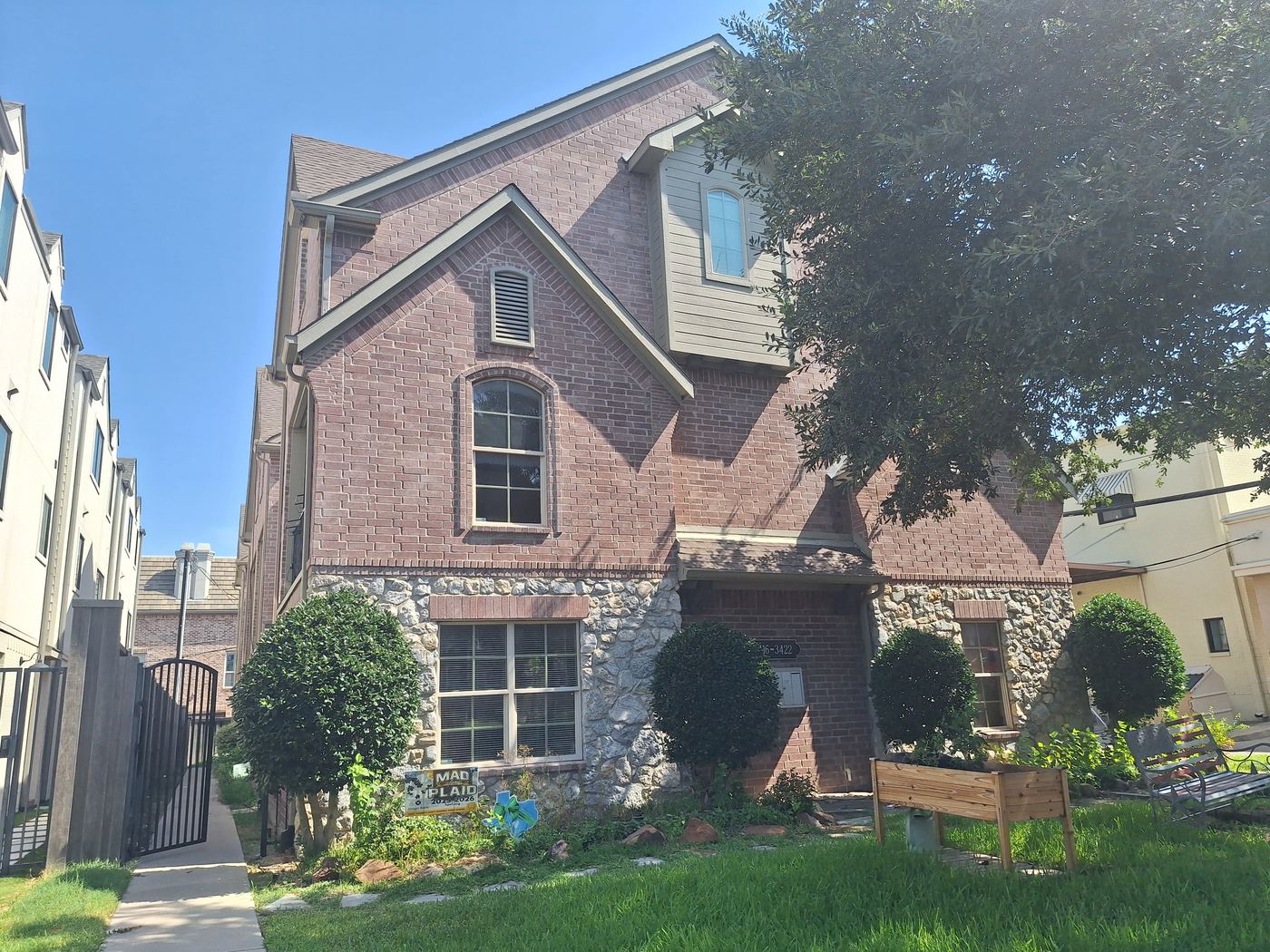
The yard sign. A sign at the house with the company's name and real phone number is the one thing a scammer cannot copy onto the property. A renter who drives by after seeing an online ad meets the real contact.
Whether these are used on your home, and how, is part of the marketing plan you agree with your manager.
One showing path and one application path
The strongest protection is procedural: a renter should never be able to pay anything to anyone before seeing the house through the manager's own system.
Showings. Our self-guided and scheduled showings run through ShowMojo. Our marketing page describes a controlled self-guided showing system with identity verification, and access that is logged, time-limited and monitored. Our showing page says self-guided tours get a one-time access code sent to the renter's phone, and that most showings are self-guided. There is also pre-showing qualification, with basic criteria checks before anyone gets access. Whether a self-guided tour is safe for the house itself is covered in are self-guided rental showings safe for my property.
Applications. Renters apply online from our own listings page, and the written rental criteria are public before anyone pays a fee. The Texas Attorney General's advice to be wary of paying outside the listing website only works when there is one website to point to.
Finding clones and reporting them
While the house is listed, search its address on the classifieds and marketplace sites, and answer any renter who calls asking "is this real?" by checking the ad they are looking at. When a clone turns up:
- Save it: screenshots, the URL, the contact details used.
- Report it to the site that carried it. The FTC lists the website where the ad was posted as one place to report.
- Report it to the FTC at ReportFraud.ftc.gov. The site says reports are shared with over 2,000 law enforcers, and that the FTC cannot resolve individual reports but uses them to investigate and bring cases.
- File with the Texas Attorney General. Its general complaint form covers scams. The office says a complaint under Texas law is open to the public, that it cannot give legal advice, and that complaints are reviewed to monitor consumer protection issues.
- Tell local police, as the FTC advises.
You can help: if a neighbor mentions your house advertised at a strange price, send the link to your manager that day.
What to tell a renter who already paid
When a renter arrives with a fake lease or a receipt, the answer is clear and humane: the listing was fraudulent, the house is not available on those terms, and here is the real listing if they want to apply. Keep a copy of what they were sent.
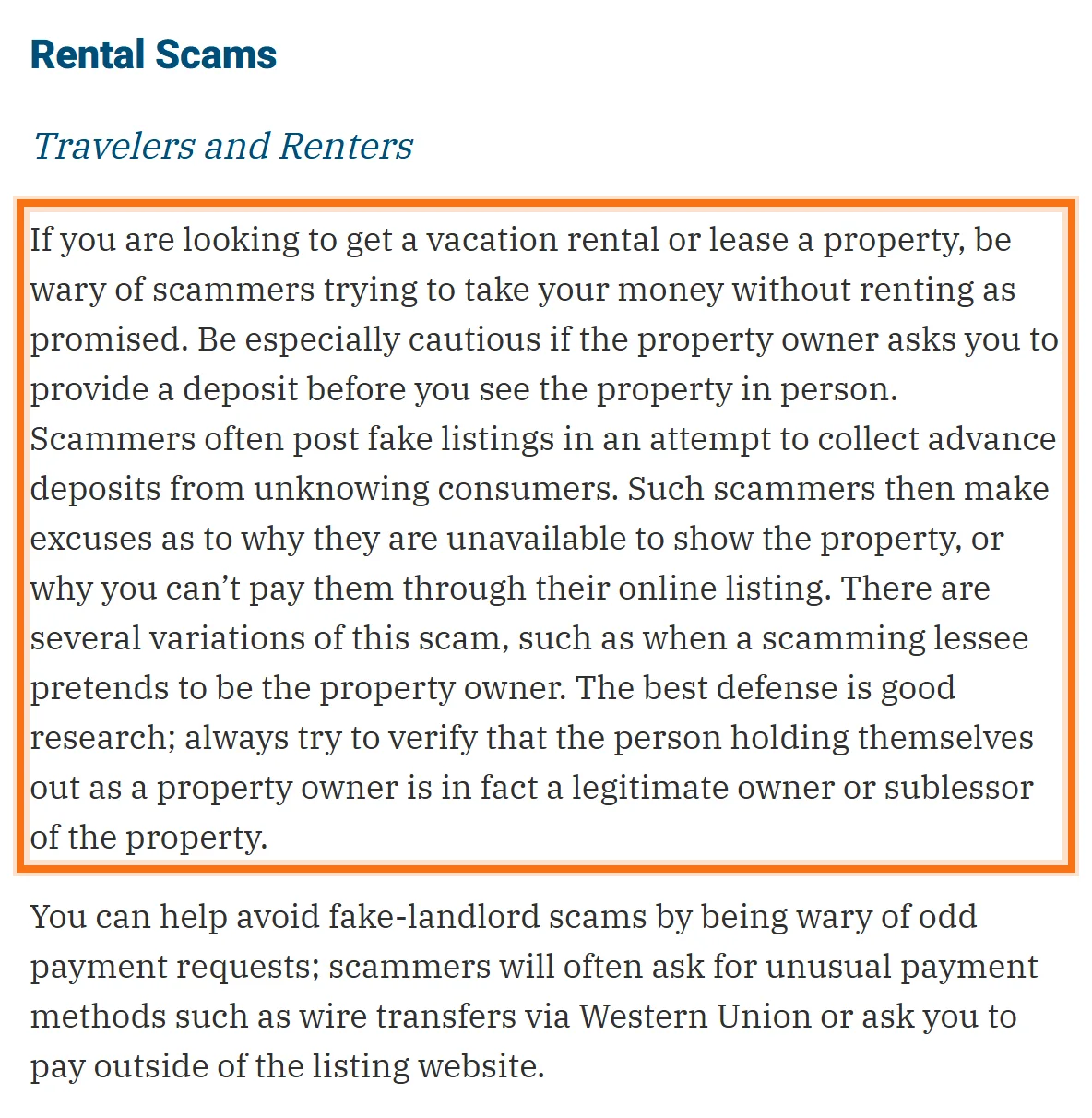
Then point them to the reporting steps: local police, the website where the ad ran, ReportFraud.ftc.gov and the Texas Attorney General. Be honest about the money: the FTC says that sending money by wire transfer, gift card or cryptocurrency is like sending cash, and once it is gone the renter probably cannot get it back. Do not promise anything you cannot deliver, and do not treat the victim as a trespasser unless they refuse to leave.
If they otherwise qualify, they can apply for a home through the real process like anyone else.
How Perpetual handles this
Perpetual Property Management is broker-owned, with our office in North Richland Hills, and we manage homes in Keller, North Richland Hills, Fort Worth and nearby. What our site states about listings and showings:
- One official listing page. Every home we manage is on our own listing page, never on Facebook Marketplace or Nextdoor, and is syndicated across the major rental sites (marketing and showings).
- Controlled showings. ShowMojo self-guided showings with identity verification and a one-time access code sent to the renter's phone; access is logged, time-limited and monitored.
- Public criteria and online applications from our own listings page.
- A real number to call. Renters with questions about a listing can call 682-593-7033.
- Reporting to you. While your home is vacant you get a written activity report every week, with showing feedback and market notes, under the Perpetual Promise.
Whether we watermark photos, use a yard sign, and how we search for and report clones of your listing is confirmed in writing before you sign. The leasing page covers what follows a showing. To talk it through, call 682-593-7033.
The takeaway: A clone cannot be prevented, only exposed: one official listing page, one showing and application path, marked photos and a yard sign with the real phone number, and fast reports to the site, ReportFraud.ftc.gov and the Texas Attorney General.
Questions owners ask
Am I liable if a renter loses money to a scam listing of my house?
The money went to the scammer, not to you, and the fake listing was not yours. Whether anyone other than the scammer could be held responsible is a question for a Texas attorney, and we do not answer it here. The practical exposure is confused renters at the door, complaints against the real listing and slower leasing. Report the clone quickly and keep copies of everything.
Can a scammer get into my vacant house to show it?
The FTC says scammers may set up a self-guided tour copied from landlords who use self-tour services. A controlled system limits that risk: our self-guided showings verify identity and send a one-time access code to the renter's phone, with logged, time-limited access. If you suspect anyone entered without authorization, tell your manager the same day so access can be checked.
Should I hide my address in the listing to prevent scams?
Hiding the address does not stop copying, because the scammer reuses the photos and invents the contact details, and it costs genuine inquiries from renters who search by map. The FTC's advice to renters is to search the address with the company's name and check the company's own website, which works best when the address is visible and the official listing is easy to find.
How do rental scams and fake listings affect property managers?
They cost time and trust. Renters call about a price the manager never set, some lose money and then show up at the house, and genuine applicants hesitate. A manager answers by keeping one official listing page renters can check, running showings and applications through a single verified path, and reporting clones to the site, ReportFraud.ftc.gov and the Texas Attorney General.
Where do I report a fake listing of my rental in Texas?
The FTC lists four places: your local law enforcement agency, the website where the ad was posted, the FTC at ReportFraud.ftc.gov, and your state attorney general. In Texas that is the Attorney General's consumer complaint form, whose general form covers scams. The Attorney General's office notes that a complaint filed with it is open to the public under Texas law.
What should a renter who already paid a scammer do?
Report it to local police, the website where the ad ran, ReportFraud.ftc.gov and the Texas Attorney General, and keep every message and receipt. The FTC warns that money sent by wire transfer, gift card or cryptocurrency is like cash and probably cannot be recovered. The renter can still apply for the real home through the official listing.
Related services
Property management in Keller, North Richland Hills and Fort Worth. How full-service management works in Tarrant County →