Key takeaways
- Tie the switch to a rent due date: the old company collects the month in progress, the new one collects from the next due date.
- The tenant needs one written instruction before that date: who to pay, from which due date, and how.
- The lease does not change with the manager. The rent, the due date and the late-fee terms stay the same.
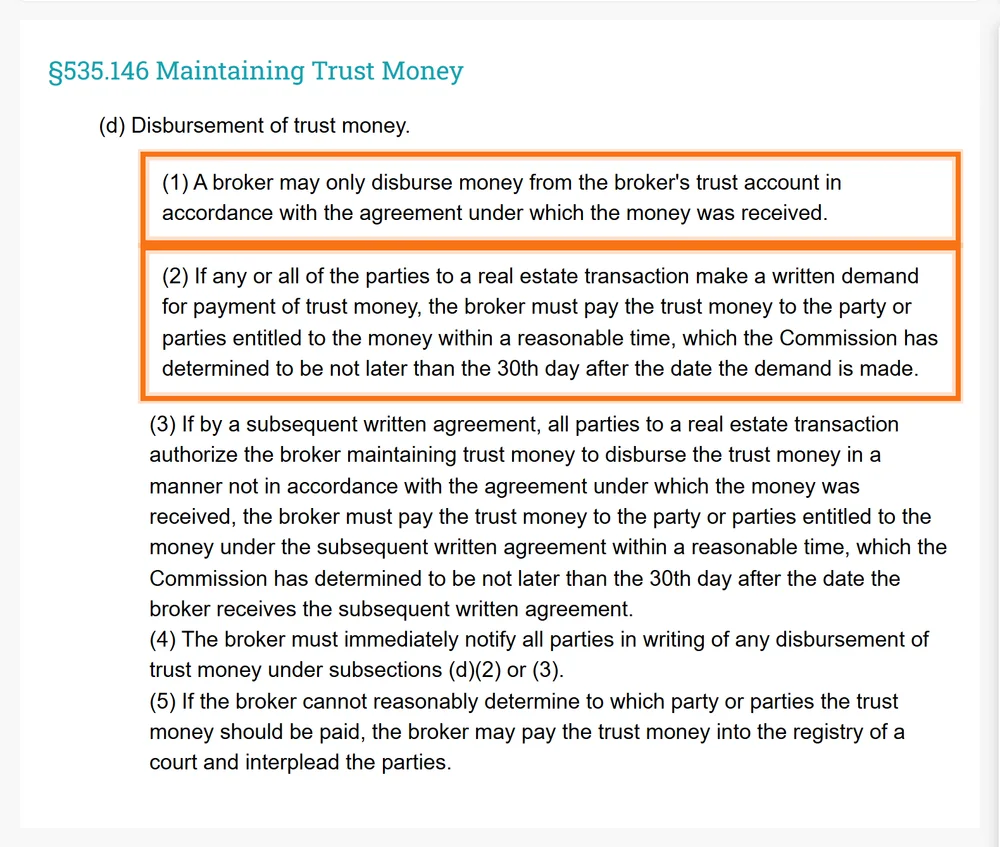
- A Texas broker holding your rent must disburse it as the agreement says and, on a written demand, pay it within 30 days (TREC rule 535.146).
- Expect one irregular month for your own payout while the two companies settle.
Can you switch property managers without interrupting rent payments? Yes. Rent is interrupted in a switch for one reason: nobody fixed the date on which the tenant stops paying one company and starts paying the other. On a rental in Fort Worth, Keller or North Richland Hills, tie the cutover to a rent due date, give the tenant written instructions before that date, and the money moves as it always has. The lease, the amount and the due date stay the same. Only the payee changes.
This guide is the rent side of a switch: the week-by-week cutover, the one rule that matters, the Texas rules behind it and what to do when a payment lands with the wrong company. The rest of the handover is in switching property managers.
The rent cutover, step by step
Here is the order that keeps rent moving when a tenant stays in place, who handles each step and what goes wrong if it is skipped:
| When | What happens | Who | If it is skipped |
|---|---|---|---|
| Before you give notice | Read the old agreement's notice and termination terms and pick an end date that matches a rent due date | You, with the new manager | An end date mid-month splits one rent payment between two companies |
| Notice given | Written notice to the old company with the end date, and a request for the lease, deposit, keys, tenant ledger and records | You | Records and money arrive late or in pieces |
| Before the next due date | The tenant gets written instructions: the new payee, the first due date it covers, how to pay and how to request repairs | You and the new manager | The tenant pays the old company out of habit or an automatic transfer |
| The due date | Rent goes to the new manager, which checks the ledger and follows up on any missing payment | New manager | A missed payment is not noticed until a late fee is in question |
| After the end date | The old company sends its final accounting and pays out what it still holds, including any rent that arrived after its term | Old manager | Your money sits in another company's trust account |
| First statement | The new company's first monthly statement shows the rent collected, its fees and the balances carried over | New manager | Transferred balances are never reconciled |
How to read this table: the third row is the one that protects the rent. Every other row can slip by a few days without the tenant noticing; the instructions to the tenant cannot arrive after the due date.
The one rule: one payee per month
A tenant should never be in a position where two companies could both claim the same month's rent. Almost every missed or late payment in a switch comes from breaking that rule: a termination that takes effect on the fifteenth, a tenant told to "start paying the new company" with no date, or payment instructions that arrive after the first.
The fix is to name the month. Rent for the month already in progress stays with the old arrangement. Rent from the next due date goes to the new company. Write "rent due on [date] and after" in the instructions to the tenant, and repeat it in any follow-up. The tenant then has one instruction, one date and one place to pay.
If the switch falls in the last few days of a month, move the rent cutover one cycle later. Let the old company collect the rent about to fall due and start the new company on the following due date. A clean start a month later beats a scramble that produces a late payment.
The Texas rules behind a rent cutover
No Texas statute sets a procedure for changing property managers. The lease stays in force, and the ordinary rules apply to the rent:
- Who the tenant deals with. Property Code 92.201 requires a landlord to disclose to the tenant the name and street address of an off-site company primarily responsible for managing the dwelling, on request or in the lease, and lets a correction be made by any of the methods it lists. Giving the tenant the new company's name and street address in writing keeps that information current.
- Late fees. Under Property Code 92.019, a late fee may be charged only if notice of it is in a written lease, the fee is reasonable, and rent has remained unpaid two full days after it was due. A new manager applies the late-fee clause in the existing lease; it cannot add one.
- Rent held by a broker. TREC rule 535.146 treats rent and security deposits held by a broker as trust money, kept in a trust account and never mixed with the broker's own money. The broker must account to each owner at least monthly when there has been activity.
- A change of manager is not a change of owner. Property Code 92.105, which makes a new owner liable for deposits, applies to a sale or other end of the owner's interest, not to a new manager.
This is general information, not legal advice.
Telling the tenant: the instruction that keeps rent on time
The tenant's instructions are the single document that decides whether rent arrives on time. They should fit on one page and answer five questions:
- Who manages the home now, with the company's name and street address.
- The first due date the new company collects, written as a date.
- How to pay: the portal or method, and that any automatic payment to the old company must be canceled.
- How to request repairs, and the number for emergencies.
- That the lease, the rent amount and the security deposit terms do not change.
Send them early enough that the tenant can set up the new payment method with time to spare before the due date, and confirm they arrived. Who signs the notice and what Texas requires in it are covered in who tells my tenants that the property manager is changing.

What happens when rent lands with the wrong company
It happens, usually because an automatic transfer was not canceled. The tenant pays the old company on the first for a month that belongs to the new one. The money is still yours and it is not lost, but it has to be moved.
If the old company is a licensed broker, it may disburse that money only as its agreement says, and if you make a written demand it must pay the money to the party entitled to it within 30 days (TREC rule 535.146). Put the demand in writing, name the amount and the month, and say whether it goes to you or to the new manager. Meanwhile the new manager notes on the ledger that the tenant paid, and when, and reminds the tenant in writing where to pay from now on.
Whether a late fee is fair in that situation depends on the facts and the lease, but a tenant who paid on time to the company they were last told to pay has not ignored the rent. Keep the emails that show what the tenant was told and when; they settle the question. The reverse case, a payment sent to the new company for a month the old one still covered, is handled the same way in the other direction.
Your own payout may move once, and why
The part that surprises owners is not the tenant's payment. It is their own. Two companies pay out on two schedules, and in the switch month you may see the old company's last disbursement on its usual date and the new company's first on a different one, with a longer gap between them than you are used to.
The old company may hold its final funds until it has reconciled the last charges and invoices, while the new company pays out on the schedule its agreement sets once rent has cleared. Ask both companies for their dates before the switch, so you can plan for a mortgage payment that falls between them. How a normal month runs is in when the property manager sends you the rent.
The other one-time item is any reserve. The old company returns what it held for you, and the new company may ask to fund its own under the new agreement, so for a short stretch one is on its way back while the other is being funded. Neither affects the tenant's rent, but both affect your cash that month.
What to ask the new manager about rent before you sign
Four questions, and the answers should be specific:
- On what date will the tenant be able to pay you, and how do you confirm they have the instructions before the due date?
- What do you do on the due date if the tenant has not paid, and when does the lease's late fee apply?
- If a payment goes to the old company by mistake, how do you record it and recover it?
- On what date do you pay owners, and what will my first statement show?
A manager who takes over occupied homes regularly can answer each in a sentence. The deposit, any unpaid balance and open repair bills are a separate set of questions, covered in deposits, unpaid rent and repair bills when you switch mid-lease.
How Perpetual handles this
Perpetual Property Management is broker-owned, with our office in North Richland Hills, and we take over occupied homes in Keller, North Richland Hills, Fort Worth and nearby. What our site commits to on a takeover:
- We start with your current agreement. Notice requirements and termination terms are reviewed before a handover date is chosen, and if your agreement makes waiting the better decision, we tell you. You give notice; we then handle coordination with the current manager.
- We request the records that carry the rent. The lease and related documents, the security deposit, keys, the tenant ledger, property records and open work orders.
- The tenant gets new instructions explaining where to pay rent and how to submit maintenance requests. We design the handover so rent never misses a beat.
- Online rent collection through the tenant portal, by bank transfer or card, with automatic receipts, and late fees applied per the lease (rent collection).
- On-time payout. Rent we collect is disbursed to you by the 10th of each month, or that month's management fee is waived, subject to the Guarantee Addendum.
Your first monthly statement and the disbursement history are in the AppFolio owner portal. The exact first due date we collect for your home, how we treat a payment the tenant sends to the old company by mistake and our payout date within the month are confirmed in writing before you sign. To plan a switch around your rent date, tell us about your current arrangement or call 682-593-7033.
The takeaway: Name the first due date the new company collects, put it in writing to the tenant before that date, and demand the old company's final accounting in writing so no month of rent falls between two companies.
Questions owners ask
Should I ask the tenant to pay me directly during the switch?
No. A month of rent paid to you in the middle of a switch breaks the ledger both companies need and confuses the deposit and late-fee records. Keep the tenant paying the old company through the end of its term and the new company from the next due date. If the switch date is awkward, start the new company's collection one cycle later rather than stepping in yourself.
Will my tenant be charged a late fee if the switch delays their payment?
Only under the lease. Property Code 92.019 allows a late fee only if the written lease gives notice of it, it is reasonable, and rent is unpaid two full days after the due date. If the delay came from late or unclear instructions, the record will show it, and charging the tenant for the handover's mistake is a poor start. Clear written instructions sent well before the due date prevent the question.
How long does it take a tenant to set up payment with a new property manager?
Usually minutes, once the tenant has the instructions and the portal invitation. The delays come from instructions sent to an old email address or missed, which is why the new manager confirms they arrived. Leave enough time before the due date for a second reminder, so the first payment lands on time.
Does my disbursement date change when I switch property managers?
Often, because each company pays out on its own schedule after rent clears. Ask the new company for its date before signing and compare it with the old one. In the switch month, the old company's final payout and the new company's first may be further apart than usual, so plan any mortgage payment that falls between them. With Perpetual, rent we collect is disbursed by the 10th of each month.
Does the security deposit move to the new property manager?
It should, along with the lease and the tenant ledger. The deposit is still owed back to the tenant under the lease and Texas deposit rules; the switch only changes who holds it. A Texas broker that holds it must keep it in a trust account (TREC rule 535.146). Get a written statement from the old company showing the deposit amount and where it went, and give the tenant the same information. A change of manager does not trigger Property Code 92.105, which covers a change of owner.
Do I have to tell my tenant in writing that the property manager changed?
Texas has no separate change-of-manager notice, but you should. Property Code 92.201 requires a landlord to disclose the name and street address of an off-site company primarily responsible for managing the home, on request or in the lease, and a correction can be made by the methods the section lists, such as giving it in writing. Written instructions also prove what the tenant was told, which matters if a payment goes astray.
Related services
Property management in Keller, North Richland Hills and Fort Worth. How full-service management works in Tarrant County →