Key takeaways
- Your mortgage: read the occupancy terms in your deed of trust and ask your servicer in writing before you lease the house.
- Homestead: Tax Code 11.43(g) says to notify the appraisal office in writing before May 1 after your entitlement to the exemption ends.
- Insurance: the Texas Department of Insurance says most companies stop coverage when a house is vacant 60 days or more; arrange a landlord policy before you go.
- Taxes on a later sale: IRS Publication 523 requires 24 months of ownership and residence in the 5 years before the sale for the full exclusion.
- Military orders: a servicemember may suspend that 5-year period for up to 10 years while on qualified official extended duty.
If a job transfer or military orders are taking you away from Fort Worth, Keller or North Richland Hills and you plan to rent out your home, the steps that are hardest to fix later all happen before you leave: the mortgage, the homestead exemption, the insurance and the tax clock on a future sale. The rent range, the make-ready and the keys are easier, but only while you can still walk through the house.
This guide puts those steps in order. Owning the house from a distance once a tenant is in is a different job, covered in owning Texas rentals from out of state.
The move-away checklist, in order
Here are the steps to settle before you leave, in the order they usually need to happen, with where the answer comes from:
| When | Step | Where the answer comes from |
|---|---|---|
| As soon as you know you are moving | Check whether your loan allows you to lease the house | Your deed of trust and your servicer, in writing |
| Before you set a move date | Get a rent range and a make-ready list | A rental analysis from leased comparables |
| Before the house is empty | Arrange a landlord (dwelling) policy and ask about vacancy | Your insurer, in writing |
| When it stops being your home | Tell the appraisal district your homestead entitlement has ended | Tax Code 11.43(g): in writing, before May 1 after it ends |
| Before you sign a lease | Note your sale-of-home exclusion dates | IRS Publication 523 and your tax adviser |
| Moving week | Hand over keys, remotes, codes and manuals; leave the house empty | You and whoever will manage it |
How to read this table: the first four rows involve someone else's rules (your lender, your insurer, the appraisal district), so start them early and get the answers in writing. The last two are yours to plan. None of them can be done well from another state in the week after you move.
Your mortgage: read the deed of trust and ask the servicer
Most home loans are made on the basis that you will live in the house, and the deed of trust you signed at closing says what you agreed about occupancy. Read that section before you sign a lease, then ask your servicer in writing whether leasing the house after your move is allowed under your loan and whether anything has to be filed. Keep their answer.
This guide cannot tell you what your loan says, and no general rule replaces the document. If the answer is unclear, ask the lender and, if needed, your own attorney. The other side of the conversion (insurance, HOA and taxes in more depth) is in converting your primary home into a rental.
Your homestead exemption ends when it stops being your home
A residence homestead under Tax Code 11.13 has to be occupied as the owner's principal residence. Section 11.13(l) says a home does not lose that character when the owner temporarily stops living there, if the owner does not establish a different principal residence and the absence is less than two years with the intent to return, or is caused by military service. A move to a new home elsewhere is not that.
When your entitlement ends, Tax Code 11.43(g) says you "shall notify the appraisal office in writing before May 1" after it ends. Under 11.43(i), an exemption found to have been allowed in error can be added back for up to five preceding years. Separately, Tax Code 23.23(c) says the homestead appraisal cap expires on January 1 of the first tax year the owner no longer qualifies. Our guide to the homestead exemption when you rent your home covers the details; your appraisal district answers for your house. This is general information, not tax advice.
Insurance: a landlord policy before the house is empty
A homeowners policy is written for a house you live in. Once you move and a tenant moves in, you need a policy written for a rental. The Texas Office of Public Insurance Counsel describes dwelling insurance as usually covering the house and other structures, and says it "does not pay for someone else's injuries and the damage to their property," so ask how liability is covered.
The gap between your move and the tenant's move-in matters too. The Texas Department of Insurance's home insurance guide says most companies stop coverage if a house is vacant 60 days or more, though they usually do not stop liability coverage. Tell your insurer your dates and get the answer in writing. What landlord insurance you need before renting lists the questions. This is general information, not insurance advice.
PCS and military orders: what is different
Orders move, so give your manager the realistic range of dates rather than one. Two official rules are specific to service members. In Texas, Tax Code 11.13(l) lets a home keep its homestead character during an absence caused by military service, if you do not establish a different principal residence. Whether that fits your situation once the house is leased is a question for the appraisal district.
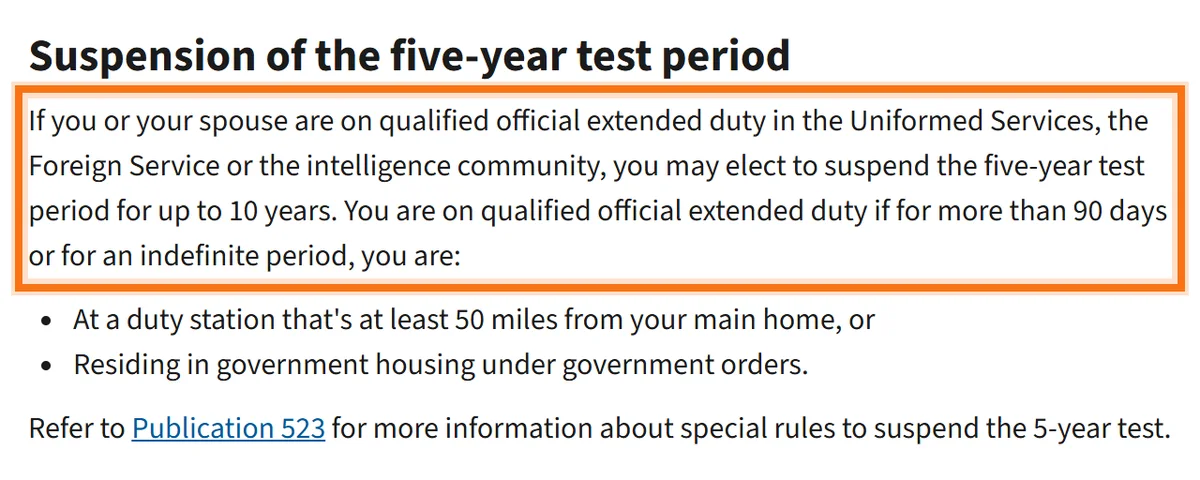
Federally, the IRS says that if you or your spouse are on qualified official extended duty, at a duty station at least 50 miles from your main home or in government housing under orders, you may elect to suspend the 5-year test period for up to 10 years. Before you deploy, settle who can sign for the house; a property manager for a rental while you are deployed covers powers of attorney and approvals. If your tenant is military too, see renting to military tenants near NAS JRB Fort Worth.
The sale-of-home clock: why your move-out date matters
If you may sell the house one day, note the date you move out. IRS Publication 523 says you meet the ownership requirement if you owned the home for at least 24 months of the last 5 years before the sale, and the residence requirement if you used it as your residence for at least 24 months of the previous 5 years; the 24 months need not be one block. Meeting both lets you exclude up to $250,000 of gain, or $500,000 for a married couple filing jointly, subject to the publication's other rules.
Illustrative only: if you lived in the house for at least the last 24 months before you moved out, those months stay inside the 5-year window for 60 - 24 = 36 months after the move. Publication 523 also says that the part of the 5-year period after you last used the house as your main home is not "nonqualified use," and that gain from depreciation taken while it is a rental is handled separately and may be recaptured. How this applies to you is a question for your tax adviser; this is general information, not tax advice.
Rent range and make-ready, while you can still walk the house
Owners who are leaving tend to price from memory or from what the mortgage needs. Neither is a comparable. Get a rent range from leased comparables for your street and school zone before you set a move date, so you know whether the rent works before you commit to renting rather than selling. If it does not, our rent or sell page lays out the other options.
Walk the house with whoever will manage it while it is still furnished, agree the must-do make-ready list and the price of each item, and authorize it in writing so the work can start the day you hand over the keys. Choosing paint colors by text from another time zone is how a short make-ready turns into a long one. Hiring a manager before the house is rent-ready explains why this conversation comes early.
Set the approval rules before you leave
The management agreement should state a dollar limit under which the manager may fix things without calling you, and above which you approve first. Set it high enough that a routine repair does not wait for your reply from a different time zone, and low enough that you see anything significant. Put it in the agreement, not in an email.
Also decide how you want to be reached and when: email for an owner abroad, text for one two states away, and what, if anything, is worth waking you for. Write your time zone and working hours into your first message to the manager.
Keys, utilities and the last week
In the last week, collect and hand over every key, garage remote, mailbox key, gate or pool card and appliance manual, and leave the house completely empty, including the garage and attic. Keep the power and water on in your name until the manager or the first tenant takes them over, so showings and the make-ready can go ahead. Set up mail forwarding and give the manager your new address.
Once you are gone, reading the monthly statement is most of the job; your owner statement explained walks through each line.
Choose the manager before you go
It is far easier to interview a manager, walk the house together and agree the make-ready while you are still local. Once you have moved, every decision becomes a phone call and a photo. Meet them, read the agreement, and get every fee in writing before you sign.
How Perpetual helps before you move
We are a broker-owned management company in North Richland Hills, managing homes in Keller, North Richland Hills, Fort Worth and the surrounding Tarrant County communities. What our site states that fits a move away:
- A free rental analysis: a rent range from leased comparables, demand notes, make-ready guidance and a written management quote, typically within one business day.
- Written guarantees, subject to our Guarantee Addendum: your home is live on every major rental platform within 5 business days of being market-ready, or the first month's management fee is waived; while it is vacant you get a written activity report every week; rent we collect is disbursed to you by the 10th of each month, or that month's fee is waived.
- From a distance: monthly statements, documents and disbursement history in the Owner Portal, photo inspection reports in your portal, and an annual property inspection on every plan.
Your repair approval limit, how we reach you across time zones and how a deployment changes who signs are confirmed in writing before you sign. Every fee is on our price sheet. Request a free rental analysis before your move date or call 682-593-7033.
The takeaway: Settle the loan, the homestead, the insurance and your tax clock while the house is still your home; settle the rent, the make-ready and the keys while you are still in town. Everything after that can be done from anywhere.
Questions owners ask
Can I rent out my house while I live in another state?
Yes. What you need is someone local for the in-person parts: showings, inspections, vendor access and anything at the door. Before you go, check your loan's occupancy terms with your servicer, tell the appraisal district when your homestead entitlement ends, and switch to a landlord policy. The day-to-day of owning from a distance is covered in our out-of-state owner guide.
How far in advance should I start if I am relocating?
As soon as you know you are moving. The loan question, the insurance change and the rental analysis all depend on other people answering, and the make-ready decisions are best made while you can walk the house. Starting in the last week usually means the house sits empty after you leave.
What happens if a tenant stops paying while I am overseas?
The lease and Texas law set the steps, and your management agreement says who takes them and what you approve. Ask any manager before you sign how a late payment is handled, what you are asked to approve and how you are told. You do not need to be in Texas to make those decisions, but you do need to be reachable.
Will I be able to see what is happening with the house?
Ask any manager what you will see and where. At Perpetual, the Owner Portal holds your statements, documents and disbursement history, inspection photo reports go to your portal, and the original vendor invoice for maintenance is always there. Ask for a look at what owners see before you sign.
Can a property manager look after my rental while I'm deployed?
Yes. Before you leave, settle who can sign for you while you are away, such as a power of attorney or a co-owner on the agreement, and set an approval limit high enough that routine repairs do not wait on you. For taxes, the IRS lets a servicemember on qualified official extended duty suspend the 5-year sale-of-home test for up to 10 years. Our deployed-owner guide covers the rest.
Do I lose my homestead exemption if I rent out my house when I move?
Usually the house stops qualifying once it is no longer your principal residence, and Tax Code 11.43(g) says to notify the appraisal office in writing before May 1 after your entitlement ends. Section 11.13(l) keeps the homestead character during a temporary absence of under two years with intent to return, or one caused by military service, if you do not establish another principal residence. Ask your appraisal district about your case.
If I rent my house out, can I still exclude the gain when I sell?
Possibly. IRS Publication 523 requires that you owned the home and lived in it for at least 24 months of the 5 years before the sale. Illustrative only: if you lived there the last 24 months before moving out, those months stay inside the window for 36 months. Depreciation taken while it is a rental is treated separately. Ask your tax adviser; this is general information, not tax advice.
Property management in Keller, North Richland Hills and Fort Worth. How full-service management works in Tarrant County →