Key takeaways
- A post-storm check has seven steps: storm alert, tenant message, exterior walk, interior look, a same-day stop-gap for active leaks, a roofer when the ground shows damage, and your decision.
- The National Weather Service office in Fort Worth publishes the warnings and local storm reports that show whether hail crossed your street.
- Every photo carries a date, because the insurance adjuster may ask weeks later what the house looked like the day after the storm.
- Property Code 92.054(a): after an insured casualty such as hail, the repair period does not begin until the landlord receives the insurance proceeds.
- Business and Commerce Code 27.02 requires a deductible notice in a contract of $1,000 or more expected to be paid from a property insurance claim.
Can a property manager check my house after a hailstorm or severe weather? Yes. On a rental in Fort Worth, Keller or North Richland Hills, the manager contacts the tenant first, then walks the outside of the house and looks at the ceilings inside, photographs everything with the date, and stops an active leak the same day. If the ground check shows damage, a roofer inspects the roof itself. The repair and claim decisions stay yours.
Below: the check step by step, where storm alerts come from, what the tenant is asked, what gets photographed, what a ground check cannot see, whether the damage is a repair or an insurance matter, and the Texas rules on roofers and deductibles.
The post-storm check, step by step
Here is what a post-storm check covers on a single-family rental, in order, and what each step leaves in the property file:
| Step | What happens | What gets recorded |
|---|---|---|
| 1. Storm alert | Check whether a warning or storm report covered the area around the house | The date and the warning or report |
| 2. Tenant message | Is everyone safe, is water coming in, is the power on, did anything hit the house | The tenant's answers and any photos they send |
| 3. Exterior walk | Roof from the ground, gutters, screens, the air conditioning condenser, fence, garage door, siding | Dated photos of each side of the house |
| 4. Interior look | Ceilings, especially near vents, skylights and the chimney; any new stain or drip | Dated photos, or the tenant's photos |
| 5. Same-day stop-gap | A tarp, a bucket or a shut-off for an active leak | The vendor's invoice and photos |
| 6. Roofer inspection | Only if the ground check shows signs: a look at the roof surface itself | The roofer's written findings and photos from the roof |
| 7. Your decision | Repair now, file a claim, or both | Your decision in writing |
How to read this table: steps 1 to 5 can happen within a day or two of the storm and need nobody on the roof. Step 6 happens only when the evidence calls for it. The right-hand column is what makes a claim possible later: dated, specific, and kept whether or not you file.
Knowing whether a storm hit your street: NWS Fort Worth
The first question after a storm is which houses were in its path. The National Weather Service office that covers North Texas is NWS Fort Worth/Dallas, at 3401 Northern Cross Blvd in Fort Worth, and its page at weather.gov/fwd lists current hazards, severe thunderstorm warnings, local storm reports and a graphical storm report map and a hazardous weather outlook.
A manager with houses across Fort Worth, Keller and North Richland Hills uses those reports to decide which tenants to contact first. An owner can use the same page to see whether hail was reported near the house on the date in question, which helps when an adjuster asks when the damage happened.
What the tenant is asked, and why the tenant comes first
The first contact after a severe storm is a message to the tenant: is everyone safe, is water coming in anywhere, is the power on, did anything hit the house, and can you send a photo of anything that looks wrong. This confirms the home is livable, finds an active leak before it soaks a ceiling, and tells the manager which homes need a visit today.
A tenant who reports a drip in a closet is your early warning system, and most will report if asked directly. The same message should say three things plainly: do not sign anything from a contractor who knocks on the door, do not let anyone on the roof, and send every contractor to the manager. The lease's access clause governs when the manager or a roofer can come in; no Texas statute sets an entry-notice period.
What gets checked outside and inside
The ground-level walk follows the same list every time, and every photo is dated, because the photos are what an adjuster may ask for weeks later:
- Roof from the ground: missing or lifted shingles, exposed underlayment, debris, dented vents and pipe flashings.
- Gutters and downspouts: dents, separated sections, and shingle granules piled at the downspout outlet.
- Windows and screens: torn screens are easy to see and easy to miss.
- Air conditioning condenser: bent fins on the side that faced the storm.
- Fence, garage door, siding and paint: impact marks, split pickets, a dimpled garage door panel.
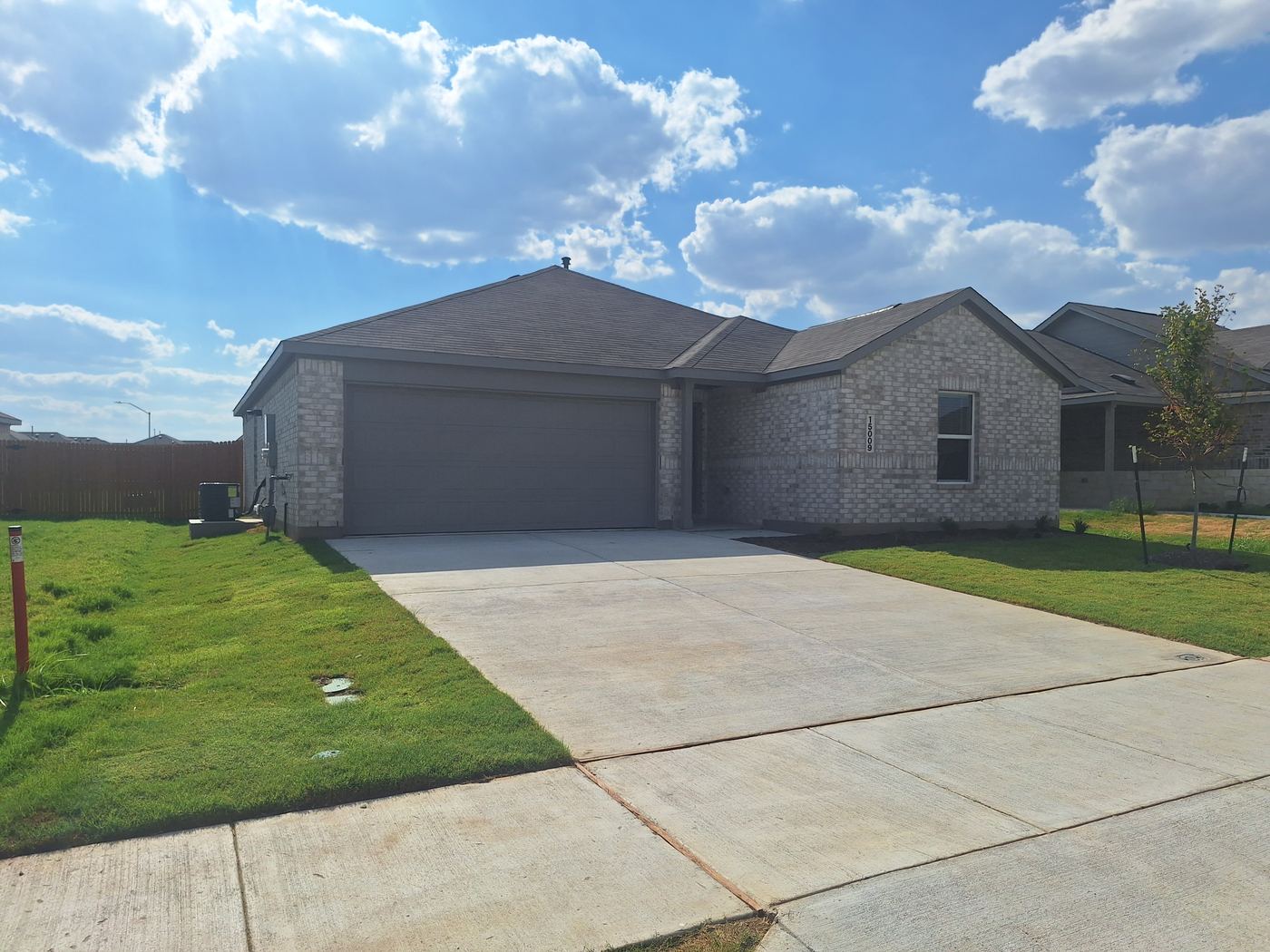
Inside, the check is the ceilings, especially around vents, skylights and the chimney, and the tops of walls under the roof's low edges. A new stain after a storm is a lead even if it is dry. If the tenant is home, their photos can cover this step the same day. An active leak gets a tarp, a bucket or a shut-off that day; everything else is photographed and goes into the property file whether or not a claim follows.
What a ground-level check cannot tell you
A manager standing in the yard cannot see bruised shingles, cracked mat under the granules, or hail hits on the back slope of the roof. That is roofer territory, and a manager who climbs your roof is taking a risk you do not want on your property. So the exterior walk answers a narrower question: is there visible damage, is anything leaking, and does this house need a roofer's inspection now.
If the answer is yes, the manager calls a roofer they already know, which matters more after a storm than at any other time. The roofer's written findings, with photos from the roof, are the document that supports a claim; the manager's ground photos are the context around it.
Is it a repair under 92.052, or an insurance matter?
Storm damage can be both at once, and Texas law treats the two clocks differently.
The repair duty. Under Property Code 92.052(a), once the tenant reports a condition that materially affects health or safety, such as water coming through a ceiling, you must make a diligent effort to repair it. Section 92.056(d) presumes seven days is a reasonable time in general.
The casualty exception. Under 92.054(a), if the condition results from an insured casualty loss, such as fire, smoke, hail or explosion, the period for repair does not begin until you receive the insurance proceeds. That does not make waiting wise: stopping water from coming in protects the house either way, and your policy may set its own duties after a loss.
If the house cannot be lived in. Under 92.054(b), if the home is totally unusable for residential purposes and the tenant did not cause the loss, either you or the tenant may end the lease by written notice before repairs are done. Under 92.054(c), if it is partly unusable, the tenant may get a proportionate rent reduction, but only on judgment of a county or district court, unless a written lease says otherwise.
The tenant's own belongings are not on your policy. That is what the tenant's renters insurance is for; see should I require renters insurance. This is general information, not legal or insurance advice.
Your claim decision, and the deductible
The claim decision is yours, because the policy is in your name. What the manager gives you is the material to decide: the dated photos, the roofer's written findings, an estimate, and a plain recommendation. Under Texas Insurance Code 707.002, a person insured under a property insurance policy shall pay any deductible that applies to a first-party claim, so the deductible is part of the arithmetic of every claim. Under 707.004, an insurer with replacement cost coverage may hold back recoverable depreciation until it receives reasonable proof that the deductible was paid.
How a manager works with your insurer, the adjuster's visit and the paperwork is covered in will a property manager coordinate with your insurer during a claim, and the policy differences worth checking before storm season are in landlord insurance vs homeowners insurance. This is general information, not insurance advice.
Storm-chasing roofers and the Texas deductible rule
Within a day of a hailstorm, door-knocking roofers reach the neighborhood, and some will ask the tenant to sign an "inspection authorization" or promise to "take care of the deductible." The tenant is not the owner, so the work is yours, or your manager's under the authority you give it, to authorize. A signature at the door only creates confusion.
Texas law speaks to the deductible promise directly. Business and Commerce Code 27.02(b) requires a contract for goods or services reasonably expected to be paid wholly or partly from a property insurance claim, with a contract price of $1,000 or more, to carry a printed notice about the deductible in at least 12-point bold type.
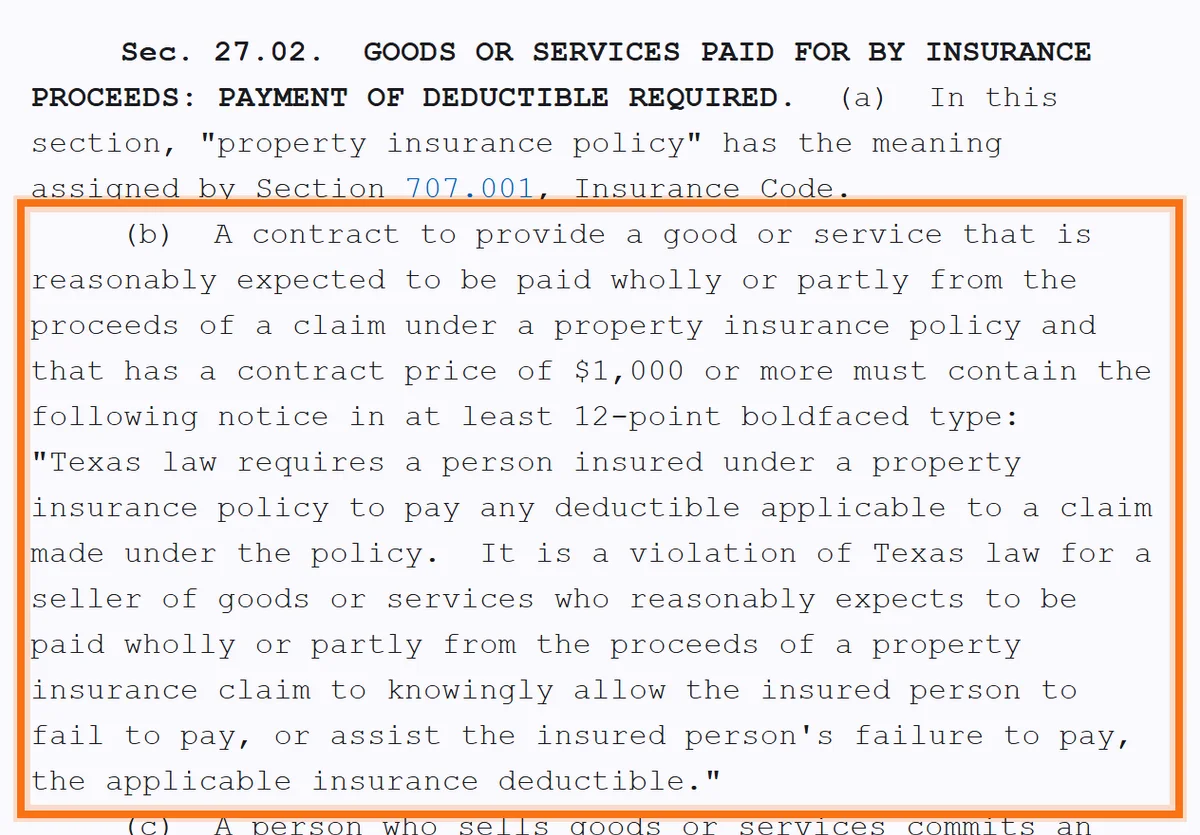
Under 27.02(c), a seller who advertises or promises to pay, waive or absorb the deductible, or to offset it with a rebate or credit, without the insurer's consent, commits an offense, and 27.02(d) makes it a Class B misdemeanor. A roofer who offers to "eat the deductible" is offering something the statute prohibits. The practical rule: use a roofer you or your manager can verify, with a local address and a history from before the storm, and read the contract before anyone signs.
What the check costs and what you see afterward
Whether a post-storm check is part of the management fee or a billed visit depends on the management agreement, and it is a fair question to ask before you sign. What should not vary is the paper trail. The tarp, the roofer's inspection, any emergency repair and the final work should each appear as their own line on your statement, with the vendor's invoice behind it.
If the roof is replaced under a claim, you should be able to see the contractor's invoice, the insurance payments received and the deductible you paid, each separately. Be wary of storm work bundled into one vague "repairs" line, or of every roof going to one contractor without an estimate you can see. A second estimate on a full replacement is reasonable even under a claim; see asking for a second quote before a major repair.
How Perpetual handles storm damage
Perpetual Property Management is broker-owned, with our office in North Richland Hills, and we manage homes in Keller, North Richland Hills, Fort Worth and nearby. What our site states that applies after a storm:
- Emergencies. Anything threatening the property or habitability, such as an active leak, follows a 24/7 process, and 24/7 emergency response is on every plan (maintenance coordination).
- Tenant reports. Tenants report issues through their portal with photos, which creates a documented record.
- Extra visits. Inspections run at move-in, during the tenancy and at move-out, and extra inspections can be arranged when something warrants a look, with photo reports to your portal (inspections).
- Spending. Repairs under your pre-approved limit proceed; anything larger comes to you with a description, photos and a recommendation.
- Proof. Every completed repair over $500 gets photo or video proof in your portal, and the original vendor invoice is always there.
Whether a storm visit is included or billed, and how we work with your insurer and adjuster, are confirmed in writing before you sign. After the next storm, or before one, call 682-593-7033.
The takeaway: A post-storm check is the tenant first, the outside and inside second, dated photos throughout and a roofer for the roof itself; Texas law then separates the repair clock (92.054) from the claim, and the deductible is always the owner's to pay (Insurance Code 707.002).
Questions owners ask
How soon after a hailstorm should a rental be inspected?
Contact the tenant the same day, once it is safe, to find active leaks. The exterior walk and a look at the ceilings follow as soon as practical, and a roofer comes only if the ground check shows signs of damage. Read your policy's duties after a loss for any reporting deadline; dated photos from the first days make any later claim easier to support.
Who files the insurance claim for hail damage on a rental, the owner or the manager?
The owner, because the policy is in the owner's name. The manager can supply the dated photos, the roofer's findings and the estimate, coordinate access for the adjuster with the tenant, and manage the repair once you approve it. If you want the manager to speak with your insurer for you, put that authority in writing.
Can a tenant hire a roofer after a storm?
The tenant is not the owner, so work on the roof is for you, or your manager under the authority you give it, to authorize. A tenant who signs a contractor's form creates confusion that takes time to clear up. The post-storm message to the tenant should say not to sign anything and to send every contractor to the manager.
Does hail damage lower the rent or let the tenant break the lease?
Not by itself. Under Property Code 92.054(b), if the home is totally unusable and the tenant did not cause the loss, either side may end the lease by written notice before repairs are done. Under 92.054(c), if it is partly unusable, the tenant may get a proportionate rent reduction only on judgment of a county or district court, unless a written lease says otherwise. This is general information, not legal advice.
Can a roofer waive or pay my insurance deductible in Texas?
No. Insurance Code 707.002 says the insured shall pay any deductible on a first-party property claim. Business and Commerce Code 27.02(c) makes it an offense for a seller paid from a property insurance claim to pay, waive or absorb the deductible, or offset it with a rebate or credit, without the insurer's consent, and 27.02(d) makes that a Class B misdemeanor.
Where can I check whether hail hit my rental's area?
The National Weather Service office for North Texas, NWS Fort Worth/Dallas, publishes current warnings, severe thunderstorm warnings and local storm reports at weather.gov/fwd. Checking the reports for the date and area of the storm helps decide which houses to look at first, and helps answer an adjuster's question about when the damage happened.
Related services
Property management in Keller, North Richland Hills and Fort Worth. How full-service management works in Tarrant County →