Key takeaways
- Test any guarantee on five points: a measurable standard, who decides it was missed, the remedy, the exclusions, and whether it is in the signed agreement.
- A remedy you can count (a fee waived, a fee not charged, work done) beats a credit that only pays if you stay.
- Exclusions decide most of the value; if they sit in an addendum, read the addendum before you sign, not after a claim.
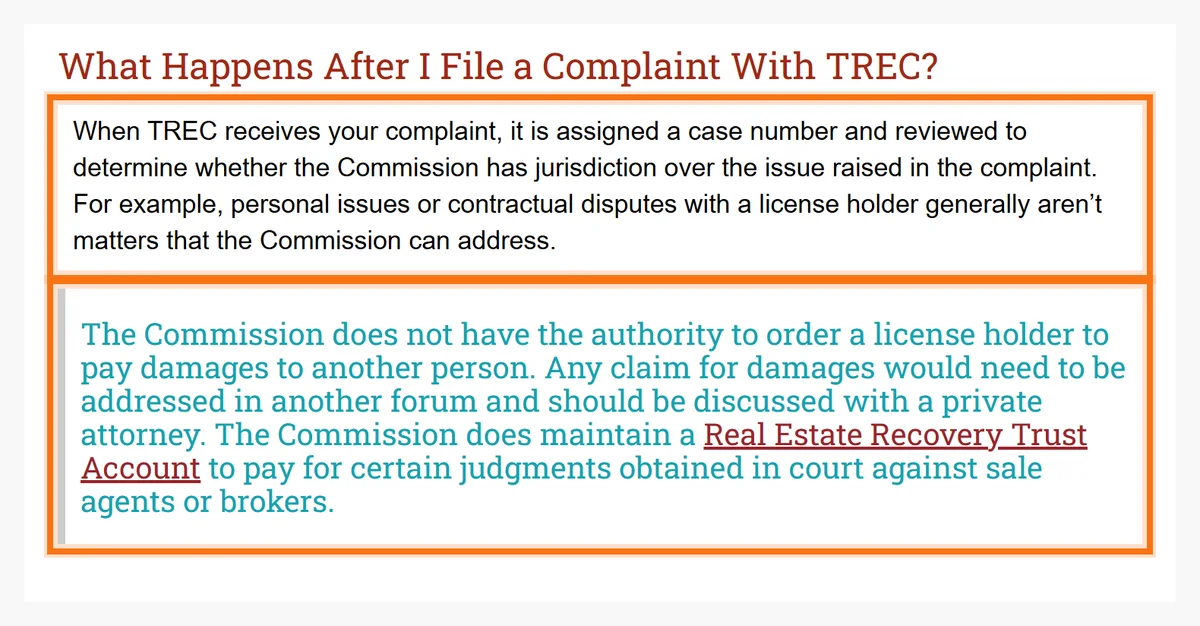
- A missed guarantee in an agreement is a contract matter: TREC says contractual disputes generally are not matters it can address and it cannot order damages.
- Perpetual offers no rent guarantee; its five written guarantees are service promises with stated remedies, subject to its Guarantee Addendum.
A property management guarantee is worth exactly what the signed agreement lets you collect. Some pass that test and are worth real money to an owner in Fort Worth, Keller or North Richland Hills; others are a headline with no matching clause, or a promise the company alone decides whether it kept. Before you give one any weight, check the remedy, the exclusions and who decides it was missed.
This guide gives you a five-point test, puts illustrative dollar values on common remedies, applies the test to our own published guarantees, and covers what to do when a guarantee is not honored.
The five-point guarantee test for Fort Worth area owners
Here are the five things that decide whether a property management guarantee is worth anything, with what a strong and a weak version look like:
| Test | Worth something when | Worth little when |
|---|---|---|
| 1. The standard | It is measurable: a number of days, a date in the month, a dollar threshold | "Excellent service," "if you are not satisfied," with no measure |
| 2. Who decides it was missed | The facts decide (a date, a listing, a report), or you can raise it and the agreement says how | The company has sole discretion to decide whether it failed |
| 3. The remedy | A stated amount: a fee waived, a fee not charged, work done at no charge | A credit against future fees, or "we will make it right" |
| 4. The exclusions | Listed, specific and available before you sign | Broad, vague, or in a document you have not seen |
| 5. Where it lives | In the management agreement you sign | Only on the website or in a sales conversation |
How to read this table: a guarantee needs all five in the left column to be worth counting. Miss test 5 and nothing else matters, because only the agreement binds the company. Miss test 2 or 4 and the remedy may never be paid, however good it sounds.
Who decides it was missed: the question most owners skip
Every guarantee has a moment when someone decides whether the promise was kept. If the agreement leaves that decision to the company alone, the guarantee can be declined without anyone breaking a rule. The strong versions let a fact decide: a listing date on a rental platform, the date money reached your bank, the date of a written report. The next best version lets you raise the miss and says what happens then.
Read the trigger with that in mind. A period measured from a date the company controls, such as the day it declares the house "market-ready," is only as firm as the definition of that date. Ask how the date is set and recorded, and whether you get a copy. "Tenant vacates within six months" is a fact; "the home is ready" is a judgment, so it needs a definition.
The remedy: what you actually collect
Remedies come in four kinds, and they are not equal:
- A fee waived or not charged. A month's management fee waived, or no new leasing fee for a replacement tenant. Countable, and paid whether or not you stay.
- Work done at no charge. Re-leasing, re-marketing or a re-inspection. Valuable if it is the work you need; check what it excludes, such as advertising costs or make-ready.
- A fixed payment. Rare in management guarantees and the easiest to value.
- A credit against future fees. It pays only if you stay, so it works more as a retention tool than a remedy.
Note what each remedy does not cover. A placement guarantee that waives the leasing fee says nothing about rent lost while the house is empty, unless its text says so. Owners searching for "property management guaranteed rent" want a different product, a rent guarantee, explained with its caps and waiting periods in rent, tenant and service guarantees explained.
Putting a dollar value on a guarantee
Value a guarantee like insurance: the remedy in dollars, times how likely you think you are to need it, compared with anything extra you pay for it. Illustrative only, not a quote. Assume rent of $2,000 and a plan priced like our Full Service plan on the price sheet: 10% of monthly rent, so a $200 monthly fee, and tenant placement at 50% of one month's rent, so $1,000.
- A payout-date guarantee whose remedy is that month's fee waived is worth $200 each time it is missed.
- A placement guarantee whose remedy is no new leasing fee is worth $1,000 if it is used. If you judge the chance of an early default or lease break at 1 in 10, its expected value is $1,000 x 0.1 = $100.
The odds are your own judgment, not a statistic. If a company charges more for its guarantees than they are worth on numbers like these, the guarantee is not the reason to choose it. If it costs nothing extra and passes the five-point test, it is a fair tie-breaker.
Applying the test to our own guarantees
Our published guarantees, the Perpetual Promise, are five written promises, each part of the management agreement with a stated remedy. Run through the test, the published text answers most of it:
- Standards: live on every major rental platform within 5 business days of being market-ready; calls and emails answered within one business day and a written weekly report while vacant; rent we collect disbursed by the 10th of each month; a new tenant at no additional leasing fee if a tenant we place defaults and is removed, or breaks the lease, within the first 6 months; a 360-degree condition inspection at every move-in and move-out and photo or video proof of every completed repair over $500.
- Remedies: the first month's management fee waived; that month's management fee credited; that month's fee waived; no additional leasing fee. The documented work guarantee states its commitments, plus the rule that if a fee is not in the agreement, you do not pay it, rather than a fee waiver.
- Who decides: for the communication guarantee the text says "tell us and we credit that month's management fee."
- Exclusions: the guarantees apply to properties under an active agreement and are subject to the terms and exclusions in our Guarantee Addendum, which you should read before signing.
What our published text does not answer sits in the addendum and the agreement, and those are the questions to put to us, or to any manager, before signing: how the "market-ready" date is set and recorded, what counts as a tenant who "defaults and is removed," which departures fall outside the placement guarantee, and how a credit or waiver shows on your statement. A guarantee you understand before you sign is one you can actually use.
Exclusions, and signs a guarantee is marketing
Exclusions decide much of a guarantee's value. Reasonable ones exist: an owner who refuses a repair the home needs, or a departure the law allows the tenant, can fairly fall outside a promise. The problem is breadth and timing. Ask for the full exclusion list before you sign, and read it against the standard it limits.
Patterns that suggest marketing rather than a promise:
- The website version is broader than the agreement version, or the agreement has none.
- The company has sole discretion over whether the standard was missed or an exclusion applies.
- The remedy is a future credit, or "we will make it right."
- An exclusion like "any recommended repair the owner declined," with no definition of recommended.
- The exclusions are in a document you are told you will receive after signing.
A direct question helps: when did this guarantee last pay out, and what did it pay?
When a guarantee is not honored
A guarantee written into the agreement is a contract term. If the standard was missed and no listed exclusion applies, put the claim in writing, quote the clause, give the dates, and keep the reply.
If they do not, know where to take it. The Texas Real Estate Commission says contractual disputes with a license holder generally are not matters it can address, and that it has no authority to order a license holder to pay damages; a claim for money goes to another forum and a private attorney. TREC does handle violations of the license law, and Occupations Code 1101.652(b)(6) lists making "false promises" through advertising among the grounds for license discipline.
A guarantee pays after something has gone wrong; it does not prevent it. Screening, the lease, inspections and responsive maintenance do, so judge those first, for example with our guide on red flags when choosing a property manager. This is general information, not legal advice.
How Perpetual handles this
Perpetual Property Management is broker-owned, with our office in North Richland Hills, and we manage homes in Keller, North Richland Hills, Fort Worth and nearby. Every promise on our guarantees page is part of your management agreement, and if we miss one, the cost comes out of our fee, not your investment. We do not offer a rent guarantee and do not pay rent while a home is vacant.
The work behind the guarantees is published too: every adult applicant screened against written rental criteria, with the same published criteria for every applicant; Texas-compliant leases; move-in documentation as the photo baseline; monthly statements, invoices and documents in the owner portal; and a written quote with every fee in plain English.

The full terms and exclusions of our Guarantee Addendum for your property are confirmed in writing before you sign. To see them with a written quote, request a free rental analysis or call 682-593-7033.
The takeaway: Judge a guarantee by its measurable standard, who decides it was missed, the remedy, the exclusions and whether it is in the agreement. Read any addendum before signing, value the remedy in dollars, and treat a good guarantee as a tie-breaker, never a substitute for checking the management itself.
Questions owners ask
What is a tenant placement guarantee in property management?
It is a promise that if the tenant the company placed leaves or is removed within a stated period, the company finds the next tenant without a new leasing fee. The period, the departures that qualify and the exclusions are in the agreement. At Perpetual, if a tenant we place defaults and is removed, or breaks the lease, within the first 6 months, we find you a new tenant with no additional leasing fee, subject to the Guarantee Addendum.
Do property managers guarantee on-time rent?
Some companies sell rent guarantees that pay the owner when a tenant does not; check the waiting period, the cap and the fee before paying for one. Perpetual does not offer a rent guarantee. Our on-time payout guarantee is a different promise: rent we collect is disbursed to you by the 10th of each month, or that month's management fee is waived.
Is a cancel-anytime guarantee the same as a month-to-month agreement?
Not necessarily. A cancel-anytime promise may waive a termination fee yet keep a notice period, and some fees can survive the end of the agreement. Read the term, termination and fee sections together with the guarantee to see what you can actually walk away from, and get the answer in writing before you sign.
Can a property manager refuse to honor a guarantee?
Only on grounds the agreement allows. If the standard was missed and no listed exclusion applies, the remedy is owed under the contract. Put the claim in writing, cite the clause and keep the reply. TREC says contractual disputes generally are not matters it can address and it cannot order damages, so a money claim goes to another forum; talk to a Texas attorney if the amount matters.
What is a property services guarantee?
It is a written promise from a property manager to meet a stated service standard, such as listing a home within a set number of days or paying out rent by a date, with a stated remedy if it misses, usually a waived fee. It is worth what the agreement lets you collect, so check the standard, who decides it was missed, the remedy and the exclusions.
Who decides whether a guarantee was missed?
Whoever the agreement says. The strongest guarantees let a fact decide, such as a listing date or the date money reached your bank, or let you raise the miss with a stated result. If the company alone decides whether it failed, the guarantee is weak however generous the remedy sounds. Ask how each date is recorded and whether you get a copy.
Is a guarantee worth paying a higher fee for?
Only if the numbers say so. Put the remedy in dollars, multiply by how likely you think you are to need it, and compare that with the extra you would pay over a year. Illustrative only: a $1,000 leasing-fee waiver you judge 1 in 10 likely to use is worth about $100. A guarantee that costs nothing extra and passes the five-point test is a fair tie-breaker.
Related services
Property management in Keller, North Richland Hills and Fort Worth. How full-service management works in Tarrant County →