Key takeaways
- The label tells you little. The broker of record, the people who come to the house and the written terms tell you a lot.
- Every company that leases and manages Texas rentals for others works under a Texas broker license you can look up on the TREC website.
- Texas lists failing to consider market conditions for the specific area served as a ground for discipline of a license holder (Occupations Code 1101.652(a)(6)).
- One house or a few in one area: weight local presence and access to the broker. Rentals in several metros: weight one consistent system.
- Score every company, including ours, on the same nine checks.
Is a local property manager better than a big national company? For an owner with one house or a few in Fort Worth, Keller or North Richland Hills, usually yes, but only if the local company proves it: a broker you can name and reach, people who come to your house, rent priced from leases near it, and every fee and promise in writing. A national company fits better when your rentals are spread across several metros.
We are a local, broker-owned company, so you know where we sit. The broader comparison is in local vs. national property management in DFW. This guide is the decision for your house, with a scorecard you can use on every company you interview.
The scorecard: nine checks for any company, local or national
Here are the nine checks that separate a good manager for one house or a few from a weak one, how to verify each, and what a strong answer sounds like:
| Check | How to verify it | What a strong answer sounds like |
|---|---|---|
| Texas broker of record | Search the company and its broker on the TREC license holder search; look for the Information About Brokerage Services link on its homepage | A broker you can find by name, in active status |
| Who is accountable | Ask who the designated broker is and whether that person owns part of the company | A named person you can reach, not a department |
| Who comes to your house | Ask who shows it, inspects it and meets vendors, and where they drive from | Named roles and a realistic drive to your street |
| How the rent is set | Ask for the comparables behind the recommended rent | Leased homes near yours, not asking prices or a metro average |
| Vendors and invoices | Ask who would replace your water heater and whether you see the vendor's invoice | Trades they use repeatedly, and the original invoice in your portal |
| Every fee for a full year | Get the fee schedule in writing and total a placement year and a renewal year | Written numbers that go into the agreement |
| Promises with a remedy | Ask what happens when the company misses a commitment | A written remedy, not "we will make it right" |
| Your money | Ask for the payout date and how rent and deposits are held | A stated date and a trust account under TREC rule 535.146 |
| When your contact is away | Ask who covers calls and decisions | A name, with the broker as the backstop |
How to read this table: none of the nine checks depends on whether the company is local, regional or national. A local company that cannot answer them has an office and nothing more; a national company that answers all nine well may be a sound choice. For one house or a few, rows three to five are where local presence shows up, or does not.
Decide on what you own, not on the label
Start with three facts: how many rentals you own, how far apart they are, and how involved you want to be. They change which rows of the scorecard matter most.
- One house or a few in one area. The rent number, the vendor who shows up and the person who walks through the house decide most of your results, so local presence and a reachable broker carry the most weight.
- Rentals in several metros. One statement format, one portal and one process across cities can matter more than depth in any one of them.
- You live far away from one Texas house. Your distance from the house is not the manager's distance from it. What you need is a portal, written reporting and someone local who goes inside.
What distinguishes local property management companies from national ones is not the size of the logo; it is who makes decisions about your house and how close they are to it. The same is true when you compare a national firm with a regional one.
What "local" has to mean, and what Texas law says about it
A local address is not local knowledge. Local counts only when it shows up in the work: the rent recommendation comes from homes that actually leased near yours, the manager knows which HOAs and city rules affect rentals in your subdivision, and the vendor who handles your air conditioning knows the area. It also means a person has stood in your house before the listing goes live and will stand in it again for inspections.
Texas law points the same way. The Real Estate License Act lists, among the grounds on which the Texas Real Estate Commission may discipline a license holder, failing to consider market conditions for the specific geographic area in which the license holder is providing a service.
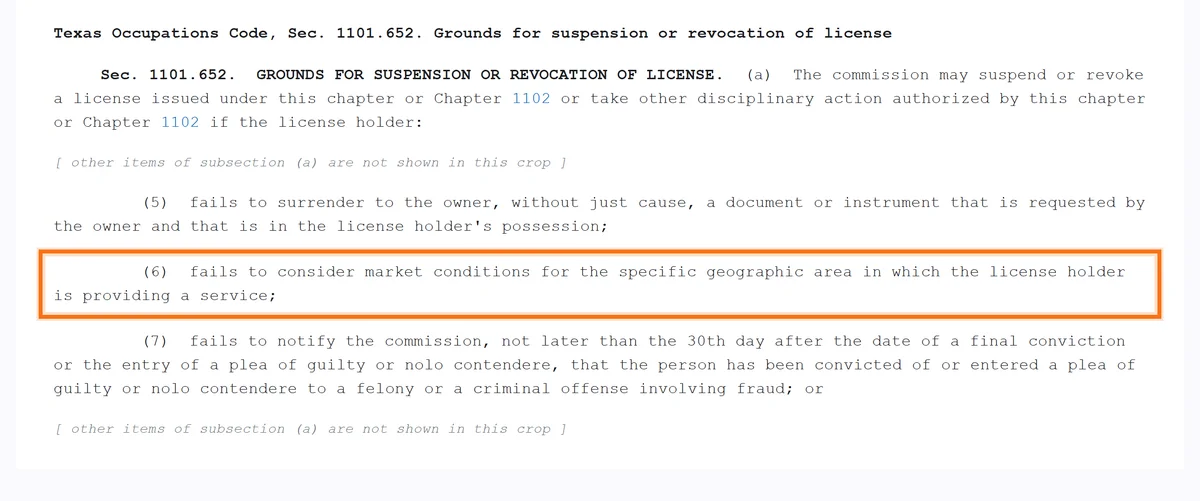
That rule applies to every license holder, local or national. It does not make any company good at pricing; it tells you which question is fair to ask all of them.
When a regional or national company fits
A larger company can be the right call. If you own rentals in several cities or states, one company across all of them gives you one statement format, one owner portal and one set of documents for your CPA. If you buy several houses in a year in different metros, one onboarding process saves you learning several. And if a small local company turns out to be one person, a larger company's bench matters when that person is sick or away.
Texas licensing gives you two fair questions for a company of any size. Under Occupations Code 1101.355, a business entity licensed as a broker must designate one of its managing officers as its broker, and must prove errors and omissions insurance with a minimum annual limit of $1 million for each occurrence if that designated broker owns less than 10 percent of the entity. So ask who the designated broker is, and what coverage the company carries. The answers are facts, not sales talk.
What a local company has to prove
A local company has to show its knowledge, not claim it. Three places to look:
- Pricing. Ask for the leased comparables behind the rent. A local manager should name homes and streets near yours and explain why your house is priced above or below them.
- Vendors. Ask which trades it uses repeatedly, and whether you see the vendor's own invoice behind every repair. How invoices and coordination charges should read is in maintenance markups explained.
- Accountability. When something goes wrong, can you reach the broker? In a broker-owned company the broker is the owner. In other structures the broker may sit elsewhere, which is why broker-owned vs. franchise property management is worth reading before you sign.
If a company cannot say when a person was last inside a house it manages, the local label is doing no work.
Local knowledge and modern systems: you need both
The real choice is whether a local company has the systems owners expect from a large one: an owner portal with statements and documents, online rent payment, a process for emergencies at any hour, and inspections documented with photos. With those, you get the knowledge and the systems together.
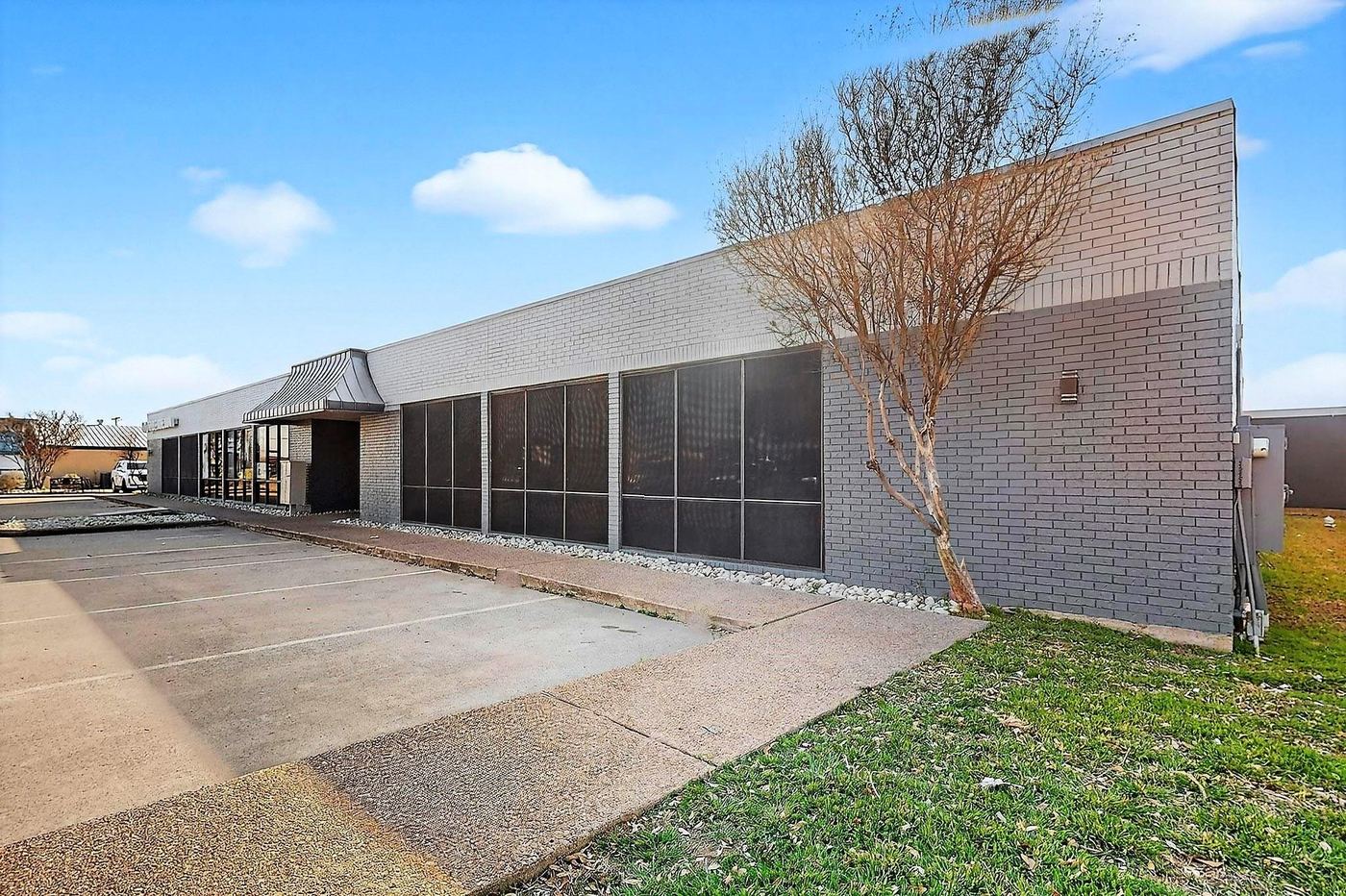
Say your house is in North Richland Hills. The company you want can tell you which homes near yours leased and for how much, has trades it has used repeatedly across Tarrant County, and still sends a monthly statement your CPA can read. That combination is what to interview for. Our North Richland Hills property management page shows how it looks for that city.
How to test any "local" claim in one call
Ask three questions and listen for specifics rather than confidence:
- "Which homes like mine leased recently, and where?" A local answer names streets or subdivisions.
- "Which HOAs or city rules around here affect rentals?" A local answer has examples.
- "Who would come out if the water heater failed on a Sunday?" A local answer names the trade and how they are reached.
Then read reviews for names of places, repairs and outcomes, and separate owner reviews from tenant reviews. Ours are on our reviews page, and how to read any company's is in reading property management reviews. Finally, look the broker up on the TREC license holder search and ask for the fee schedule in writing. If the company hesitates on either, you have your answer.
How Perpetual handles this
Here is how we score on the checks above, using only what our site states:
- Broker and owner. Perpetual Property Management is broker-owned. Justin Brown is a Texas Broker and owns both Perpetual Property Management and our affiliated brokerage, Perpetual Realty Group. As our North Richland Hills page puts it, the person accountable for your house is reachable, not a regional call center; Justin's direct line is 817-228-6817.
- Where we work. Our office is at 5755 Rufe Snow Dr, Suite 155, in North Richland Hills. Northeast Tarrant County is our home market, with Keller, North Richland Hills and Fort Worth as our main cities. For owners with several doors we manage portfolios across Tarrant, Dallas, Collin and Denton counties.
- Rent and vendors. We price from leased comparables in your neighborhood, not asking prices, and coordinate plumbing, electrical, HVAC and general trades we work with repeatedly; the original vendor invoice is always in your portal.
- Systems. An AppFolio owner portal with statements, documents and disbursement history, online rent collection, inspections with photo reports, and an annual property inspection and 24/7 emergency response on every plan.
- In writing. Every fee is on our price sheet, if a fee is not in the agreement you do not pay it, and the Perpetual Promise puts five guarantees in every management agreement, subject to its Guarantee Addendum, including rent disbursed by the 10th of each month or that month's management fee waived.
We manage long-term rentals and do not manage short-term or vacation rentals. Who your day-to-day contact will be is confirmed in writing before you sign. To compare us against a national quote on the same terms, see what full-service management includes or call 682-593-7033.
The takeaway: Local or national is the wrong first question: score every company on who the broker is, who comes to your house, how the rent is set and what is in writing, and the right choice for one house or a few usually becomes obvious.
Questions owners ask
Do national property management companies charge less than local ones?
There is no rule either way. A headline percentage says little until you add the leasing, renewal, inspection and maintenance charges, so total a full year of written fees for each company on the same assumptions. Our plans are 7%, 9% and 10% of monthly rent, with every other fee on our pricing page and the exact quote for your house in writing.
Can a local property manager handle an owner who lives out of state?
Yes. What an owner who lives elsewhere needs is a portal with statements and documents, communication on your schedule and someone local who goes inside the house. Ask how repairs are approved when you are in another time zone and how inspection reports reach you. Our property management page describes it for out-of-state owners: portal access, photo inspections and statements, so you see everything from anywhere.
What is the risk of a small local property management company?
The main risk is depth. If the company is one or two people, ask who covers when the owner is sick, on vacation or leaves the business, and who holds the broker's license. Ask how rent and deposits are held: a broker must keep trust money in a trust account under TREC rule 535.146. A small company with clear answers can be a safe choice; one that waves the questions off is not.
Is a franchise property manager local or national?
It is a local office under a national brand, which is why it needs its own questions. Ask who owns the office, who the designated broker is, and which decisions the local owner can make without the franchisor, such as vendors, software and fees. The answers tell you whether you are dealing with a local business or a local storefront. The full comparison is in our broker-owned vs. franchise guide.
What distinguishes local property management companies from national ones?
For an owner, the practical differences are who makes decisions about your house and how close they are to it: who sets the rent and from which comparables, who comes to the house, which vendors are sent, and whether you can reach the broker. Score both kinds on the same checks: a broker you can look up on TREC, every fee in writing, written promises with a remedy and a stated payout date.
Is a national vacation rental management company better than a local manager?
It is a different business. Short-term vacation rental management is about bookings, cleanings between guests and city short-term rental rules, while long-term management is about tenant screening, leases and maintenance over a year or more. Compare companies that do the kind of renting you plan to do. We manage long-term rentals only.
Property management in Keller, North Richland Hills and Fort Worth. How full-service management works in Tarrant County →