Key takeaways
- You should get a written update every week the house is on the market: views, inquiries, showings booked and completed, renter feedback and applications by status.
- Read the numbers as a funnel: the stage where they drop off points to the fix, whether photos, access, condition or price.
- Compare your listing with itself week to week; there is no official benchmark for what a "normal" inquiry or tour count is on your street.
- An application counts only when it is complete; Texas then gives the landlord 7 days to accept or the applicant is deemed rejected (Property Code 92.352).
- Perpetual's communication guarantee: replies within one business day and a written activity report every week while your home is vacant, or that month's fee is credited.
Yes. While your house in Fort Worth, Keller or North Richland Hills is listed, you should get a written update every week covering listing views, inquiries, showings booked and completed, what renters said after touring, and where each application stands. The report is only half of it. The other half is knowing how to read it, because the numbers tell you, week by week, whether to wait, fix something or change the price.
This guide covers what the update should contain, how to read it as a funnel, what you will and will not see about applicants, and which decisions should come back to you.
What each number in a leasing update means for a Fort Worth rental
Here is each stage of the leasing funnel, what the number counts, where to look when it is low, and the decision it can lead to:
| Funnel stage | What the number counts | If it is low, look at | Decision it can lead to |
|---|---|---|---|
| Listing views and saves | People who opened or saved the listing on the rental sites | The first photo, the headline rent, where the listing is syndicated | Retake photos; review the price against leased comparables |
| Inquiries | Calls, messages and showing requests | Whether the listing answers pets, move-in costs and availability | Rewrite the listing; check how fast inquiries get a reply |
| Showings booked | Tours scheduled | How easy it is to book: same day, evenings, self-guided | Widen showing access |
| Showings completed | Tours that actually happened | No-shows: renters who found something else first | Usually a price or timing signal |
| Applications | Started versus complete, and where each sits in screening | Tour feedback: condition, layout, price against homes seen the same day | Fix a repeated objection or adjust the price |
| Approved and lease signed | Applicants who met the written criteria | Applicants who fail: the criteria may not be clear in the listing | State the criteria in the listing; your call on any criteria change |
How to read this table: work from the top down and stop at the first row where the number drops sharply. That row is your problem, and fixing a row further down will not help. A low count in one week means little; the same drop two weeks running is a signal.
What a useful weekly leasing update contains
A good update fits on one screen and answers the question you are actually asking: is this going to rent, and if not, why not. It should include:
- Listing views and saves, as a trend against the week before.
- Inquiries: calls, messages and showing requests.
- Showings booked and showings completed, because the gap between them is informative.
- Feedback from renters who toured, especially anything said more than once.
- Applications started and completed, and where each sits in screening.
- A recommendation: hold, change the listing, widen showings, adjust the price, or wait for a pending application.
Agree the day of the week and the format before the listing goes live. How a manager should communicate across the rest of the relationship is covered in what owner communication should look like.
Reading the funnel: where renters drop out, and why
Marketing a rental is a funnel, and each stage diagnoses a different problem. Views but few inquiries means renters see the listing and decide not to ask: the first photo, the rent, or a missing answer about pets or move-in costs. Inquiries but few tours booked points to slow replies or awkward scheduling; how inquiries are covered after hours is in who answers rental inquiries in the evenings and on weekends.
Tours booked but many no-shows usually means renters found something else first. Tours completed but no applications means the house in person does not match the listing, or renters found the same objection. Applications that fail the criteria mean the listing is attracting people the criteria will turn down, so the criteria should be stated more clearly up front. How a tour runs from the owner's side is in how showings work.
Two weeks of numbers, read as a funnel
Illustrative only, not a benchmark. Say week one of a listing shows 300 views, 12 inquiries, 6 showings booked, 5 completed and no applications. The share of viewers who inquired is 12 / 300 = 4%, five of six booked tours happened (about 83%), and none of the five tours produced an application. The top of the funnel is working; the house loses people after they see it in person.
The tour feedback says the same thing three times: the carpet in the main bedroom is stained. The carpet is cleaned, and in week two the listing shows 280 views, 11 inquiries, 6 showings completed and 2 applications. Views and inquiries barely moved, so the price was never the problem; the room was. Had week one shown 300 views and 2 inquiries instead, the fix would have been at the top, in the photos or the price, and cleaning carpet would have changed nothing.
This is why the comparison that matters is your listing against itself, week to week. We did not find an official source giving a normal inquiry or tour rate for a Tarrant County rental, and we do not quote one.
When an application counts, and why it cannot wait a week
Views and tours can wait for the weekly update. Applications cannot, for a legal reason as well as a practical one. Under Property Code 92.352(a), an applicant "is deemed rejected" if the landlord does not give notice of acceptance on or before the seventh day after the applicant submits a completed rental application. Any decision that needs you, such as a pet request or two complete applications at once, has to happen inside that week.
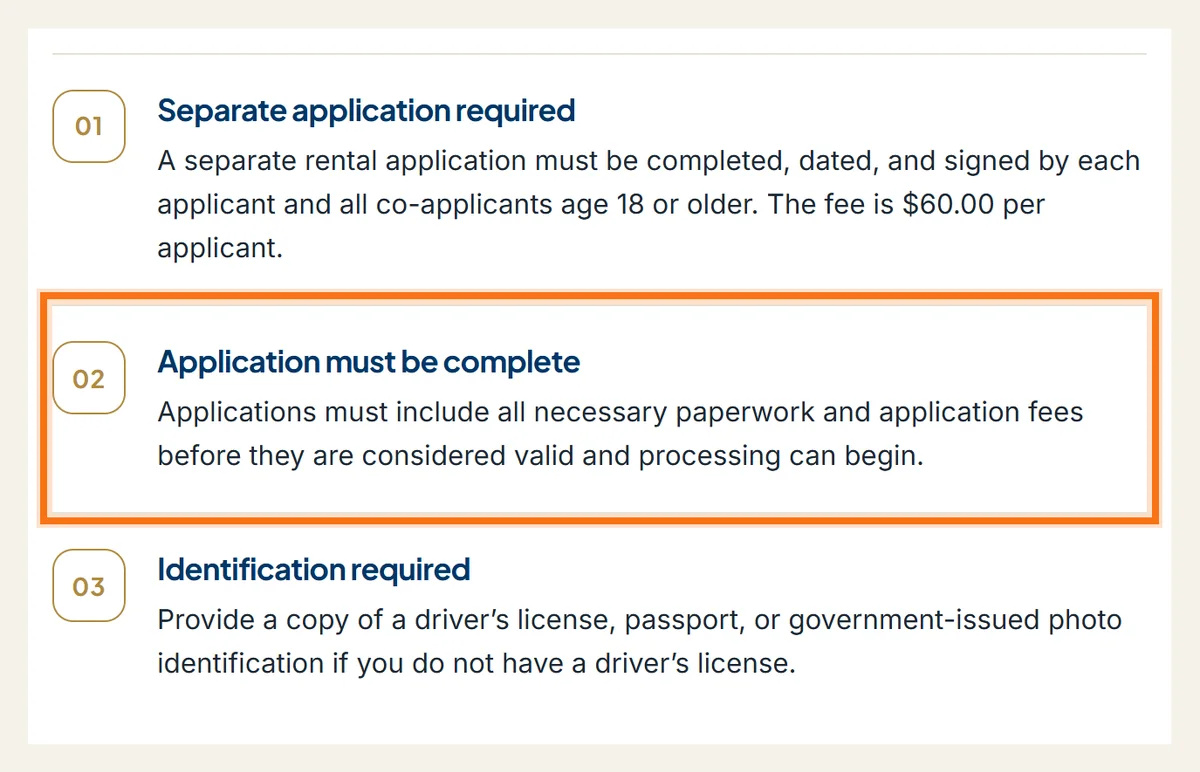
The clock starts at "completed," so the update should say whether each application is complete, not just started. Our own criteria are explicit about it.
When several complete applications arrive close together, the order of processing is set by policy, not by preference; see choosing fairly among several applicants.
What you will and will not see about applicants
An update should tell you how many applications are in, whether each is complete, where it sits in screening and the outcome. It usually should not hand you the raw file. Applications carry pay stubs, bank statements, identification and credit information, and the safest arrangement is that the person applying the criteria holds them. What you need is the result and anything that needs your decision.
Texas requires the criteria to be set before anyone applies. Property Code 92.3515(a) requires the landlord, when giving an applicant a rental application, to make available printed notice of the tenant selection criteria and the grounds for denial, including criminal history, previous rental history, current income, credit history, or failure to provide accurate or complete information. So "approve this one, not that one" by feel is not how the decision should work. The same written criteria apply to every applicant, which is also what fair housing law expects. Who makes the final call is covered in who makes the final decision on a tenant. This is general information, not legal advice.
A record in the portal versus a note that explains it
A portal and a message do different jobs. Our owner portal, on AppFolio, holds your statements, documents and disbursement history: the financial record. The leasing numbers come in the written weekly report, and the report should interpret them. A note that says "40 views, 2 inquiries, the first photo is the back of the house, we are replacing it today" is management; a bare count is data you have to decode yourself.
Keep both. File the weekly reports with the listing so you can compare week three with week one, and use the owner portal for the money side once rent starts.
Which decisions come back to you, including price
An update matters only if it leads to a decision, so agree before the listing goes live which decisions are yours. Typically that is any rent reduction or concession, a pet where the owner's discretion applies, and taking the house off the market. The manager runs the daily mechanics: which sites, which photos, when tours run, and applying the written criteria the same way to every applicant.
Agree the price trigger in advance too: for example, if week two shows tours but no applications and the feedback names the price, you will decide on an adjustment that week rather than the next month. Who has the last word on the rent is covered in who sets the rent.
After the lease is signed, the rhythm changes
The weekly leasing update belongs to the vacancy. Once a tenant moves in, updates follow the month: a statement with rent, expenses and the payout, plus messages when something needs you, such as a repair above your approval limit or a renewal decision. Silence between those points usually means nothing needs you.
What a monthly owner statement should show is in what financial reports a property manager should send, and how often the inside of the house gets checked in whether you receive inspection reports with photos.
How Perpetual reports while your house is listed
Perpetual Property Management is broker-owned and manages homes in Keller, North Richland Hills, Fort Worth and nearby. Our communication guarantee is in writing: we respond to your calls and emails within one business day, and while your home is vacant you get a written activity report every week, with showing feedback and market notes. If we miss either one, tell us and we credit that month's management fee. It is part of the Perpetual Promise and subject to its Guarantee Addendum.
Our marketing page says it plainly: you see showing activity and inquiry volume, and if the market pushes back on price or condition, we tell you in week two, with the numbers. Every adult applicant is screened against the same published criteria; you set the standards with us and we apply them without exceptions. Whether you hear about each application the same day it arrives, and the exact list of decisions that come back to you, are confirmed in writing before you sign. See marketing and showings or call 682-593-7033.
The takeaway: Ask for a weekly written update while the house is listed, read it as a funnel to find the stage that is losing renters, and agree in advance what number makes you change the price.
Questions owners ask
Can I see the names and details of people who apply for my rental?
Usually you receive a summary: whether each applicant is complete, whether they met the written criteria, household size, pets, the requested move-in date and anything that needs your decision. The full file holds pay stubs, bank statements, identification and credit information, and is best kept by whoever applies the criteria. Keeping decisions tied to the same written criteria for everyone is what fair housing law expects and what protects you.
How often should I expect updates after the house is rented?
The weekly rhythm belongs to the vacancy. Once a tenant is in, expect a monthly statement with rent, expenses and your payout, plus messages whenever something needs your attention, such as a repair above your approval limit or a renewal decision. Silence between those points usually means nothing needs you.
What should I do if my manager stops sending marketing updates?
Ask once, in writing, for the current numbers and the plan. If the answer is vague or does not come, that tells you how the rest of the relationship will go: reporting matters most while the house is empty. Check what your agreement promises about reporting and notice before deciding anything. At Perpetual, the weekly written report while vacant is a written guarantee with a fee credit if we miss it.
Will I get updates on inquiries, showings, and applications?
You should, at least weekly while the house is listed: views, inquiries, showings booked and completed, renter feedback and applications by status, with a recommendation. With Perpetual, a written activity report every week while your home is vacant is part of our communication guarantee, with showing feedback and market notes, and we respond to calls and emails within one business day.
What does it mean if my listing gets views but few inquiries?
Renters are seeing the listing and choosing not to ask. Look at the top of the funnel: the first photo, the rent against what similar homes actually leased for, and whether the listing answers pets, move-in costs and availability. Compare with your own previous week rather than a published "normal" rate; we did not find an official benchmark for one.
When does an application count as received?
When it is complete. Our criteria say applications must include all necessary paperwork and application fees before they are considered valid and processing can begin. Texas law also keys off a completed application: under Property Code 92.352, an applicant not accepted by the 7th day after submitting one is deemed rejected.
Related services
Property management in Keller, North Richland Hills and Fort Worth. How full-service management works in Tarrant County →