Key takeaways
- Each side is its own dwelling under Texas law: its own lease, deposit, refund clock and itemized list (Property Code 92.001, 92.103, 92.104).
- A repair to a shared sewer line, roof or slab is one job with two tenants waiting, and either tenant's repair notice starts your duty (92.052).
- Meters, yard, driveway and parking are only as clear as each lease makes them.
- Noise and parking complaints between the two sides land on the manager, so the rules have to be written the same way in both leases.
- Living in one side changes the homestead and the home-sale tax picture: ask the appraisal district and your CPA.
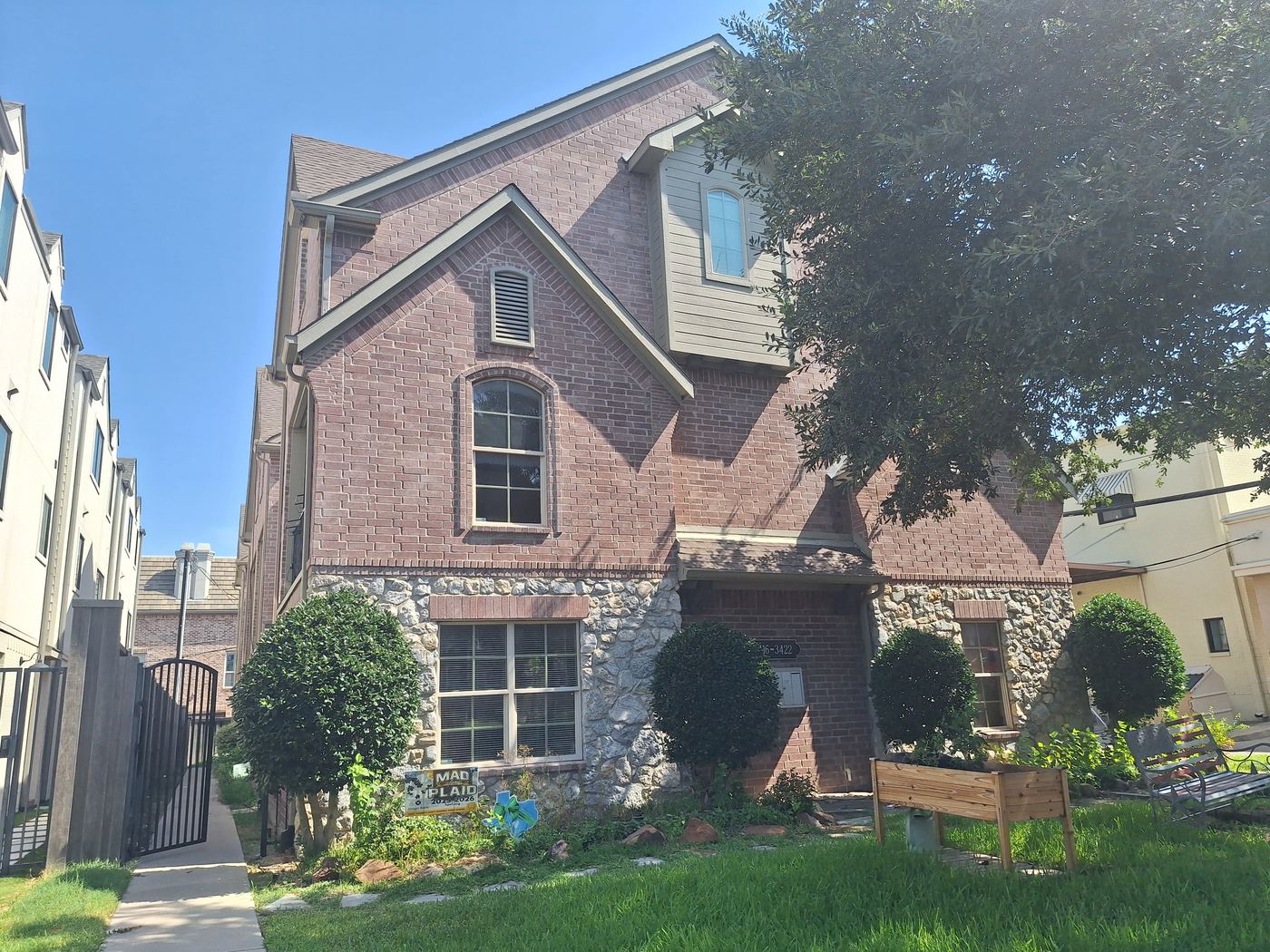
Duplex property management in Tarrant County is the same work as managing a house, done twice, with one building in the middle. For owners in Fort Worth, Keller and North Richland Hills, that means two leases and two deposits, repairs that reach both tenants at once, shared meters and a shared yard, and two households who hear each other through the wall. A manager who has run duplexes can tell you how each of those is handled.
This guide covers what changes when the rental has two units, the Texas rules behind each point, and the questions that show whether a manager has done it before. The basics of small multifamily ownership are in renting out a duplex or fourplex.
What changes when the rental is a duplex
Here is how the same event plays out in a single-family rental and in a duplex, and what it means for whoever manages it:
| Event | Single-family house | Duplex | What management has to do |
|---|---|---|---|
| Rent day | One lease, one payment | Two leases, two payments, two late-fee clocks | Track each side on its own; a late fee needs notice in each written lease, and up to 12% of that side's rent is considered reasonable in a building of four units or fewer (92.019) |
| Move-out | One deposit, one itemized list | Each side has its own deposit, 30-day refund clock and itemized list | Inspect and account for the side that moved out only (92.103, 92.104) |
| Shared sewer line backs up | One tenant affected | Both tenants may be affected | Either tenant's notice can start the repair duty (92.052(a)); plan access to both sides |
| Noise or parking dispute | A neighbor's problem | Your two tenants' problem | Same written rules in both leases, applied the same way |
| Water bill on one meter | Tenant's name, tenant's bill | One bill, two households | The lease must say who pays and how it is split |
| One side empties | No rent at all | Half the rent keeps coming | Lease end dates that do not fall in the same month |
How to read this table: the middle column is the reason a duplex needs its own setup. Every row comes back to two documents, the two leases, and one habit, treating the two tenants the same way.
Who manages duplexes in Tarrant County
Most duplexes in Tarrant County are managed by residential companies that also manage single-family homes, because the leasing, rent collection and repair work is the same work, done for two tenants. Companies built around large apartment communities are set up for on-site staff and many units; whether one will take a two-unit building is a question to ask, not something to assume.
Whether the duplex is an older side-by-side or a newer, higher-end build, ask early: "How many two-to-four-unit buildings do you manage now, and what do you set up differently for a duplex?" Listen for separate leases, separate deposit records and a plan for shared repairs.
Two leases, two deposits, two ledgers
Under Texas law, each side is its own rental. Property Code 92.001 defines a dwelling as one or more rooms rented as a permanent residence under a single lease, so two leases mean two dwellings, each with its own tenant, rent, deposit and dates. That has practical consequences:
- Deposits are tracked one tenant at a time. When side A moves out, the refund or accounting for side A is due on or before the 30th day after that tenant surrenders the premises (92.103(a)), once the tenant has given a written forwarding address (92.107(a)). Side B's deposit is not touched.
- Deductions follow the lease. A landlord may deduct damages and charges for which that tenant is legally liable under the lease, never normal wear and tear (92.104(a), (b)). Damage in the shared yard or driveway needs evidence of which household caused it.
- Rent is priced side by side, not as a building. The two sides rarely match: yard, parking, finishes and position differ. How to price a rental in DFW applies to each side.
Ask how a manager keeps the two sides apart in its records and on your statement.
Keeping both sides from emptying in the same month
A duplex has one advantage over a house: when one side is empty, the other side is still paying. The way to lose that advantage is to let both leases end in the same month, which happens easily when both sides were leased up together and renewed on the same schedule.
Illustrative only, not a quote: with side A at $1,450 and side B at $1,350, one empty month means $1,450 or $1,350 of rent not received; both empty in the same month means $2,800 (checked: $2,800 minus $1,450 leaves $1,350). Lost rent is income not received, not cash paid out, but the mortgage does not pause.
The fix is to set the next lease or renewal on one side for a different length so the end dates drift apart, and keep them apart at each renewal. The broader cost of an empty month is in what vacancy really costs.
One repair, two tenants: the shared systems
A duplex usually shares a roof, a slab, a main sewer line and often a water meter and shutoff. When one of those fails, it is one repair with two tenants waiting, and each tenant has the same rights:
- Either tenant can start the clock. Under 92.052(a), the landlord must make a diligent effort to repair a condition that materially affects the physical health or safety of an ordinary tenant once the tenant gives notice to the person or place where rent is normally paid and is not delinquent in rent. If the lease is in writing and requires written notice, the notice must be in writing (92.052(d)).
- Who caused it matters per tenant. The landlord has no duty during the lease to repair a condition caused by the tenant, a lawful occupant in the tenant's dwelling, a family member or a guest, unless it is normal wear and tear (92.052(b)). A backup caused by side A is not caused by side B's household.
- Shared lines are the owner's. A lease can make a tenant pay for stoppages caused by foreign or improper objects only "in lines that exclusively serve the tenant's dwelling" (92.006(f)(1)), and only with the formal requirements of 92.006(e)(4). A main serving both sides does not fit that wording, so toward a tenant who did not cause a backup, the repair duty stays with you.
Access is the other half. No Texas statute sets a landlord-entry notice period, so each lease's entry clause decides how much notice the plumber needs, as landlord entry rights in Texas explains. Soils and slab issues: foundation and plumbing in North Texas rentals. This is general information, not legal or tax advice.
Meters, yard, driveway and parking: what each lease must say
Anything the two households share has to be written into both leases the same way, before move-in:
- Meters. If each side has its own electric, gas and water meter, each tenant carries their own. A shared water meter needs a stated method: you keep the bill and price it into rent, or the lease sets a split. The Texas Water Code's submetering and allocation subchapter is written for an "apartment house", which section 13.501 defines as one or more buildings containing five or more dwelling units; a duplex has two. Confirm with your water utility how a shared meter is billed before you charge a tenant for water.
- Yard. Who mows which part, or whether you pay a lawn vendor for both.
- Driveway and parking. Which spaces belong to which side, and where guests park.
- Trash and recycling. Where the carts go and whose they are.
The statute table, the 92.301 rule on a utility you agreed to pay, and the three ways to split a water bill are in renting out a duplex or fourplex. The addenda that carry these terms are in lease addenda every Texas landlord should consider.
Noise and complaints between the two sides
In a house, a tenant's neighbor is someone else's tenant. In a duplex, it is yours. The recurring complaints are noise through the shared wall, the shared driveway, the yard, ordinary pets and guests, and every one of them reaches the manager.
Three habits keep them small: the same quiet-hours, parking and yard rules in both leases; every complaint recorded in writing with the date and what was done; and enforcement against whichever tenant is in breach of their own lease, not against the one who complains less. How complaints are triaged in general is covered in handling tenant complaints, and complaints from neighbors about a tenant in neighbor complaints and lease violations.
If you live in one side
Many Tarrant County duplexes are bought by owners who live in one side and rent the other. Management still works: the manager leases and handles the rented side, and you are the occupant next door. Two things need to be settled in writing: which shared repairs the manager arranges and how you approve them, and that the tenant contacts the manager rather than knocking on your door.
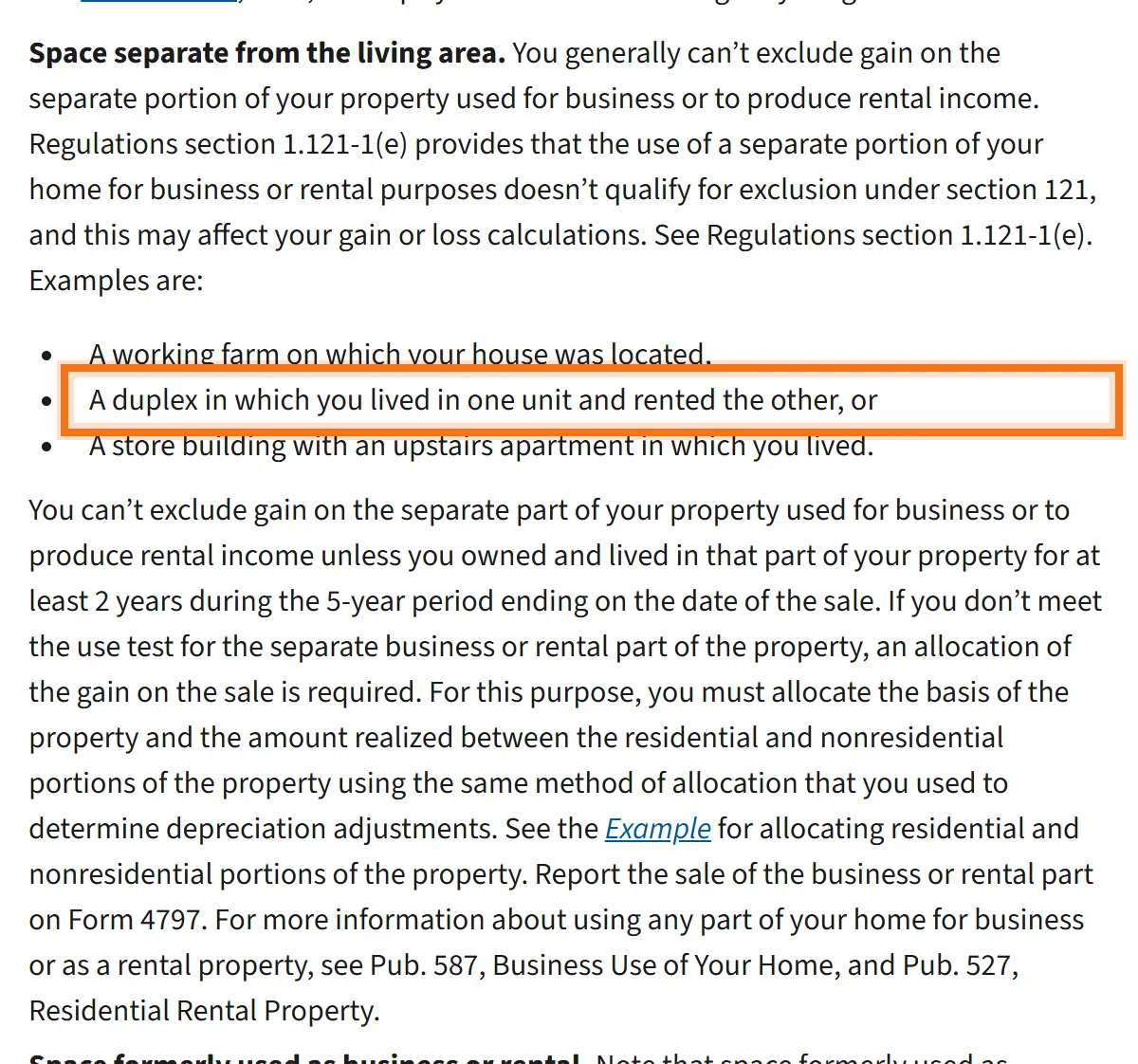
Two tax points come with living there. The Texas residence homestead definition in Tax Code 11.13(j)(1) includes "a separately secured and occupied portion of a structure" occupied as the owner's principal residence; ask the Tarrant Appraisal District how that applies to your side. And at sale, IRS Publication 523 treats the rented side of a duplex as a separate portion of the property:
Choosing between a house and a duplex in the first place is covered in single-family home or duplex as a first rental. This is general information, not legal or tax advice.
Questions that show whether a manager has run a duplex
Ask these in the first conversation and listen for specific answers:
- "How will my statement show the two sides, and can I see each side's rent, repairs and deposit separately?"
- "How do you keep the two lease end dates apart?"
- "What do your leases say about a shared water meter, the yard and parking?"
- "When a repair needs access to both sides, how do you arrange it and tell both tenants?"
- "What happens when one tenant complains about the other?"
- "How do your fees apply to two leases in one building: management, placement and renewal?"
- "Have you managed a duplex where the owner lives in one side?"
A manager who has run duplexes answers each in a sentence or two. Our free rental analysis is a natural place to start, because pricing the two sides is where the conversation begins.
How Perpetual handles this
Perpetual Property Management is a broker-owned company in North Richland Hills. What our site states about duplexes and how we manage:
- What we manage. Single-family homes, townhomes and small multifamily across Northeast Tarrant County; on our North Richland Hills page, duplexes and small multifamily are part of the portfolio alongside single-family homes, on twelve-month leases and renewals.
- Fees. Full Service 10%, Standard 9% and Investor Special 7% of monthly rent, the last for portfolios of 5 or more units, on our price sheet. The final fee is set after the rental analysis, and the price sheet notes that property type and condition matter: a newer single-family home prices differently than an older fourplex.
- Repairs. Spending limits are agreed with you in advance; larger items come to you with a recommendation; the original vendor invoice is always in your owner portal, and every completed repair over $500 gets photo or video proof, subject to the Guarantee Addendum.
- Condition records. A 360-degree condition inspection at every move-in and move-out, and an annual property inspection on every plan.
How the fees apply to each side's lease, and how a shared repair is shown on your statement, are confirmed in writing in the management agreement before you sign; if a fee is not in the agreement, you do not pay it. To talk about your duplex, call 682-593-7033.
The takeaway: A duplex is two accounts and one building: two leases, two deposits and two ledgers, plus shared systems and shared space that the leases and the manager have to handle the same way for both sides.
Questions owners ask
Who manages duplexes in Tarrant County?
Mostly residential management companies that also manage single-family homes, because the work is the same, done for two tenants in one building. Ask how many two-to-four-unit buildings the company manages now, how the two sides appear on your statement, how lease end dates are kept apart, and how shared repairs and tenant-to-tenant complaints are handled. Perpetual manages small multifamily, including duplexes, in Tarrant County.
Should both units of a duplex rent for the same amount?
Usually not. One side often has the better yard, parking, finishes or position, and one price for both either leaves money on the stronger side or keeps the weaker one empty longer. Price each side from leased comparables, and keep each side's rent, deposit and repairs separate in the records.
How do I keep both duplex units from going vacant at the same time?
Keep the lease end dates apart. When one side next leases or renews, set a different term length so its end date moves away from the other side's, then keep the gap at each renewal. Ask a manager what it would do if both of your leases end in the same month today.
Who pays utilities on a duplex with one water meter?
Whatever both leases say, which is why they must say it before move-in: you keep the bill and price it into rent, or the lease sets a stated split. The Texas Water Code's submetering subchapter defines an apartment house as five or more dwelling units, so confirm with your water utility how a shared meter on a duplex is billed before charging a tenant.
Can a property manager handle a duplex if I live in the other side?
Yes. The manager leases and handles the rented side, and shared repairs are arranged with you as the occupant next door. Settle in writing how you approve shared repairs and that the tenant contacts the manager, not you. Ask the Tarrant Appraisal District about the homestead on your side and a CPA about the sale rules in IRS Publication 523.
Is the late fee limit different for a duplex in Texas?
No different from a house. Under Property Code 92.019(a-1), a late fee is considered reasonable at up to 12 percent of the month's rent for a dwelling in a structure with not more than four dwelling units; above four units the figure is 10 percent. Each side's fee is measured against that side's rent, and notice of the fee must be in the written lease. This is general information, not legal advice.
Who pays when one side's drain backs up into the shared line?
A lease can make a tenant pay for stoppages from foreign or improper objects only in lines that exclusively serve that tenant's dwelling (Property Code 92.006(f)(1)), with the formal requirements of 92.006(e)(4). A main serving both sides does not fit that wording. Toward the tenant who did not cause the backup, the repair duty stays with the owner (92.052(b)); what the responsible tenant owes is a lease and move-out question. This is general information, not legal advice.
Property management in Keller, North Richland Hills and Fort Worth. How full-service management works in Tarrant County →