Key takeaways
- Sort every complaint before answering: a repair, noise from another unit, an HOA letter, a billing question or a complaint about a vendor or staff member.
- Under Property Code 92.052, the duty to repair covers conditions that materially affect an ordinary tenant's physical health or safety, plus hot water of at least 120 degrees, once the tenant gives notice where rent is normally paid.
- Under 92.056(d), seven days is presumed a reasonable time to repair after notice; the presumption can be rebutted by the severity of the problem and the availability of labor and materials.
- For six months after a tenant's good-faith repair notice or code complaint, 92.331(b) bars retaliating by raising the rent, ending the lease, or filing an eviction other than on the grounds in 92.332.
- A dated written record of each complaint, answer and fix is what settles a later dispute.
How should a landlord handle tenant complaints? Sort each one by type, answer it in writing the same day with the next step and a time, act on what the type requires, and close it with a dated note. On a rental in Fort Worth, Keller or North Richland Hills, Texas law sets the rules for one type in particular: repairs, where Property Code 92.052 and 92.056 set the duty and the clock, and 92.331 limits what you may do afterward.
Below: the complaint types in one table, the first written reply, the repair clock, noise and HOA letters, billing and staff complaints, the retaliation limits, and how we handle this.
The kinds of tenant complaints and the rule behind each
Here are the complaints a rental owner or manager actually receives from tenants, what each one usually is, and the rule that decides the answer:
| Complaint | What it usually is | The rule that applies | First written answer |
|---|---|---|---|
| Something broken: a leak, no hot water, no cooling | A repair request | Property Code 92.052 and the lease | Received, the next step, and when to expect contact |
| Noise from the other side of a duplex or fourplex you own | A lease issue with your other tenant | That tenant's lease | That you will address it with the other household |
| Noise, parking or pets at a house you do not own | Outside your control | City code or that owner's HOA | What you can and cannot do, and who to contact |
| An HOA letter the tenant received | A rules question | The HOA rules and your lease | Which rule, what cures it, who pays any fine under the lease |
| A charge on the ledger: a late fee or a repair bill | A billing question | The lease; 92.019 and 92.0191 for late fees | The ledger line and the lease clause behind it |
| A rude vendor or staff member | A conduct complaint | Your management agreement | Who will review it and by when |
How to read this table: only the first row carries a statutory duty and clock. The others are answered from a lease, a rule or the management agreement, so the useful reply quotes that document instead of arguing. A complaint can move rows: a "noise" complaint that turns out to be a failing AC compressor is a repair.
Triage first: what kind of complaint is it?
Decide what kind of complaint it is before you write a word back. The type sets whether a duty exists, how fast you must move and which document the answer comes from: the statute for repairs, the lease for requests, noise and billing, the management agreement for conduct.
Most friction comes from treating a request like a repair, or a repair like a request. A ceiling fan the tenant would like is a request you may decline; a ceiling fan that came with the house and stopped working is a repair. Name the type in your notes first.
The first reply: in writing, the same day
The first reply goes out the same business day and does three things: confirms you received the complaint, states the next step, and gives a time. It does not argue, promise an outcome you do not control, or apologize for something not yet checked.
For a repair: "Received. We are sending a technician and you will be contacted to schedule. If water is actively leaking, close the shutoff valve and call the emergency line." For a request: "Thanks for asking. I will check with the owner and reply by Friday." For a neighbor problem: "Here is what we can do, and here is who handles the rest."
Put the reply in writing, even when the complaint came by phone. A one-line message that restates the complaint and the next step becomes the first entry in the record. If the lease names a channel for repair requests, such as a portal, point the tenant to it so the next complaint starts there.
Repair complaints: the written notice and the Texas repair clock
Under Property Code 92.052(a), a landlord must make a diligent effort to repair or remedy a condition when three things are true: the tenant gave notice to the person or place where rent is normally paid, the tenant was not delinquent in rent when the notice was given, and the condition materially affects the physical health or safety of an ordinary tenant, or comes from a failure to keep a water heater supplying at least 120 degrees Fahrenheit. Under 92.052(d), that notice must be in writing only if the lease is in writing and requires it.
Under 92.052(b), there is no duty during the lease to repair a condition caused by the tenant, an occupant, a family member or a guest, unless it is normal wear and tear. That is why the cause gets recorded on every repair.
The clock. Under 92.056(d), seven days is presumed a reasonable time to repair after the landlord receives notice. The presumption can be rebutted by the date of notice, the severity of the condition and the availability of materials, labor and utilities. Under 92.056(c), notice counts as received when the landlord or the landlord's agent or employee actually receives it, or when the Postal Service attempted delivery. If a tenant sends a written demand for an explanation of a delay, 92.053(b) requires a written answer by the fifth day.
What happens if the repair stalls. Under 92.056(e), a tenant to whom the landlord is liable may end the lease, have the repair made and deduct the cost under 92.0561 (capped at one month's rent or $500, whichever is greater), or go to court. Withholding rent outside those rules is not one of the remedies, and 92.058 lets a landlord recover damages from a tenant who does it. Texas landlord repair obligations covers the duties in full. This is general information, not legal advice.
The written record: complaint, answer, close
Every complaint gets three dated entries: the complaint as the tenant stated it, your written answer, and the close. For a repair the close is the invoice and a photo of the finished work. For a request it is the written yes or no. For a neighbor problem it is a note of what you told the tenant and what you did.
The record does two jobs. It answers "when did you first hear about this" with a date, which is the question most repair disputes turn on, because the 92.056 clock runs from receipt. And it shows patterns: the same leak reported three times is one unfixed problem, not three bad luck events, and fixing the cause usually costs less than the fourth service call.
Keep the record for the whole tenancy and past move-out. A complaint log that shows prompt answers is also the best evidence that a later non-renewal had nothing to do with the complaint.
Noise from other units and problems with neighbors
Noise from another unit you own. In a duplex or fourplex, the noisy household is also your tenant, so the complaint becomes a lease question about them. Check the quiet-enjoyment and conduct clauses in their lease, send a written notice citing the clause, and tell the complaining tenant that it is being handled without sharing the other household's details.
Noise or problems from a house you do not own. You cannot make a neighbor change, so say so plainly. Point the tenant to the city's code or noise line or the neighbor's HOA, and note what you told them.
The reverse case, a neighbor or the HOA complaining about your tenant, is a lease-violation question. That process, from the written complaint to the cure notice, is covered in how a property manager handles neighbor complaints and lease violations.
HOA letters, billing questions and complaints about staff
HOA letters. When a tenant forwards or complains about an HOA violation letter, the answer names the rule, what cures it and by when, and who pays any fine under your lease. If the letter is really about something you owe, such as a fence or roof, it is your repair. How a manager handles HOA notices and violations covers the routine.
Billing. Answer with the ledger line and the lease clause. Late fees follow Property Code 92.019(a): notice of the fee in a written lease, a reasonable amount, and rent unpaid two full days after it was due. Under 92.0191, a tenant may ask for a written statement of whether a late fee is owed and how much, and the landlord must provide it by the usual written channel.
Staff or vendor conduct. Thank the tenant, say who will review it and when, and follow up. The manager should tell you about any conduct complaint involving someone sent to your property.
Retaliation limits: what you may not do for six months
Some complaints become disputes: the tenant cites the city, an attorney or the repair-and-deduct remedy. The handling then becomes stricter, because Texas limits what a landlord may do next.
Under Property Code 92.331(a), a landlord may not retaliate because a tenant in good faith used a lawful right or remedy, gave a repair notice, or complained to a government building or housing code office or a utility. Under 92.331(b), for six months after that action, the landlord may not retaliate by filing an eviction except on the grounds in 92.332, depriving the tenant of the premises, decreasing services, increasing the rent or ending the lease, or by bad-faith conduct that interferes with the lease.
Under 92.332(b), an eviction or lease termination based on certain grounds is not retaliation, such as rent that is delinquent when the notice is given or property the tenant intentionally damaged. Under 92.332(a), a landlord is also not liable if it proves the action was not retaliation. That is what the complaint log is for. If an attorney is involved on the tenant's side, involve one on yours. This is general information, not legal advice.
Keeping the tenant after a bad week
A tenant who had a frustrating repair week decides about renewal from how it was handled, not from whether something broke. What they remember is whether someone answered, whether the fix was real, and whether they were treated as a customer.
Three habits help. Follow up after the repair with one line asking whether it is resolved. If a repair genuinely dragged, say so and thank them, without offering a credit the lease does not require. And note the episode in the record, so the renewal conversation starts from "the water heater was replaced in two days." Whether a steady tenant is worth keeping at the current rent is weighed in keeping a good tenant at the same rent, and the renewal itself runs through lease renewals.
How Perpetual handles tenant complaints
Perpetual Property Management is broker-owned, with our office at 5755 Rufe Snow Dr in North Richland Hills, and we manage homes in Keller, North Richland Hills, Fort Worth and nearby. What our site states about the complaints tenants bring us:
- Repairs start in the tenant portal. Tenants pay rent, read their lease and submit maintenance requests online. Requests come in with photos, which creates a documented record and lets us triage before dispatching anyone.
- Your spending limit. Routine repairs under the limit you pre-approve are fixed without waiting; anything larger comes to you with a description, photos and a recommendation.
- Emergencies. Active leaks, no AC in extreme heat, no heat in winter and electrical hazards follow a 24/7 process (maintenance coordination).
- Proof. What was reported, what was done and what it cost is visible in your portal, with the original vendor invoice. Under the Perpetual Promise, every completed repair over $500 gets photo or video proof, subject to the Guarantee Addendum.
How non-repair complaints are logged and answered, and when you are told about them, is confirmed in writing before you sign. To talk through a complaint on your rental, call 682-593-7033.
The takeaway: Sort the complaint, answer in writing the same day, run repairs on the 92.052 and 92.056 clock, keep the dated record, and make no rent or lease move against a tenant who complained in good faith within the six months 92.331 covers.
Questions owners ask
How long does a landlord have to fix something in Texas?
Property Code 92.056(d) presumes seven days is a reasonable time to repair after the landlord receives the tenant's notice. The presumption can be rebutted by the severity of the condition and the availability of labor, materials and utilities. The duty under 92.052 covers conditions that materially affect an ordinary tenant's health or safety, after notice to the place where rent is normally paid, while the tenant is current on rent.
Can a tenant withhold rent for repairs in Texas?
Not under the repair statutes. Property Code 92.056(e) gives a tenant specific remedies after proper notice and a reasonable time: ending the lease, repair and deduct under 92.0561 within its cap and conditions, or going to court. Under 92.058, a landlord may recover damages from a tenant who withholds rent in violation of that subchapter, and a penalty after written warning in bad-faith cases. Owners should still fix real repairs promptly.
What if a tenant complains constantly about small things?
Answer each one briefly, in writing, by type: repair, request, noise, billing or conduct. Schedule real repairs on the normal clock, decline requests plainly and keep a neutral tone. The dated record shows whether the house has a recurring problem or the tenant expects more than the lease promises, and it protects you if a later non-renewal is ever questioned.
Should I give a rent credit when a repair takes too long?
Only if the lease or the situation genuinely calls for it, and not as a reflex. A sincere note and a quick follow-up usually do more for the relationship than a credit. If a delay left part of the home unusable, talk to your manager or an attorney before offering anything in writing.
Will a property manager handle neighbor complaints and lease violations?
Yes, within what the owner controls. When your tenant complains about another of your tenants, as in a duplex, the manager handles it under that tenant's lease with a written notice citing the clause. When the neighbor's house is not yours, the honest answer is the city's code or noise line or the neighbor's HOA. A neighbor complaining about your tenant is a lease-violation process, covered in our separate guide on neighbor complaints and lease violations.
Can I raise the rent after a tenant complains about repairs?
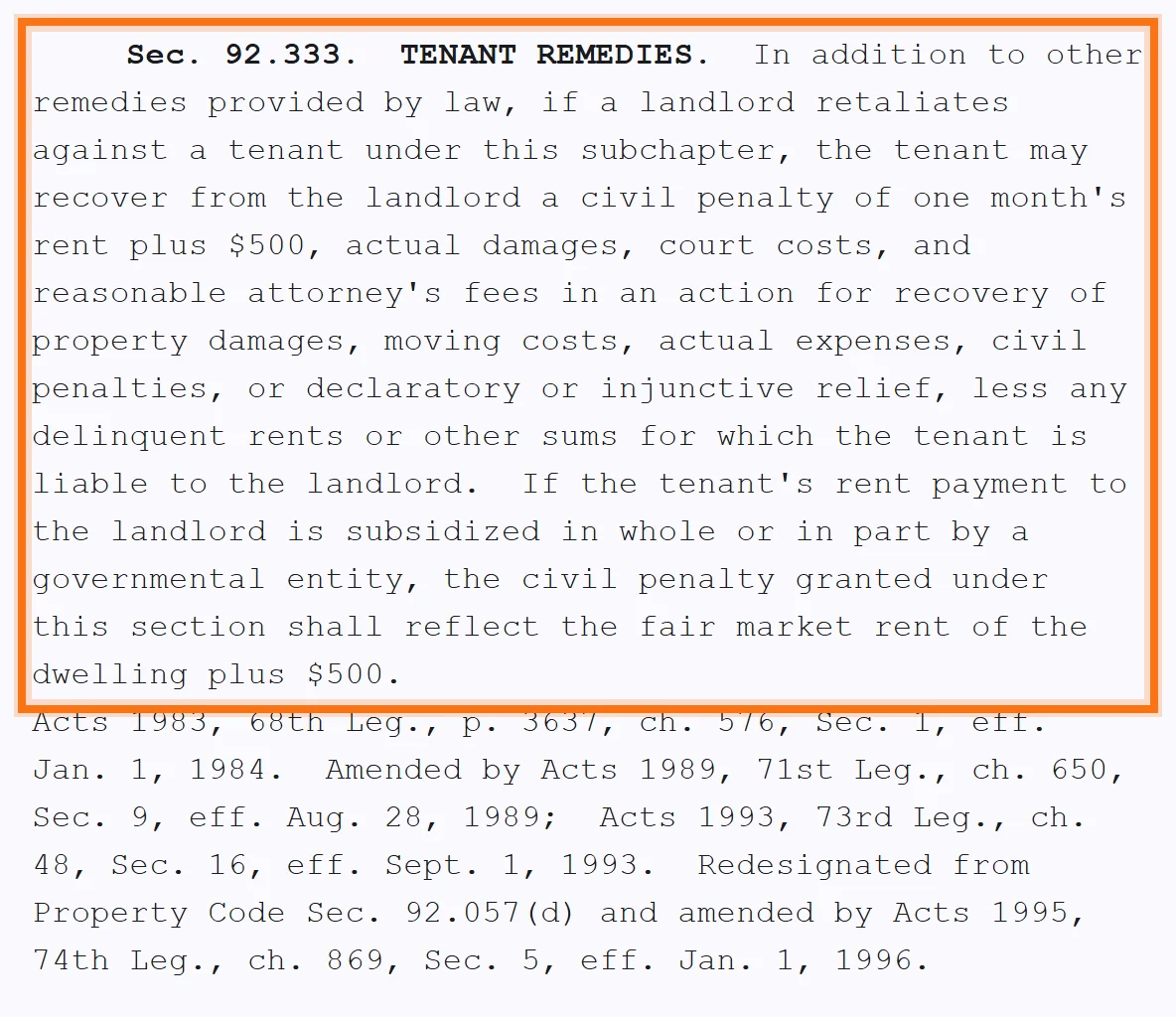
Not as retaliation. Property Code 92.331(b) bars increasing the rent or ending the lease within six months after a tenant's good-faith repair notice, use of a legal remedy, or complaint to a code office. Section 92.332 lists actions that are not retaliation. Under 92.333, a tenant who proves retaliation may recover one month's rent plus $500, actual damages, court costs and attorney's fees.
Does a tenant's repair complaint have to be in writing in Texas?
Only if the lease is in writing and requires written notice, under Property Code 92.052(d). The notice goes to the person or place where rent is normally paid. For the tenant's statutory remedies, 92.056(b) also requires a later written notice, unless the first notice went by certified, registered or tracked mail.
Property management in Keller, North Richland Hills and Fort Worth. How full-service management works in Tarrant County →