Key takeaways
- A track record is numbers with definitions, not a review score.
- Ask for seven: days to lease, renewal share, average tenancy, delinquency, evictions, owner retention and complaint history.
- Ask for both counts behind every percentage; the definition is where numbers get flattered.
- There is no official benchmark: compare each figure with the other quotes, measured the same way.
- The TREC License Holder Search and the complaint process are the public checks.
To check references for a property management company, go beyond a phone call with a happy client: ask for seven performance numbers, each with its definition and the counts behind it, then run the public license check with the Texas Real Estate Commission. Compare each figure with what the other managers you are interviewing report. It is the same method for a manager in Fort Worth, Keller or North Richland Hills.
Below is the table of numbers with how each is defined, verified and gamed, two illustrative examples of a flattering definition, the public checks, and a test you can run yourself.
The seven numbers: definition, check, and how each is gamed
Here are the numbers that describe a manager's track record, the definition to ask for, how to verify each one, and the common way it is made to look better:
| Number | How it should be defined | How to verify it | How it gets gamed |
|---|---|---|---|
| Days to lease (days vacant) | Days from the old tenant's move-out to the new tenant's move-in, make-ready included, averaged over the year's turnovers | Ask for the list of the year's turnovers with the two dates for each; ask a reference for their last one | Counted from the listing date, or only to lease signing, which hides make-ready and the gap before move-in |
| Renewal share | Leases that ended in the year where the tenant renewed, divided by all leases that ended | Ask for both counts, not only the percentage | Tenants asked to leave are dropped from the bottom, or a month-to-month rollover counts as a renewal |
| Average tenancy | Average months a tenant stays, across all tenancies that ended in the period | Ask whether tenancies still running are counted, and over which years | Only long-running current tenants are averaged, which leaves out the short ones |
| Delinquency | Rent collected divided by rent due under the leases, for the year | Ask for both dollar totals; ask how many tenants were more than 30 days behind at year-end | Measured against rent billed after write-offs, so lost rent disappears from the base |
| Evictions | Eviction suits filed in the year, divided by homes managed | Ask for filings, not only completed evictions, and the number of homes | Only completed evictions are counted, or one good year is shown |
| Owner retention | Owners who left in the year, divided by owners at the start of the year | Ask why the ones who left did so: sale, self-managing, or dissatisfied | Owners who sold are mixed with owners who left unhappy, or the count is never kept |
| Complaint history | Complaints filed with the Texas Real Estate Commission against the company or its broker, and how each ended | The license record on the TREC License Holder Search; then ask the company directly | Answering about the company while leaving out the broker, or the reverse |
How to read this table: the second column is the definition you write into your request, so every company answers the same question. The third column is what to ask for alongside the figure. The last column is not an accusation; it is the question to ask when a number looks unusually good.
No public source sets a "good" figure for any of these numbers for houses in our area, and a vacant month in summer differs from one in December. So do not judge a number against a benchmark. Judge it against the other quotes you collect, measured the same way, and by whether the company can explain it.
Four sources, in the order to check them
There is no single website that rates property managers. Four sources together give a clear picture, and they are quickest in this order:
- The public record. The license of the company and its broker on the Texas Real Estate Commission's search. How to verify a property manager's Texas license walks through it.
- The company's own numbers. The seven in the table above, requested in writing with definitions.
- Owner references. One or two current clients whose houses resemble yours.
- Your own test. An inquiry on one of the company's live listings, the way a tenant would make it.
The first and last need nobody's cooperation. The middle two show whether the company measures itself and whether its clients describe the same company its numbers do.
How to ask for the numbers
Ask in one email, so the request and the answers are on record. Ask for the most recent full year, for the company's whole managed portfolio, and paste in the definitions from the table. A company that tracks its business can answer from its own software; one that cannot is telling you it does not manage to these numbers.
Ask for counts, not only percentages. "92% renewal" means little; "23 of 25 leases that ended were renewed" can be checked and compared. Ask how many homes the company manages, because a figure from a dozen homes swings more than one from a few hundred.
Then send the same email to every manager you are considering. The comparison is only fair if each answers the same question. The numbers to keep tracking for your own house after you hire someone are in the numbers that tell you if your rental is performing.
Two illustrative examples of a flattering definition
Two short examples show why the definition matters more than the figure. Both are illustrative only, with invented dates and counts.
Days vacant. A tenant moves out March 1. The house is listed March 15, a lease is signed March 29, and the new tenant moves in April 8. Measured from listing to signing, that turnover took 14 days. Measured from move-out to move-in, it took 38 days: 14 days of make-ready, 14 days on the market and 10 days to move-in, and 14 + 14 + 10 = 38. Both figures are true. Only the second is what the vacancy cost the owner.
Renewal share. Ten leases ended in a year. Six tenants renewed, two chose to leave and two were asked to leave. Six of ten is 60%. Drop the two who were asked to leave and it becomes six of eight, or 75%. Again both are true, which is why you ask for the counts.
Ask "from what date to what date?" for every number. A manager who answers precisely has nothing to hide.
Where the reference call fits
An owner reference tells you what the numbers felt like from the owner's side: how long the last turnover really took, what a late-paying tenant looked like on the statement, whether the renewal advice was right. That makes it the best cross-check on the figures a company gives you.
Ask for an owner whose house resembles yours and who has been through at least one turnover, and expect a few days while the company asks that owner's permission. A flat refusal with nothing offered in its place is a finding. The full method, including a ten-question call script and how to tell a reference is a real owner, is in should I ask to speak with other owners they work with.
Use the call to test two numbers directly. If the company says its days to lease are low, ask the reference how long their last turnover took from move-out to move-in. If the company says renewals are high, ask what happened at their last renewal.
The public checks: the TREC license and complaint record
The license. The Texas Real Estate Commission's License Holder Search lets anyone search by name or license number and filter by license type and status. The statuses it lists are Active, Inactive, Un-Sponsored, Expired, Suspended, Surrendered and Revoked. Search both the company named on the agreement and its broker, and confirm both are active.
The complaint process. TREC's complaint page says anyone can file a complaint against a license holder, in writing, with a name and contact information; TREC cannot accept an anonymous complaint or investigate an incident from four or more years ago. Personal issues or contractual disputes generally are not matters it can address, and it cannot order a license holder to pay damages.
The same page lists what can happen when a staff attorney reviews a case: a letter closing the complaint, an advisory letter that becomes part of the license holder's record, or a recommendation of formal discipline, which it describes as monetary fines, license suspension or license revocation.
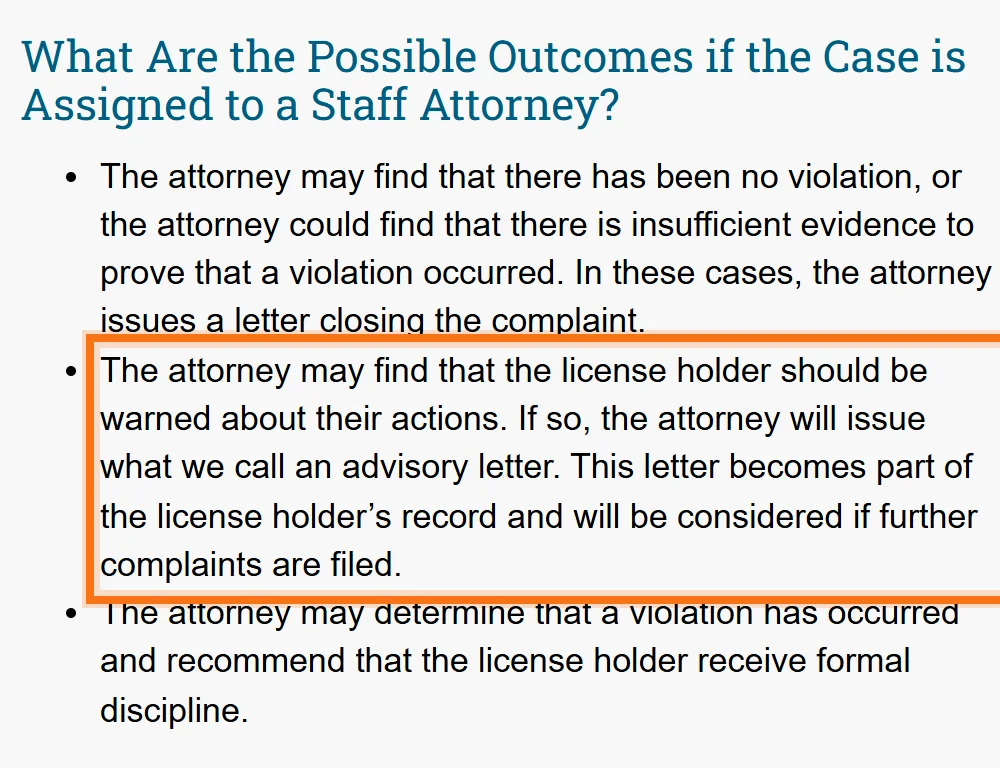
So ask each company in writing: "Has the company or its broker received a TREC complaint that ended in an advisory letter or discipline, and what was it about?" Judge the answer by how specific it is.
The test you can run yourself
Numbers and references describe the past. A twenty-minute test shows what the company does today. Find one of the manager's current rental listings and inquire the way a tenant would, by the listed phone number or the listing's contact form, in the evening or on a weekend if you can. Note how long the reply takes, whether it answers your question and whether it moves you toward a showing. That is how your future applicants will be treated.
Then read the listing itself. Are the photos clear and taken after the make-ready? Is the description specific about the house and the terms, or a template? A listing that sits with poor photos is a vacancy the numbers will show next year.
Hold every manager, including us, to the same test.
Running these checks on Perpetual
Perpetual Property Management is broker-owned, with our office in North Richland Hills, and we manage rentals in Keller, North Richland Hills, Fort Worth and the surrounding Northeast Tarrant County communities. Here is what you can check on us today, and what to ask us for:
- The public record. Perpetual Property Management is a registered assumed name of Perpetual Realty Group, LLC, TREC Broker Company License 9008702-BB. Justin Brown, Broker/Owner, holds TREC Broker License 549418-B, licensed since 2006. Search both on the TREC License Holder Search.
- Numbers we commit to in writing. The five guarantees in the Perpetual Promise, subject to the Guarantee Addendum, give you figures to track each month: listed on every major rental platform within 5 business days of being market-ready; calls and emails answered within one business day, with a written activity report every week while the home is vacant; rent we collect disbursed by the 10th of each month; a replacement tenant with no additional leasing fee if a tenant we place defaults and is removed, or breaks the lease, within the first 6 months.
- Records you will see. Our owner portal holds your statements, documents and disbursement history; the original vendor invoice is always in the portal; inspection photo reports go to the portal.
Our website does not publish days-to-lease, renewal or eviction figures. Ask us for them with the definitions in the table above, and compare our answer with the other quotes.
Every fee is on our price sheet and confirmed in writing before you sign. Run the inquiry test on one of our listings, then request a free rental analysis or call 682-593-7033.
The takeaway: Ask for the seven numbers with definitions and the counts behind them, compare them across the managers you interview, check the TREC license record, and run your own inquiry test before you decide.
Questions owners ask
What performance numbers should I ask a property manager for?
Seven, each with its definition: days to lease measured from move-out to move-in, renewal share, average tenancy, delinquency (rent collected against rent due), eviction filings per home managed, owner retention and complaint history. Ask for the most recent full year, for the whole portfolio, and for the counts behind every percentage.
What if the manager cannot produce performance numbers?
Treat it as a finding, not a gap to fill later. A company that does not know its own days to lease or renewal share is not managing to them, and your house will be run the same way. Ask once more in writing with your definitions; if the answer is still vague, weigh the owner reference and your own inquiry test more heavily, or move on.
What is a good average days vacant for a property manager?
There is no official benchmark, and the figure depends on the season, the price point and the condition of the houses. Compare managers against each other using the same definition: days from the old tenant's move-out to the new tenant's move-in, make-ready included. A manager who measures it that way and can explain the figure is the one to trust.
What questions should I ask a property manager's reference?
Ask about events only an owner can know: the last turnover from move-out to move-in, a repair above the approval limit, a late payment, a surprise charge, the last renewal, and one thing they wish the company did better. A full ten-question script with what good and weak answers sound like is in our guide to owner reference calls.
Can I trust online reviews of a property management company?
Partly. Owner reviews speak to statements, communication and vacancy; tenant reviews speak to repairs and move-out handling, and a manager who enforces leases will have some unhappy tenants. Use reviews to find questions, then check them against the numbers, the license record and an owner reference.
How do I check references for a property management company?
Do two things. Ask for an owner reference whose house resembles yours and ask about specific events. Then ask the company in writing for seven numbers with definitions and counts: days to lease, renewal share, average tenancy, delinquency, evictions, owner retention and complaint history. Check the license on the TREC License Holder Search, and compare everything with the other quotes.
Can I look up complaints against a property management company in Texas?
You can look up the license and its status on the Texas Real Estate Commission's License Holder Search. TREC's complaint page explains who can file, that complaints must be written and signed, and that outcomes include a closing letter, an advisory letter that becomes part of the record, or formal discipline. Ask the company directly about any complaint and how it ended.
Related services
Property management in Keller, North Richland Hills and Fort Worth. How full-service management works in Tarrant County →