
Key takeaways
- Sort the money by type: application fee, holding money, security deposit and rent paid in advance each follow a different rule.
- Texas defines an application fee as nonrefundable and an application deposit as refundable if the applicant is rejected (Property Code 92.351). For an approved applicant who withdraws, the written terms decide.
- Holding money is not a security deposit: section 92.102 excludes a rental application deposit from that definition.
- Relist with a new available date and re-check keys, make-ready and utilities. The price rarely needs to change.
- The next applicant meets the same written criteria and gets their own acceptance. The first applicant's reasons stay private.
An approved tenant who backs out before move-in leaves you two jobs: get the house back in front of renters, and handle any money you are holding correctly. On a rental in Fort Worth, Keller or North Richland Hills, that money follows the Texas Property Code and the paperwork the applicant signed: an application fee was spent on screening, holding money follows its written terms, and a security deposit under a signed lease is applied with an itemized list.
This guide is the owner's checklist for the days after a withdrawal: the money you may be holding, how to relist, what to tell the next applicant and what your statement should show. What Texas law says at each stage of a withdrawal, and what the gap costs in rent, is covered in what happens if an approved tenant backs out before moving in.
The money you may be holding after an approved tenant backs out
A withdrawal can leave up to four kinds of money on the table. Here is what Texas law says about each and what to do with it this week:
| Money | What Texas law says | What to do this week |
|---|---|---|
| Application fee | A nonrefundable sum that offsets the cost of screening (Property Code 92.351). It must be returned if the landlord rejects an applicant without having made the selection criteria available (92.3515). | Usually nothing to refund: the screening was done. File the receipt with the application. |
| Holding money or application deposit, paid before any lease | Refundable to the applicant if the applicant is rejected (92.351). Not a security deposit (92.102). The statute does not address an approved applicant who withdraws. | Get the withdrawal in writing, read the terms the applicant signed, and refund or keep exactly as they say. |
| Security deposit, lease signed | Deductions need a written description and itemized list (92.104). If a replacement moves in by the lease start date, 92.1031 limits what you keep. | Hold it until you know when the replacement starts, then account for it in writing. |
| Rent paid in advance, lease signed | The same 92.1031 limit applies to a rent prepayment when a replacement moves in by the start date. | Track it as its own line, separate from the deposit. |
How to read this table: the first two rows depend on what the applicant signed before any lease; the last two depend on the lease and on the date the next tenant moves in. If you cannot tell which row a payment belongs to, settle that first, because a refund sent or withheld under the wrong rule is hard to undo.
Three questions to answer before you refund or keep anything
- What did the applicant sign? An application only, written holding terms, or a lease. Find the signed copies, not the blank template.
- What was paid, by whom, and who holds it? The application subchapter treats money as deposited when it sits in an account of the landlord or the landlord's agent (Property Code 92.351), so confirm whether you or your manager holds it before anyone promises a refund.
- Is the withdrawal in writing? An email or text with the date. A call saying "we might not" is not a withdrawal, and the house should not go to the next applicant on the strength of it.
Skip these and owners make one of two mistakes: refunding everything when a signed lease gave them rights, or keeping money from someone who never signed anything that allowed it.
Holding money: refund it or keep it?
Texas law defines an application deposit as money given with a rental application that is refundable to the applicant if the applicant is rejected (Property Code 92.351). It does not say what happens when an approved applicant changes their mind, so the written holding terms decide. Terms that state the amount, the signing deadline, when the money becomes part of the security deposit and when it is kept are what let you act without an argument.
If it was you who changed course, for example you decided to sell or to move a relative in, refund the money in full. The statute is strict here: a landlord who in bad faith fails to refund an application fee or deposit as the subchapter requires owes $100, three times the amount kept and the applicant's reasonable attorney's fees (92.354).
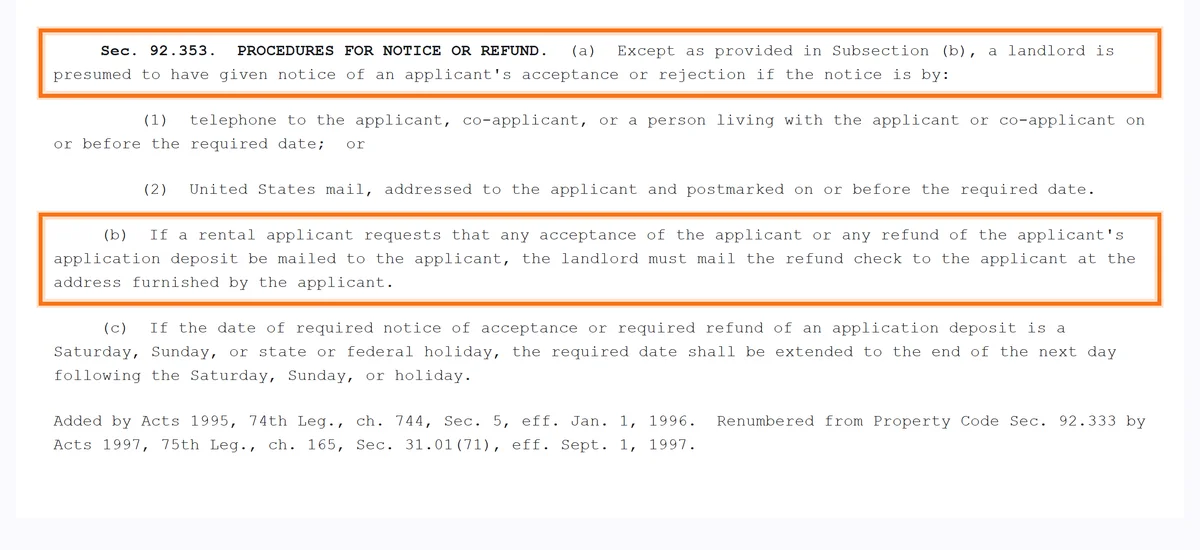
Two practical rules follow from section 92.353: a refund the applicant asks to receive by mail goes to the address they furnish, and a required date that falls on a weekend or a state or federal holiday moves to the end of the next day. This is general information, not legal advice.
If the lease was signed: hold the deposit until the replacement date is known
Once a lease is signed, the money changes category. Section 92.102 defines a security deposit as an advance of money, other than a rental application deposit or an advance payment of rent, that is intended primarily to secure performance under a lease. The departing tenant is bound by the lease.
The date the next tenant moves in matters most. If a replacement satisfactory to you occupies the house on or before the lease start date, section 92.1031 lets you keep only a lease cancellation fee agreed in the lease or your actual expenses of securing the replacement, including a reasonable amount for your time. If the replacement starts later, the lease decides what is owed, you have a duty to mitigate under section 91.006, and deductions go to the tenant with a written description and itemized list (92.104). The full rules are in Texas security deposit rules. This is general information, not legal advice.
Relisting: what to change and what to leave alone
An approved applicant changing plans tells you about that applicant, not the market, so the listing usually needs a new date rather than a new strategy:
- Change the available date on every platform at once, so nobody books a showing for a move-in that is no longer possible.
- Leave the photos, description and price alone unless the listing was already slow before the approval. If it was, review the price against leased comparables from a rental analysis, not against the withdrawal.
- Re-check the house. Reset any keys, codes or lockbox set up for the move-in, confirm the make-ready is still complete, and make sure the utilities stayed in the owner's name. Who handles utilities while the rental is empty covers that handoff.
- Tell the backups first. Applicants who were waiting on this house should hear before the public listing changes.
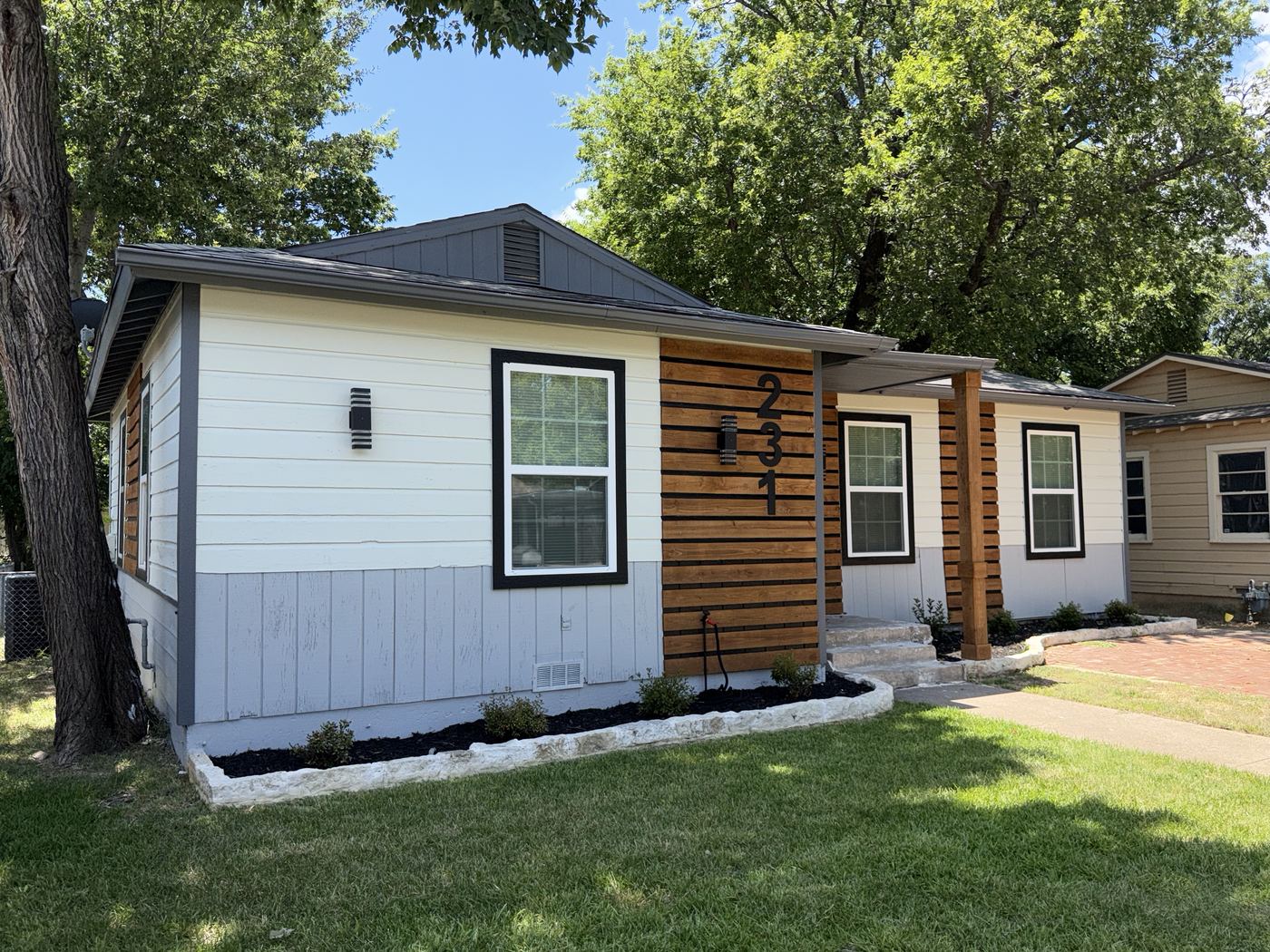
Speed still matters: our marketing page notes that a rental listing gets most of its attention in its first two weeks. The rent side of the gap is in what a vacant month really costs.
An example: sorting the money after a withdrawal
Illustrative only, not a quote. Rent is $2,000 a month. Two adults applied together and each paid a $60 application fee. Once approved, they paid $500 of holding money under written terms saying it would become part of the security deposit at lease signing and would be kept if they did not sign by a stated date. Four days before that date, they email that they have accepted a job in another state.
The money sorts into three lines. The two application fees, $120 in total, paid for screening that was completed, so nothing is refunded. The $500 is kept under the signed terms, because the approved applicants withdrew in writing before signing; whether it goes to you or to your manager is a management agreement question. Nothing else is owed, because no lease was signed.
Change one fact and the answer changes. With no written terms about a withdrawal, the safer course is to refund the $500 and treat the $120 as spent. With a signed lease, the $500 would be part of the security deposit, and sections 92.1031 and 92.104 would decide what you keep.
The leasing fee: what your statement should show
Whether you pay a leasing fee twice is decided by your management agreement: when the placement fee is earned and what happens if a tenant never takes possession. After a withdrawal, check these lines on your next statement:
- Whether a placement fee was charged for the applicant who withdrew, and on what date.
- Where any kept holding money went: to you, to the manager or split, and whether that matches the agreement.
- How application fees are shown. Who keeps them is also an agreement term.
- The extra costs of the gap, such as utilities, rekeying or a second cleaning, each as its own line.
If a line does not match the agreement, ask before the next disbursement, not at year-end. Leasing fees explained covers the fee itself, and how to read an owner statement covers the rest of the page.
What to tell the next applicant
The next applicant needs three things: the house, an honest timeline and the same rules everyone else got. Contact backups in the order your process sets, for example the order complete applications arrived, and offer the house on the same terms you would offer anyone; treating applicants alike at this step is part of complying with fair housing law. What to say, in substance:
- When the house is available. You do not need to explain why it came back. The previous applicant's reasons are their own.
- What the application needs. It is measured against the same written criteria, and anything stale is updated. Our criteria, for example, ask for pay stubs covering at least 6 weeks and 2 months of bank statements.
- Who applies. Each adult 18 or older applies separately.
- When they will hear. An applicant not accepted by the seventh day after a completed application is deemed rejected (section 92.352), so a backup from two weeks ago is a fresh decision with a new acceptance.
When several people are still interested, the process for choosing fairly is in choosing between several qualified applicants.
How Perpetual handles this
Perpetual Property Management is broker-owned, with our office at 5755 Rufe Snow Dr in North Richland Hills, and we lease homes in Keller, North Richland Hills, Fort Worth and nearby. What our site states that applies after a withdrawal:
- The same written criteria for every applicant. Our rental criteria are published, each applicant 18 or older applies separately at $60, and the criteria state that denied or canceled applications are non-refundable.
- A listing guarantee. Your home is live on every major rental platform within 5 business days of being market-ready, or we waive the first month's management fee.
- Weekly reports while vacant. A written activity report every week while the home is vacant, with showing feedback and market notes, or we credit that month's management fee.
- The placement fee is 50% of one month's rent on Full Service and Investor Special and 75% on Standard, charged when a tenant is placed (pricing and fees).
- Monthly statements in the owner portal, with income, expenses and documents in one place.
The guarantees are subject to the terms and exclusions in our Guarantee Addendum. Whether we take holding money from approved applicants, who keeps it if an applicant withdraws, and how the placement fee applies when an applicant never moves in are confirmed in writing before you sign. If an applicant just withdrew from your house, call 682-593-7033 or contact us.
The takeaway: Sort the money by what the applicant signed, relist with a new date rather than a new strategy, and give the next applicant the same criteria and a fresh acceptance.
Questions owners ask
Do I get the leasing fee back if the approved tenant never moves in?
It depends on your management agreement: when it says the placement fee is earned, and whether a second fee is charged if the first tenant never takes possession. Check your statement for a placement fee charged for the applicant who withdrew and compare it with the agreement. With Perpetual, the placement fee is charged when a tenant is placed; ask us how that applies to a withdrawal before you sign.
Does a signed lease still bind a tenant who never moved in?
Yes. A signed lease is a contract whether or not the tenant collects the keys. What they owe is usually rent until the house is re-let plus any reletting charge the lease sets, and you have a duty to mitigate under Property Code 91.006. If a replacement moves in on or before the lease start date, section 92.1031 limits what you keep from the deposit or prepaid rent to an agreed lease cancellation fee or your actual expenses of finding the replacement. This is general information, not legal advice.
Is a holding deposit the same as a security deposit?
No. Property Code 92.102 defines a security deposit as money that secures performance under a lease and expressly excludes a rental application deposit. Holding money paid before a lease follows the application rules and its own written terms; it becomes part of the security deposit only if those terms convert it when the lease is signed.
Can I keep the holding deposit if I decide not to rent to them after approving?
No, refund it. Section 92.351 makes an application deposit refundable when the applicant is rejected, and a landlord who in bad faith fails to refund as the subchapter requires owes $100, three times the amount kept and the applicant's reasonable attorney's fees (92.354). Keep money only when the approved applicant is the one who withdraws and the written terms allow it. This is general information, not legal advice.
Can I rent to the second applicant while the first is still deciding?
Not while the first applicant holds the house under signed holding terms or a lease. Once they withdraw in writing, or the signing deadline in their terms passes, the house is free. Treat the second applicant as a fresh decision: confirm they still want it, update stale documents and give a new acceptance, because an applicant not accepted by the seventh day after a completed application is deemed rejected (Property Code 92.352).
Do I have to tell the next applicant why the house is available again?
No. Tell them when it is available and what the application needs. The previous applicant's reasons are their own business, and nothing about the house changed. If the next applicant asks, a plain answer works: the approved applicant's plans changed.
Should I lower the rent after an approved tenant backs out?
Usually not because of the withdrawal alone. An applicant who was approved at your price showed that the price could work. Review the rent if the listing was already slow before that approval, and base the review on leased comparables, which is how our free rental analysis is built.
Related services
Property management in Keller, North Richland Hills and Fort Worth. How full-service management works in Tarrant County →