Key takeaways
- A fire or storm does not end the lease. A written notice does, and either side can give it when the home is totally unusable.
- If the lease is ended, rent is refunded pro rata from the day the tenant moves out; the deposit is handled as at any move-out.
- A partly usable house keeps its lease. A rent reduction comes from your written lease or a court judgment.
- The statute does not make the owner pay for the tenant's hotel or belongings. That is what renters insurance is for.
- For an insured loss, the repair period starts when the insurance proceeds arrive.
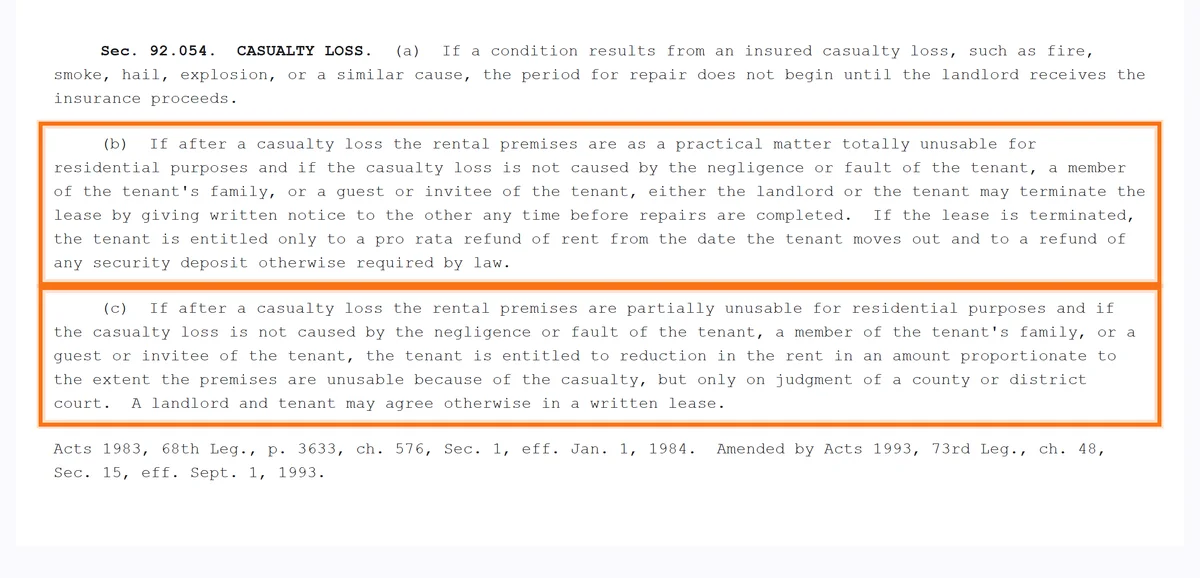
Your rental house in Fort Worth, Keller or North Richland Hills had a fire, took a tornado or flooded from a burst pipe, and the tenant cannot live there. The lease does not end by itself. If the house is totally unusable and the tenant did not cause the damage, Texas Property Code 92.054 lets either you or the tenant end the lease by written notice before repairs are completed. The tenant then gets a pro rata rent refund from the day they move out, plus the deposit refund the law requires. The statute does not make you pay for their hotel.
This guide covers how to tell a total loss from a partial one, the first 72 hours, whether to end the lease or keep it, the rent and deposit accounting, who pays for what, what changes when the tenant caused it, and getting the house rented again.
Totally unusable, or can the tenant still live there?
Everything turns on one question from Texas Property Code Section 92.054: after the fire, storm or leak, is the house "as a practical matter totally unusable for residential purposes," or only partly unusable? The size of the repair bill is not the test. What the tenant can no longer do in the house is.
A roof opened to the rain over the living space, smoke through every room, or a house with no working water after a freeze can make normal living impractical. Hail damage to gutters and shingles, with the inside dry, usually leaves the house fully usable while the roof claim runs its course.
How the damage and its cause change the lease and the rent
| Situation | The lease | The rent | Who decides |
|---|---|---|---|
| Totally unusable, not the tenant's fault | Either the owner or the tenant may end it by written notice, any time before repairs are completed | If the lease is ended: a pro rata refund from the date the tenant moves out | Either side, by giving the notice |
| Partly unusable, not the tenant's fault | Continues | A reduction in proportion to the part that cannot be used, but only on a court judgment, unless the written lease says otherwise | A county or district court, or the terms of your written lease |
| Caused by the tenant, a family member or a guest | The casualty rights in the two rows above do not apply | Follows the lease | The lease; an attorney if the cause is disputed |
| Minor damage, whole house usable | Continues | Follows the lease | Normal repair process |
How to read this table: first settle the cause, then how much of the house is out of use. Only the first row gives either side a right to walk away, and it belongs to the tenant as much as to you. For the second row, read the casualty paragraph of your own lease: the statute lets a written lease set the terms for a partial loss, and many leases do.
What should the owner do in the first 72 hours?
- People first, then utilities. With an active fire, a gas smell, live wires or structural damage, everyone stays out and the fire department or the utility is called. Find out whether water, power and gas are off and who can safely turn them back on.
- Secure the house. Board broken windows, tarp the roof, shut off the water at the leak. Stopping further damage is expected of an owner and is usually the first thing an insurer asks about. After a North Texas spring storm, look for water inside even when the damage seems limited to the roof; our guide to checking a rental after a hailstorm or severe weather walks through it.
- Call your insurer. Give the address, when the damage was found, what is known about the cause and whether the tenant has left. Ask what emergency work can go ahead and whether damaged parts must be kept for the adjuster. Write down the claim number.
- Document what can be seen safely. Dated wide shots and close-ups of every affected room, the tenant's first report, and every invoice for temporary work.
- Write to the tenant. Say whether anyone may enter, what work is underway and when the next update will come. Ask when they left, what is still inside and how to reach them. Keep it in writing from the first day.
- Get a repair outlook from a contractor. Ask for two things separately: what it takes to make the house safe to live in again, and what could push that date back. Days or months is the number your lease decision rests on.
Step 3 has its own guide: how a property manager works with your insurer during a claim covers the adjuster visit, the deadlines and the checks.
End the lease or keep it in place?
If the house is totally unusable and the tenant did not cause it, both of you hold the same option. Either can end the lease with a written notice, as long as it is given before repairs are completed. Neither needs the other's agreement. If both of you would rather continue, put the arrangement in writing: the rent while the tenant is out, access to belongings, and what will mark the house as ready.
What to weigh before you decide
| Factor | Points toward keeping the lease | Points toward ending it |
|---|---|---|
| Contractor's estimate | Days or a few weeks, with a clear path to a safe house | Months, or key work still unknown |
| The tenant's plans | Wants to come back and can manage a short move | Needs to sign for another home now |
| Your loss-of-rents coverage | Your agent confirms how it pays while the lease continues | Your agent confirms it pays through repairs and re-leasing |
| The tenant and the lease terms | A good tenant at a rent you would be glad to keep | A lease you would reprice anyway |
How to read this table: no single row decides it. The second column describes a short repair with a tenant worth waiting for; the third describes a long rebuild. Ask your insurance agent the third-row question before you send or accept a notice, because ending the lease can change how a lost-rent claim is handled.
A tenant who needs a place to sleep this week will often decide before you do. When the tenant's notice arrives, the lease ends under the statute; your job then is the accounting below.
How are the rent and the security deposit settled?
When the lease is ended under 92.054(b), the statute gives the tenant two things: a pro rata refund of rent from the date the tenant moves out, and a refund of any security deposit otherwise required by law. Three dates can differ, so record each: the day of the damage, the day of the written notice and the day the tenant actually moved out.
An illustration, not a quote: the tenant paid $2,100 for a 30-day month and moved out on the 12th. That is $70 a day. Eighteen days remain, so 18 x $70 = $1,260 refunded.
The deposit is a separate account. It is handled the way it would be at any move-out: a forwarding address from the tenant, the move-in condition record against what can be verified now, and an itemized list for any deduction. Fire or storm damage the tenant did not cause is not tenant damage. The timing and the itemizing rules are in our guide to Texas security deposit rules.
If the lease continues instead, do not change the rent on your own reading of the situation. Check the lease's casualty paragraph, agree on any adjustment in writing, and note the dates it covers.
Who pays for the repairs, the belongings, the hotel and the lost rent?
Section 92.054 does not make the owner pay for the tenant's hotel or replace the tenant's belongings. Each side looks to its own insurance first. The table shows where each cost usually lands; the policy wording decides.
Where each cost usually lands after a fire or storm
| Cost | Usually paid by |
|---|---|
| The house and attached structures | The owner's landlord (dwelling) policy, for a covered cause |
| Appliances the owner supplied | The owner's policy, if it covers them and the cause |
| The tenant's furniture, clothes and electronics | The tenant's renters insurance (personal property), or the tenant |
| The tenant's hotel or temporary housing | The tenant's renters insurance (additional living expense), or the tenant |
| Rent lost while the house is empty | The owner's policy, if it includes loss of rents or fair rental value |
| The deductible | Whoever holds the policy that pays |
How to read this table: the left column is the bill, the right column is where to look first. "Usually" is doing real work here. Ask your agent what your policy pays for lost rent and for how long before you count on it, and tell the tenant in writing the date of the loss and whether the house can be occupied, because their insurer will ask for both.
This is the day a renters policy earns its place in the lease. Our guides explain requiring renters insurance and the landlord insurance you need before renting out a house.
What if the tenant caused it, and when does the repair clock start?
A kitchen fire can start with a failed appliance or with a pan left on the burner. The cause changes the outcome, so collect the fire department's report if there is one, the contractor's findings and the tenant's account before anyone assigns blame.
Two parts of the statute turn on fault. The right to end the lease and the rent reduction in 92.054 apply only when the loss was not caused by the negligence or fault of the tenant, a family member, or a guest. And under Section 92.052(b), a landlord has no duty to repair a condition caused by the tenant, a lawful occupant, a family member or a guest, unless it comes from normal wear and tear. Where the cause is disputed, have an attorney look at the facts before you rely on fault in a notice or a charge. Our guide to Texas landlord repair obligations covers the repair duty in full.
On timing, 92.054(a) gives owners breathing room: when the damage is an insured casualty loss, such as fire, smoke, hail or explosion, the period for repair does not begin until the landlord receives the insurance proceeds. Note the day the funds arrive. That does not pause the safety work, the estimates or the updates to the tenant.
When is the house ready for the tenant to return, or for a new lease?
Walk the house when the contractor says it is done. Have each repaired system shown working, and after a burst pipe check the rooms the water traveled through, not only the plumbing. Keep the final scope, invoices and photos with the property's records.
If the lease continued, confirm the return date, the keys and the rent in writing. If it ended, treat the house as a new listing: a make-ready walk, a fresh condition record and a rent set from comparable homes that actually leased. A repaired house with a new roof, floors or kitchen may not rent for what it did before.
How Perpetual handles a house that cannot be lived in
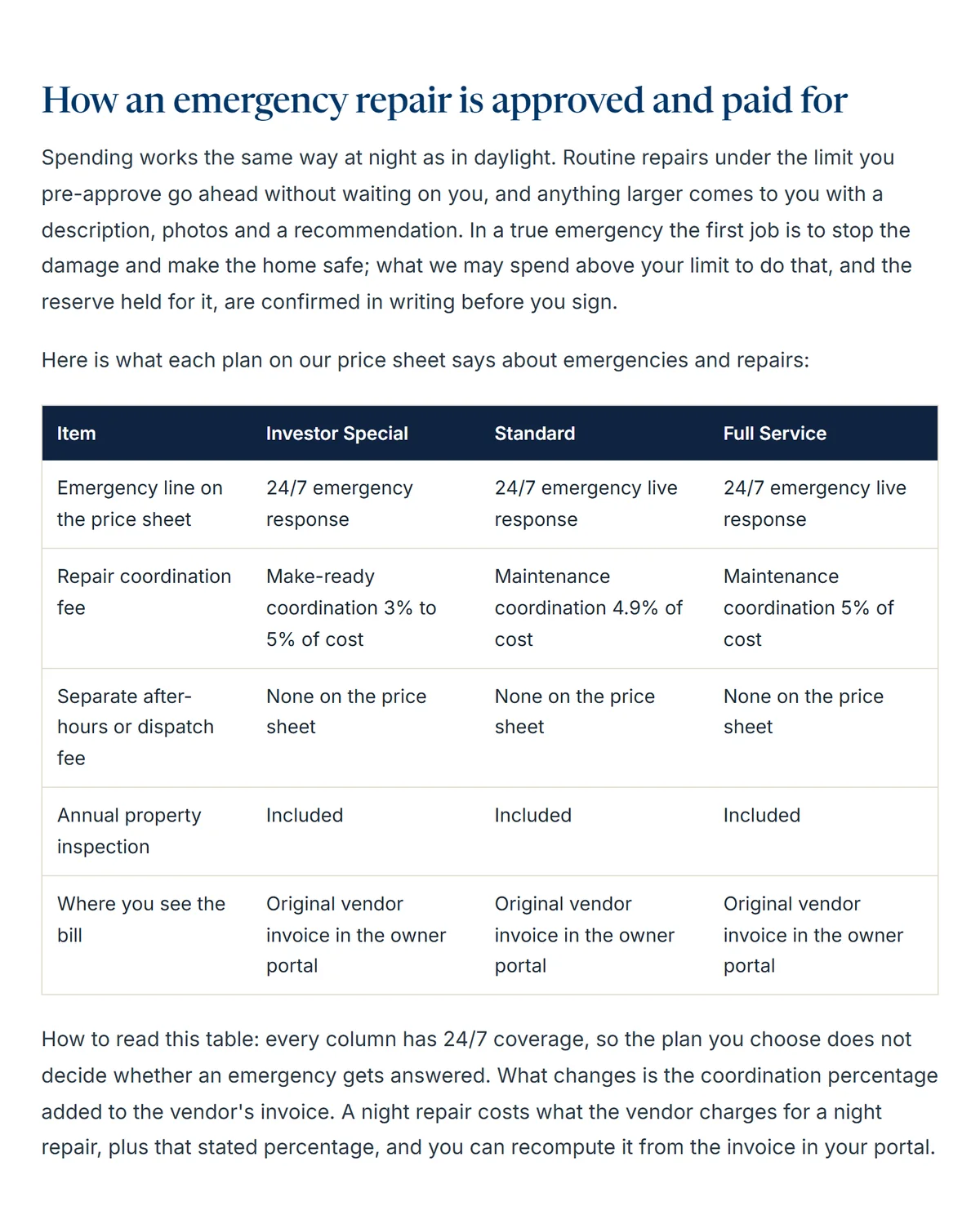
We are a local, broker-owned company managing single-family rentals in Fort Worth, Keller and North Richland Hills. Every plan on our price sheet includes 24/7 emergency response, so the tenant's first call at 2 a.m. reaches us, not you. From there we send vetted, insured vendors to stop the damage and make the house safe, photograph everything with the date, and keep the tenant updated in writing.
Two decisions stay with you, because they are yours as the owner and the policyholder: whether to file a claim, and whether to end the lease when the statute allows it. We bring you what you need to make them: the contractor's outlook, the tenant's plans and the documents your insurer asks for.
The record is in your owner portal: the original vendor invoices, and photo or video proof for every completed repair over $500. When the house is ready, a new rental analysis sets the rent and the 360-degree move-in inspection starts the next tenancy with a clean record.
Want a manager in place before the next storm season? Call 682-593-7033 or request a free rental analysis. You get a rent figure from comparable leased homes and a written management quote, with every fee confirmed in writing before you sign.
The takeaway: Make it safe, call the insurer, write to the tenant, and get a contractor's time estimate. That estimate, the cause and your loss-of-rents coverage decide whether the lease ends by written notice or waits for the repair.
Questions owners ask
Does the tenant owe rent while the rental house is unlivable in Texas?
If the lease is ended under Property Code 92.054(b), the tenant gets a pro rata refund of rent from the date they move out. If the lease continues, rent follows the written lease and any adjustment you agree to in writing.
Do I have to pay for my tenant's hotel after a fire or storm?
Section 92.054 does not require it. Check your lease for anything you agreed to. The tenant's renters insurance commonly covers additional living expenses.
Does a fire automatically end the lease?
No. The lease stays in effect until the owner or the tenant ends it by written notice, which the statute allows when the home is totally unusable and the tenant did not cause the loss.
Can I end the lease because I want to renovate?
Not under this rule. It applies only after a casualty loss that leaves the home totally unusable, with written notice given before repairs are completed.
Who decides whether the house is totally unusable?
The statute says "as a practical matter," so it comes down to the facts: safe access, utilities and which rooms can be used. A contractor's written findings help. If you and the tenant disagree, ask a Texas attorney.
What happens to the security deposit?
The tenant is entitled to the deposit refund otherwise required by law. Account for it separately from the rent refund, with an itemized list for any deduction.
What if only one room is damaged?
The lease continues. For a partly unusable home the statute provides a proportionate rent reduction only on a court judgment, unless your written lease sets its own terms, so read the lease's casualty paragraph.
Does the tenant have a right to move back in after repairs?
Not under 92.054 once the lease has been ended. Whether the former tenant gets the first offer depends on what you agree to in writing.
Related services
Property management in Keller, North Richland Hills and Fort Worth. How full-service management works in Tarrant County →