Key takeaways
- The manager's first job on a condo is the association's documents: declaration, bylaws, rules and amendments, read for leasing terms before the unit is listed.
- Registration, move-in reservations and fees run on the association's timeline, so they go into the leasing calendar.
- A Texas condo association must send a written notice with a cure period before most fines (Property Code 82.102(d)).
- The owner is liable to the association for the tenant's violations (82.117(4)); the lease addendum is how the manager charges a tenant-caused fine back.
- Dues stay the owner's; the manager can only pay them from rent if the agreement says so.
Can a property manager help you rent out a condo with an HOA? Yes. For owners in Fort Worth, Keller and North Richland Hills, the manager's extra work on a condo sits with the association: confirming from its documents that leasing is allowed and on what terms, handling registration and move-in rules, writing the rules into the lease, and answering violation notices before a fine is levied.
This guide is the manager's part, task by task. Whether renting the condo makes sense at all, including insurance and the dues math, is the owner's decision in renting out a condo in DFW.
Owner, manager, association and tenant: who does what
Here is how the work on a rented condo usually splits once a manager is hired; the declaration and your management agreement set the details:
| Task | Manager | Owner | Association | Tenant |
|---|---|---|---|---|
| Get the declaration, bylaws, rules and amendments | Reads them before listing | Supplies them or authorizes the request | Provides them | - |
| Confirm leasing is allowed, and on what terms | Asks in writing and files the answer | Decides whether to go ahead | Answers | - |
| Registration and move-in steps (elevator, dock, fobs, fees) | Completes or schedules them | Pays any owner fee | Sets the rules | Follows them |
| Rules in the lease | Adds the HOA rules addendum | Approves the terms | - | Signs and follows |
| Violation notice | Contacts tenant, documents the cure, answers the association | Receives it as owner | Sends it with a cure period | Fixes the problem |
| Fine | Charges it back if the tenant caused it | Liable to the association | Levies it | Pays under the lease |
| Dues and assessments | Pays from rent only if the agreement says so | Owes them | Collects | - |
How to read this table: the owner's column never empties. The association deals with the owner, so the manager's job is to keep the owner's name off a fine the tenant caused and to make sure nothing reaches the association late. Each row is explained below.
First job: read the association's documents before anything is listed
Before a photo is taken, the manager should have the declaration, bylaws, current rules and any recorded amendment, and should be able to answer these questions from them, in writing:
- Is leasing permitted, and is there a cap on leased units or a waiting list?
- Is there a minimum lease term or a ban on short stays?
- Must the tenant be registered with the association, or receive the rules before move-in? Is there an approval step?
- Are there move-in or move-out fees, elevator or dock reservations, or deposits payable to the association?
- What are the pet, parking, guest and amenity rules that will bind the tenant?
- Has the declaration been amended to let the board evict a tenant or collect rent from the tenant if the owner falls 60 days behind (Property Code 82.067(h))?
If a document is missing, an owner may request the association's books and records by certified mail, and the association must respond within 10 business days (82.1141(d)). Skipping this step is how owners sign a lease the association will not recognize.
The repair line the manager works from
A condo divides repairs along a line a single-family house does not have, and the declaration draws it. The manager needs that line on file before the first service request, because the tenant reports everything to the manager: a leak from the unit above, a dead air conditioner, a broken balcony door.
Before sending a vendor, the manager checks whether the item belongs to the unit or to the common elements. A unit item is handled like any rental repair: under the spending limit you pre-approve, it gets fixed; above it, you get a description, photos and a recommendation. A common-element item is reported to the association, in writing, with photos, and followed up until it is fixed, because the tenant still lives with the problem. The owner pays for damage caused by the negligence of an occupant of the unit (82.117(3)), so the cause goes in the file too. See maintenance coordination.
Registration, move-in rules and the lease addendum
Registration and move-in steps run on the association's calendar, not the tenant's. A manager builds them into the leasing timeline: submitting whatever the association requires about the tenant, booking the elevator or loading area, arranging gate codes, parking tags and fobs, and telling the tenant the moving hours in writing before move-in day. Done afterward, it is a tenant locked out of the pool and calling you.
The tenant is not a party to the association's documents, and the owner is liable to the association for violations by an occupant of the unit (82.117(4)). So the lease must carry the rules: an addendum that attaches them, requires the tenant to follow them, and makes a fine caused by the tenant's conduct the tenant's charge. Lease addenda for Texas landlords covers how it fits with the rest of the lease, and our leasing service lists HOA rules among the addenda we add where the property needs them.
Violation notices and who pays the fine
A notice is addressed to the owner of record. Give the association your manager's contact as well so a letter is not sitting in your mailbox while the cure date passes; the association may also give a copy to the occupant (82.102(e)). When a notice arrives, the manager reads what is alleged and the cure date, contacts the tenant, documents the fix with dated photos, and answers the association before the date.
Who pays depends on cause. A fine for the tenant's pet in a building that bans them, a car in a visitor space or a grill on the balcony is the tenant's, charged back under the lease addendum. A fine for something the owner controls, such as a window the declaration makes the owner replace, is yours. Either way the association looks to the owner, so if a tenant does not pay a charge-back, that becomes a lease debt between you and the tenant. A hearing request goes to the board within 30 days of the notice (82.102(d)(2)); that is the owner's call, with the manager's file as evidence.
What Texas law requires before a condo association fines you
Which statute applies depends on what you own. A house in a subdivision HOA is under Property Code chapter 209, and our guide on HOA notices and violations covers that process. A condominium is not: chapter 209 does not apply to a condominium (209.003(d)), and the condo rules are in chapter 82.
Under 82.102(d), before a condo association levies a fine or charges the owner for property damage, it must give the owner a written notice that describes the violation and the proposed amount, says the owner may request a hearing before the board within 30 days, and allows a reasonable time to cure by a specified date, unless the owner had notice and a chance to cure a similar violation within the preceding 12 months:
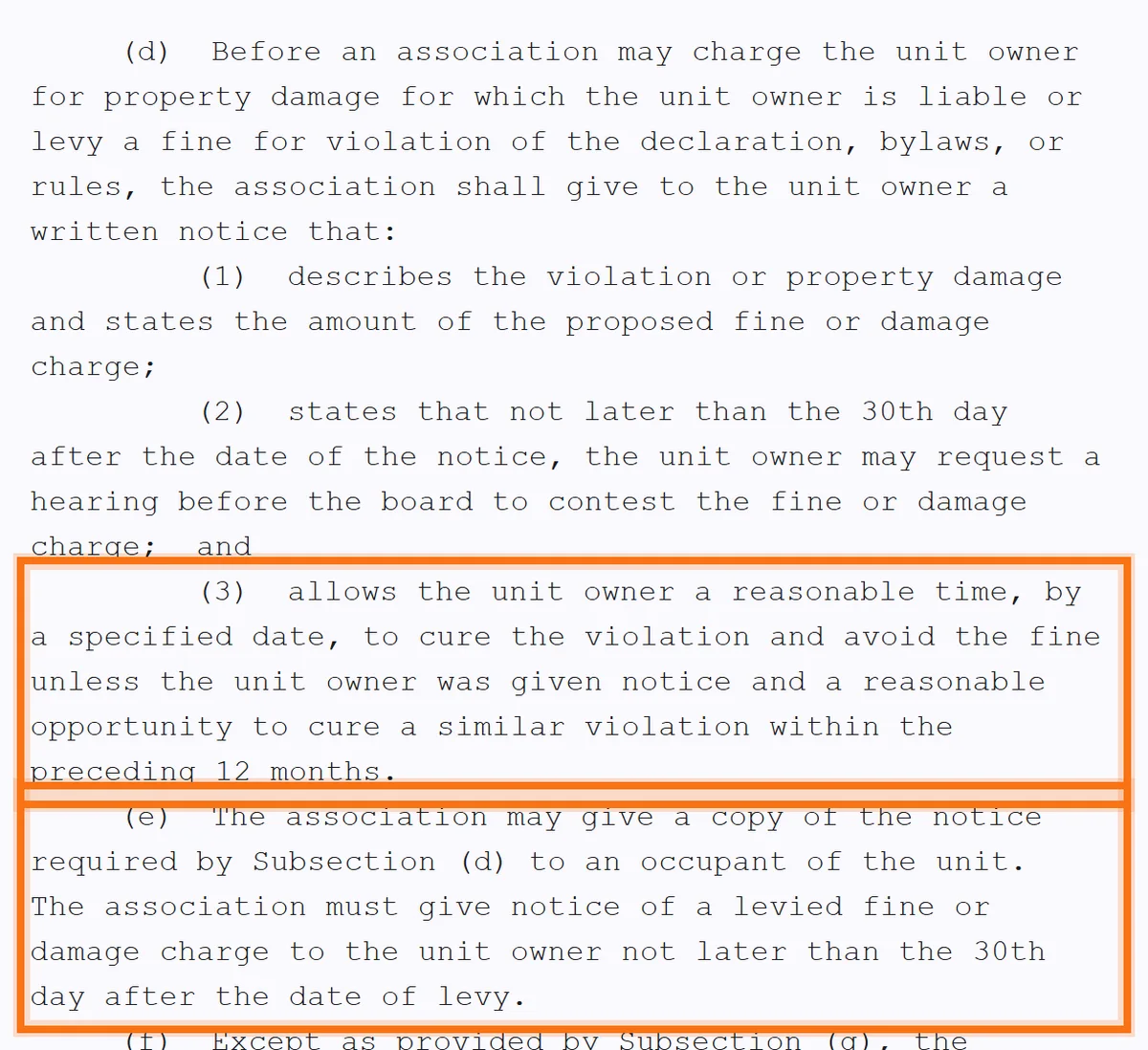
That cure date is the manager's deadline. A manager who reaches the tenant, gets the problem fixed and sends the association proof before the date usually ends the matter there. The association must also tell the owner of a levied fine within 30 days of the levy (82.102(e)). This is general information, not legal advice.
Insurance and shared walls
The association insures the common elements, your own condo policy covers what the declaration leaves to you, and the tenant's renters policy covers the tenant's belongings and liability. The manager's part is practical: keep a copy of your policy's declarations page and the association's insurance contact on file, require renters insurance in the lease if you want it required, and report a leak that crosses walls to the association and to you the same day. Who pays the master policy deductible is set by your documents (Property Code 82.111(k)); the owner's guide to renting out a condo in DFW explains the split. This is general information, not insurance advice.
An example: a parking notice on a rented condo
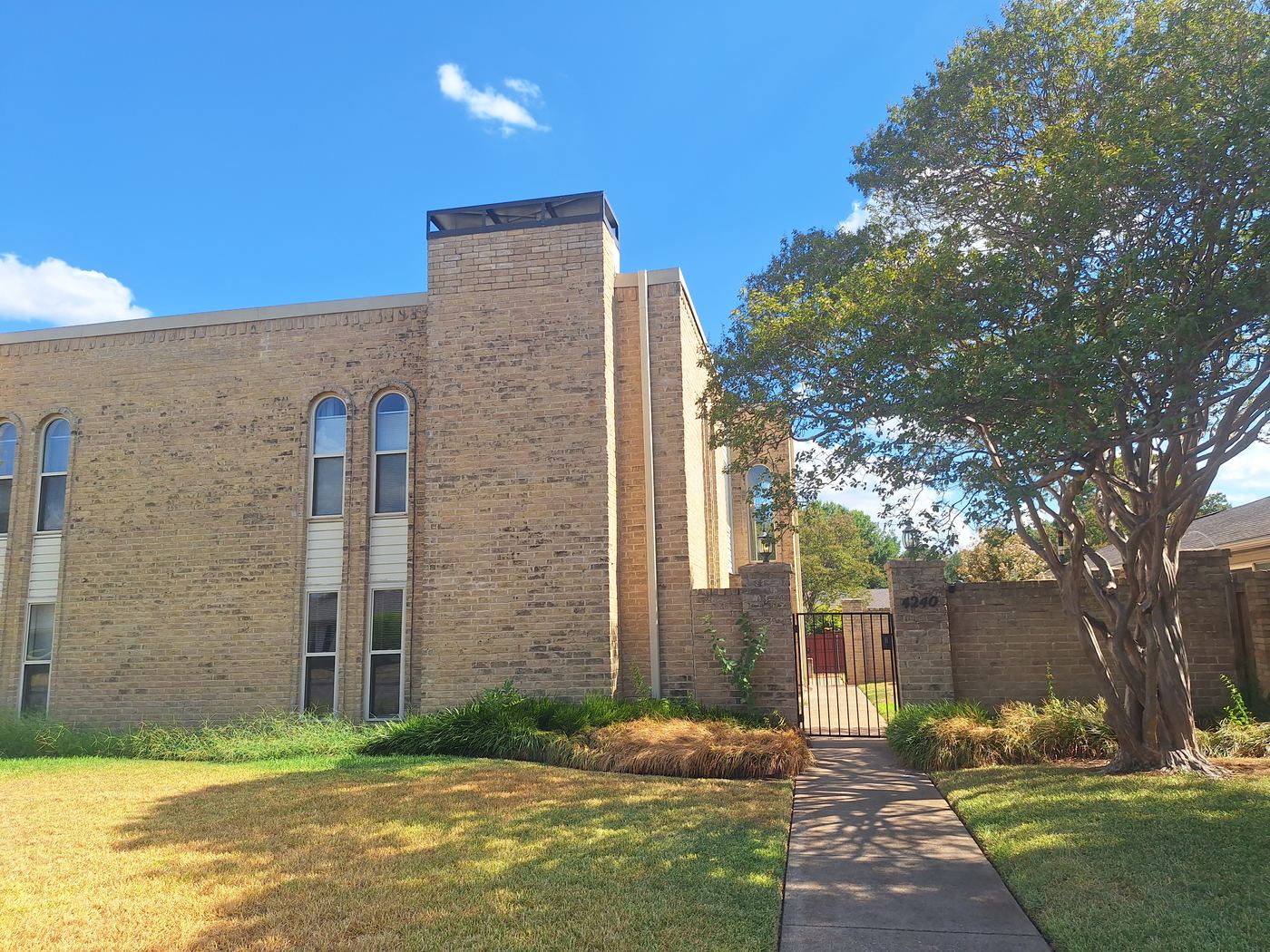
Say you own a two-bedroom condo near downtown Fort Worth. The documents allow leasing with a twelve-month minimum, require the tenant's name and vehicle to be registered and charge a move-in fee. The manager confirms there is no cap issue, registers the tenant and vehicle, books the move-in slot and puts the minimum term and the rules addendum in the lease. Every step is dated in the file.
Six months later, a notice arrives: the tenant's second car is parked in a visitor space, with a fine proposed if it is not moved by a date three weeks out. The manager calls the tenant the same week, the car moves to the tenant's assigned space, and the manager sends the association a dated photo before the cure date. No fine is levied. If it had been, the addendum would have made it the tenant's charge.
How Perpetual handles this
Perpetual Property Management is broker-owned and manages homes in Keller, North Richland Hills, Fort Worth and nearby. What our site states about association properties:
- Documents before leasing. Owners provide the association documents and any rental-related requirements before leasing; we review them for the specific home and do not build a leasing plan on assumptions about restrictions or tenant obligations.
- HOA rules in view. We manage lease-up and tenant communication with the HOA rules in view, and address violation notices quickly so they don't escalate into owner fines.
- The lease. Texas-compliant lease documents with the addenda the property needs, HOA rules among them.
- Repairs and invoices. Repairs under your pre-approved limit are fixed without waiting; larger ones come to you with a description, photos and a recommendation. The original vendor invoice is always in your owner portal.
- Property type. Our free rental analysis request lists a condo as a property type.
Who submits the association's registration, and how an association fee or a charged-back fine appears on your statement, is confirmed in writing before you sign. To talk through your condo and its association, call 682-593-7033.
The takeaway: A manager earns the fee on a condo by reading the association's documents before listing, building registration and move-in rules into the calendar, putting the rules in the lease, answering every notice inside the cure period, and charging tenant-caused fines back under the lease.
Questions owners ask
Can a condo association block the manager from leasing my unit?
It can if its documents allow it. For a condo, Property Code 82.102(a)(7) lets the association adopt rules regulating the leasing of units unless the declaration says otherwise, so read the declaration, rules and amendments. The subdivision HOA rules in chapter 209 do not apply to a condominium (209.003(d)). If the answer is unclear, ask the association in writing and have a Texas attorney review it.
Who pays HOA dues when a condo is rented out?
The owner. Dues are the owner's obligation to the association whether the unit is occupied or not. A manager can pay them from rent only if the management agreement arranges it, and the association pursues the owner, not the tenant, if they are unpaid.
Does the tenant have to follow the HOA rules?
Only through the lease, because the tenant has no agreement with the association. A rules addendum that attaches the current rules, requires compliance and makes fines caused by the tenant's conduct the tenant's charge is the standard approach. Without it, the owner stays liable to the association for the occupant's violations (Property Code 82.117(4)) with little recourse against the tenant.
Which insurance papers should the manager keep for a rented condo?
A condominium policy that covers what the association's master policy does not, told that the unit is rented, plus renters insurance from the tenant if your lease requires it. Who pays the master policy deductible is set by your documents (Property Code 82.111(k)). Ask your insurance agent; this is general information, not insurance advice.
Who pays an HOA fine my tenant caused in my condo?
The association looks to the owner: under Property Code 82.117(4), the owner is liable for violations by an occupant of the unit. If your lease has a rules addendum that makes tenant-caused fines the tenant's charge, the manager charges it back to the tenant. A fine for something the owner controls stays yours.
Does a condo association have to warn me before it fines me?
Yes, with one exception. Under Property Code 82.102(d), the written notice must describe the violation and the amount, tell you that you may request a board hearing within 30 days, and give a reasonable time to cure, unless you had notice and a chance to cure a similar violation in the preceding 12 months.
Can my condo association approve or reject my tenant?
It depends on your declaration and rules. The Property Code ban on HOA tenant approval (209.016) is in chapter 209, which does not apply to condominiums (209.003(d)). A condo association's leasing rules come from chapter 82 and its own documents, so check what yours say. This is general information, not legal advice.
Property management in Keller, North Richland Hills and Fort Worth. How full-service management works in Tarrant County →