Key takeaways
- Smoking: Property Code chapter 92 sets no smoking rule, so the lease decides. Define it, and tie a breach to the documented cost of cleanup.
- Subletting: Property Code 91.005 says a tenant may not rent the leasehold to another person during the lease without the landlord's prior consent. The lease should require that consent in writing.
- Occupants: section 92.010 caps adults at three times the number of bedrooms, with narrow exceptions.
- Airbnb: Fort Worth does not allow short-term rentals (1 to 29 days) in residential zoning districts, and a legal one must be registered before it is listed.
- A clause works only with evidence: a move-in report, inspections during the lease and written notices.
Can your lease address smoking, subletting and unauthorized Airbnb rentals? Yes, all three. A Texas residential lease can ban smoking inside the house, require your written consent before anyone sublets or moves in, and prohibit short-term and vacation rentals through any platform. For a rental in Fort Worth, Keller or North Richland Hills, state law and city rules already back part of this, and the lease fills in the rest.
This guide sets out what Texas law covers on its own, what each clause should add, Fort Worth's short-term rental rules, and how a breach is handled once it is found.
Smoking, subletting and short-term rentals at a glance
Here is what Texas law already says about each rule, what the lease should add, and how a breach usually comes to light:
| Rule | What the law already says | What the lease should add | How a breach shows up |
|---|---|---|---|
| Smoking | Nothing specific: chapter 92 of the Property Code mentions smoke alarms, not smoking | A defined ban (tobacco, vaping, any substance), where it applies, that it covers guests, and who pays for cleanup | Odor, residue or burns at an inspection or move-out |
| Subletting and added occupants | Property Code 91.005: no renting the leasehold to another person during the term without the landlord's prior consent. Section 92.010: at most three adults per bedroom, with narrow exceptions | Consent in writing, the named occupants, a guest limit, and screening for any new adult | New names, cars or mail; a neighbor or HOA report; an inspection |
| Short-term rentals (Airbnb, VRBO) | Fort Worth: rentals of 1 to 29 days are not allowed in residential districts and must be registered before listing where allowed. Other cities: confirm with the city | An explicit ban on short-term or transient rental of any part of the home through any platform, and on advertising it | A listing found online, guest turnover, complaints or a city or HOA letter |
How to read this table: the law gives you a floor for subletting and occupancy, and nothing at all for smoking. The third column is where your lease does the real work, and the fourth is why inspections matter as much as the wording.
Smoking: the lease decides, so define it and tie it to the cost
Can you smoke in your apartment or rental house? In Texas that depends on the lease. Chapter 92 of the Property Code, the landlord-tenant chapter, requires smoke alarms but says nothing about smoking itself, so a no-smoking clause is an ordinary use restriction the parties agree to.
The useful version does three things:
- Defines smoking broadly: tobacco, vaping and any other substance, inside the house, the garage and any attached structure.
- Covers guests as well as the tenant and household.
- Connects a breach to money: odor treatment, repainting, cleaning and replacing affected carpet or blinds are the tenant's cost.
The deposit rules support the third point. Property Code 92.104 lets a landlord deduct damages and charges the tenant is legally liable for under the lease, but nothing for normal wear and tear. Section 92.001 defines normal wear and tear to exclude deterioration from negligence, carelessness, accident or abuse by the tenant, the household or a guest. A smoke-damage charge is far easier to support when you can prove the house was clean before, which is the job of the dated move-in report and photos. This is general information, not legal advice.
Subletting and added occupants: Texas law and the consent clause
Texas law already sets the floor. Property Code 91.005 says that during the term of a lease, the tenant may not rent the leasehold to any other person without the prior consent of the landlord. That covers a tenant who moves out and rents the house to a friend, or rents a bedroom to a stranger.
The lease should go further, because not every unauthorized occupant pays rent. A good clause says the tenant may not sublet, assign the lease or let anyone not named on the lease live there beyond a stated guest limit without the owner's prior written consent. Written consent turns a gray area into a yes-or-no fact. If a tenant wants to add a roommate, the answer is an application and a lease amendment, not a verbal okay. More on adding people is in roommates, co-signers and occupants.
Occupancy has a legal ceiling too. Section 92.010 says the maximum number of adults a landlord may allow to occupy a dwelling is three times the number of bedrooms, with narrow exceptions. Someone who owns or leases a dwelling within 3,000 feet may sue a landlord who violates it, and a prevailing plaintiff may recover $500 per violation plus court costs and attorney's fees. An unscreened crowd in a three-bedroom house is your problem, not only the tenant's.
Short-term rentals: Fort Worth rules and the clause to add
A general sublet clause may not clearly reach a tenant renting a bedroom for weekends through a booking app, so the lease should say it directly: no short-term, vacation or transient rental of all or any part of the premises, through any platform or otherwise, and no advertising it. Add that the tenant pays any resulting fines, HOA penalties or city citations.
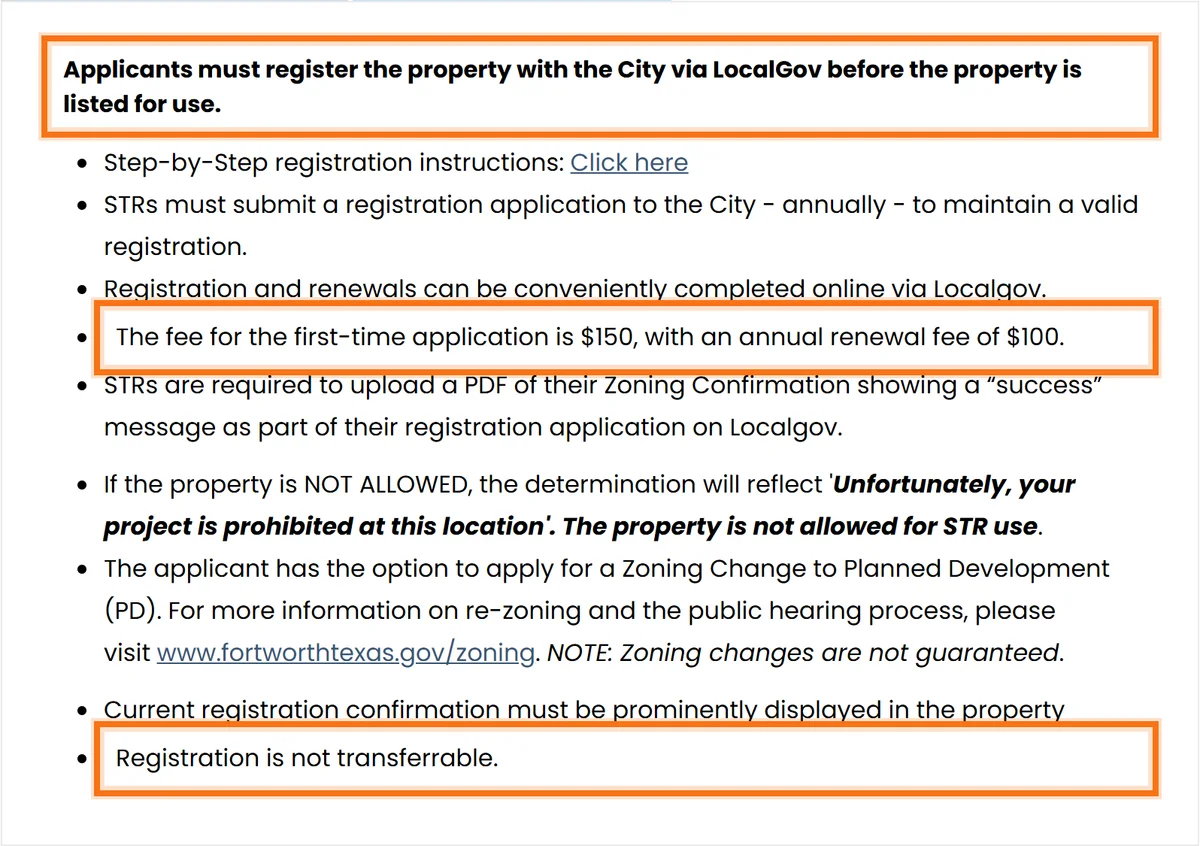
In Fort Worth the city rule is blunt. Its short-term rental page defines a short-term rental as a residential unit rented for guest lodging for 1 to 29 days, and says these rentals are not allowed in residential zoning districts (A-#, AR, B, R1, R2, CR, C, D and UR). Where they are allowed, the property must be registered with the city before it is listed:
For a home in Keller, North Richland Hills or another city, confirm the current rule with the city before relying on it. Insurance is the other reason to be explicit: the Texas Department of Insurance warns that homeowners insurance probably won't cover the costs if a short-term guest gets hurt or causes damage, and that landlord insurance is mainly for traditional long-term leases. Ask your agent how your policy treats paying guests. Associations add their own rules; see HOA rules and your rental property. This is general information, not legal or insurance advice.
What happens when a breach is found
Enforcement follows the same path for all three rules. Something is noticed: a neighbor's complaint, a listing found online, a smell or an extra car at an inspection. The breach is documented with photos, screenshots or a dated note. The tenant then gets a written notice naming the lease clause and what must happen by when: stop smoking inside and arrange cleaning, remove the unauthorized occupant or submit an application, take the listing down and cancel bookings. If the tenant does not comply, the lease's default provisions apply, which can end in a notice to vacate and an eviction for breach.
Illustrative example: an owner's Keller tenant has been hosting weekend guests through a booking site. The listing is found and saved with its dates and photos, and the tenant gets a written notice to remove it and stop within the period the lease allows. What happens if the tenant ignores it, and how to decide between a cure and ending the lease, is covered step by step in when your tenant sublets or lists the house on Airbnb. The court side is on our evictions service page.
Writing the clauses so they hold up
A few drafting habits make the difference between a clause that works and one that invites an argument:
- Be specific. "No smoking of any substance inside the premises or garage" beats "no smoking".
- State the consequence in the clause or the default section, so a breach connects to a remedy.
- Charge actual, documented costs. A deposit deduction has to be a damage or charge the tenant is liable for under the lease, and never normal wear and tear (92.104). An invoice and a before-and-after photo carry more weight than a flat figure.
- Keep the lease consistent. A sublet ban that contradicts a generous guest clause is an argument waiting to happen.
House-specific rules usually live in addenda; see which lease addenda Texas landlords use. If you self-manage on a form you wrote, these three clauses are among the first to check. An attorney can review the wording for your situation; this is general information, not legal advice.
How Perpetual handles this
Perpetual Property Management is broker-owned, with our office at 5755 Rufe Snow Dr in North Richland Hills, and we manage homes in Keller, North Richland Hills, Fort Worth and nearby. What our site states that bears on these three rules:
- Screening every adult. Our rental criteria require each resident over 18 to submit a separate application, and occupants under 18 and pets must be listed on the application and lease.
- The lease. We use current Texas-compliant lease documentation with property-specific addenda, and you receive a copy of everything through the owner portal.
- Inspections. Our inspections page says inspections catch lease violations early, naming unauthorized pets, occupants and smoking, and each report lands in your portal with any lease-violation follow-up.
- The baseline. Every move-in and move-out gets a 360-degree condition inspection, one of our written guarantees, subject to the Guarantee Addendum.
The exact wording of our lease on smoking, subletting and short-term rentals, and how a violation notice is handled, are not published on our site, so they are confirmed in writing before you sign, along with every fee. To have your current lease checked against these three rules, call 682-593-7033.
The takeaway: Write all three rules in specific words, tie each to a consequence, and keep the move-in report and inspection photos that let you enforce them.
Questions owners ask
Can a landlord prohibit smoking in a rental house in Texas?
Yes. Chapter 92 of the Property Code does not address smoking, so a no-smoking clause is a use restriction the lease sets. Define it to include tobacco, vaping and any other substance, inside the house and garage, and apply it to guests. Tie a breach to the documented cost of cleanup, because a deposit deduction must be a charge the tenant is liable for under the lease (92.104).
What happens if a tenant sublets without permission in Texas?
Property Code 91.005 says the tenant may not rent the leasehold to anyone else during the lease without the landlord's prior consent, so an unauthorized sublet breaches the law and, with a consent clause, the lease. The usual sequence is to document it, send a written notice to remove the occupant or submit an application by a deadline, and apply the lease's default provisions if the tenant does not comply.
Can a tenant list a rental house on Airbnb?
Not without the landlord's consent: renting the home to another person during the lease is a sublet under Property Code 91.005, and a lease can ban short-term rentals outright. In Fort Worth, short-term rentals of 1 to 29 days are not allowed in residential zoning districts at all. For other cities, confirm with the city. The clause should cover any platform and make the tenant responsible for resulting fines.
Can I charge a fine for smoking in my rental?
Charge the actual, documented cost of the damage, such as odor treatment, repainting and replacing affected items, measured against the move-in condition report. Property Code 92.104 allows deductions for damages and charges the tenant is legally liable for under the lease, never for normal wear and tear. An invoice and before-and-after photos are stronger than a flat amount with no cost behind it.
Can you smoke in your apartment or rental house in Texas?
It depends on your lease. The landlord-tenant chapter of the Texas Property Code requires smoke alarms but sets no rule on smoking, so if the lease bans smoking inside, smoking there is a lease violation, and cleanup beyond normal wear and tear can be a deposit deduction. If the lease is silent, read any community rules or addenda you signed, and ask the landlord before assuming it is allowed.
Is a tenant's Airbnb listing legal in Fort Worth?
Not in a residential zoning district. Fort Worth's short-term rental page says rentals of 1 to 29 days are not allowed in residential zoning districts, and where they are allowed, the property must be registered with the city before it is listed, at $150 for the first application and $100 a year to renew. Registration does not transfer. A tenant's listing also needs the owner's consent under Property Code 91.005.
Property management in Keller, North Richland Hills and Fort Worth. How full-service management works in Tarrant County →