Key takeaways
- No Texas statute sets a property management cancellation fee. The agreement you signed decides what leaving costs.
- Five clauses can turn a cancellation into a bill: early termination fee, notice period, leasing fee clawback, sale clause and close-out charges.
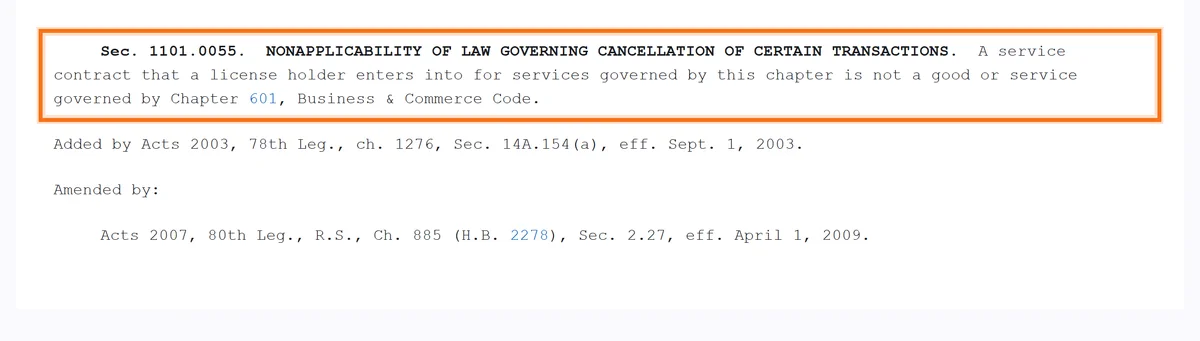
- There is no three-day right to cancel a management contract with a licensed broker: Occupations Code 1101.0055 takes it out of the home-solicitation law.
- The monthly fee usually runs through the notice period, because the manager is still doing the work.
- Your tenant's lease stays in force when you cancel. Only the company acting for you changes.
Does it cost anything to cancel property management? It depends entirely on the agreement you signed. Some agreements let you leave with written notice and nothing more; others charge a termination fee, take back part of a leasing fee or claim a commission if you sell. For an owner in Fort Worth, Keller or North Richland Hills, the job is to find five clauses, put a number on each, and then choose the cheapest exit date.
This guide covers what each clause can cost, what Texas law says about canceling, a worked example comparing two agreements, and how to remove a property management company step by step.
What canceling can cost: the five charges at a glance
Here are the five clauses that decide what canceling costs, the words that find each one in your agreement, and what to ask for:
| Clause | What it can cost | Words to search for | What to ask for |
|---|---|---|---|
| Early termination fee | A flat amount, a number of months of fees, or every fee left in the term | "early termination", "liquidated damages", "cancellation fee" | No fee when you leave for cause, and none after the first term |
| Notice period | The monthly fee for every day of notice | "written notice", "days prior", "termination date" | A short period, email accepted, written confirmation of the end date |
| Leasing fee clawback | Part or all of a placement fee you may already have paid | "leasing fee", "placement", "tenant procured" | No second charge for a fee already paid |
| Sale or listing clause | A sales commission, which can exceed every management fee you paid | "exclusive right to sell", "procuring cause", "commission upon sale" | Strike it, or limit it to a sale to a tenant the manager placed |
| Close-out charges | File transfer, records, key or account-closing fees | "transfer fee", "closing fee", "records" | Waive them: handing over your records is part of the service |
How to read this table: find each clause in your agreement with the words in the third column. If a clause is missing, that charge generally does not apply; if it is there, the second column is the worst case and the last column is what to negotiate before signing, or what to point to when you leave.
What Texas law says about canceling a management agreement
There is no state rule on cancellation fees. The Real Estate License Act, Occupations Code chapter 1101, governs the brokers who manage rentals for others, and it leaves the term, the notice and any fee to the contract. Section 1101.652(b)(12) even exempts property management contracts from the rule that a license holder's service contracts must carry a definite end date not subject to prior notice. A management agreement may run until one side gives notice, on the terms it states.
There is also no cooling-off period to fall back on. Business and Commerce Code 601.051 lets a consumer cancel certain sales made away from the seller's place of business until midnight of the third business day after signing. Occupations Code 1101.0055 says a service contract with a license holder for services governed by chapter 1101 is not covered by that chapter:
What the law does protect is your money. Under 1101.652(b)(9) the Texas Real Estate Commission may discipline a license holder who fails within a reasonable time to account for or remit money belonging to another person, and under (b)(10) one who commingles it with its own. Neither sets a number of days. This is general information, not legal advice.
The early termination fee
This is the charge for leaving before the term ends. It is usually written as a fixed number of months of fees, a flat dollar amount, or every fee the manager would have earned through the rest of the term. Illustrative only, not a quote: with a $200 monthly fee and a twelve-month term, leaving after month four under a "remaining term" clause leaves eight months unpaid, 8 x $200 = $1,600, for service you no longer receive.
Check two things: whether the fee applies if you leave for cause, meaning the manager failed to perform, and whether it survives into a renewal term. The fairer version waives it for cause and drops to a simple notice period after the first term. Other charges that surprise owners are in hidden property management fees.
The notice period keeps the monthly fee running
Even an agreement with no termination fee usually requires written notice of a stated number of days. During that period the manager keeps collecting rent and charging the monthly fee, which is fair, because the work continues. It becomes a cost when the period is long, must end on a month end, or only counts in one form, such as certified mail to one address. Counting the days and timing the end date before a rent due date is worked through in how much notice you need to give before ending a management agreement.
The leasing fee clawback
Some agreements say that if you cancel within a stated period after a tenant is placed, you owe the leasing fee, or its balance, because the manager found a tenant you are keeping. Whether that is fair depends on whether the fee was already paid. If it came out of the first month's rent, it is paid in full and a second charge at cancellation is double billing. If the tenant was placed at a reduced fee in exchange for a term commitment, a prorated balance can be legitimate.
Read the leasing section and the termination section together, and ask before signing: "If I cancel six months after you place a tenant, do I owe anything related to that tenant?"
The sale and listing clause
Many owners cancel because they are selling, and the most expensive clause lives here. Some agreements require you to list with the manager's brokerage, or to pay a commission if you sell to anyone, including your own tenant, during the term or for a period after it. On a sale of several hundred thousand dollars, a commission can exceed every management fee you ever paid.
Search for "exclusive right to sell", "procuring cause" or "commission upon sale". Strike it, cap it, or limit it to a sale to the tenant the manager placed. The sale case, including the deposit at closing, is covered in canceling management when you sell your rental.
Close-out charges, and what you should get back free
The last charges appear on the final statement: a file transfer, records, key or "account closing" fee. They are rarely large and rarely justified, since your records are part of the service you already paid for. Ask for them to be waived.
What you should receive at close-out, at no charge:
- The signed lease, addenda and application file for the current tenant.
- The tenant ledger showing every payment and charge.
- The security deposit, transferred to you or the new manager, with a written accounting.
- Any reserve the manager holds for you, after open invoices clear, with a final statement.
- Keys, remotes, codes and any vendor warranties.
Put a delivery date for these items in your notice letter. If they do not arrive after a second written request, the next steps are in when the old manager won't release keys or records. If a termination clause is unclear, have a Texas attorney read it before you sign.
A worked example: the same exit under two agreements
Illustrative only, not a quote. Two owners rent identical houses for $2,500 a month, pay a made-up management fee of 8% of collected rent ($2,500 x 8% = $200 a month), and cancel after month four of a twelve-month term with 30 days' notice. Each manager placed the current tenant for a leasing fee of half a month's rent ($1,250). Here is what each owner pays to leave:
| Charge | Agreement A | Agreement B |
|---|---|---|
| Monthly fee during the 30-day notice | $200, for a month of service still received | $200, for a month of service still received |
| Early termination fee | None | Three months of fees: 3 x $200 = $600 |
| Leasing fee clawback | None | Half of the $1,250 leasing fee: $625 |
| File transfer or account-closing fee | None | $150 |
| Cost of leaving, beyond the notice month | $0 | $600 + $625 + $150 = $1,375 |
How to read this table: the notice month is the same in both columns, because both owners keep receiving management until the end date. The difference is the last row, $1,375, and every dollar of it came from clauses Owner B could have read and negotiated before signing.
How to remove a property management company, step by step
Most removals go smoothly when they are done in this order:
- Read the agreement first. Find the term, the notice period and form, the early termination fee and any for-cause exception, the leasing fee section and any sale clause.
- Choose the end date. If the agreement renews on an anniversary, ending on that date can avoid a fee; if you are leaving for cause, document the failures and allow any cure period the agreement gives.
- Line up the next step. If another manager is taking over, its start date should be the day after the old agreement ends, so someone is always responsible for the tenant.
- Send written notice exactly as the agreement says. State the clause, the end date and the records, funds and keys you expect, and keep proof of delivery.
- Tell the tenant who to pay. The lease stays in force; the tenant needs written instructions on where rent goes and who handles repairs from the end date.
- Collect the close-out package. Lease file, ledger, deposit with an accounting, any reserve with a final statement, keys and warranties.
The full handover is described in how to switch property managers.
How Perpetual handles this
Perpetual Property Management is broker-owned, with our office at 5755 Rufe Snow Dr, Suite 155, in North Richland Hills, and we manage homes in Keller, North Richland Hills, Fort Worth and nearby. What our site states that matters when you think about leaving a manager:
- Written fees only. Every fee you pay is listed in your written agreement. If a fee is not in the agreement, you do not pay it.
- The exit question, answered up front. Our pricing page lists "What does it cost to leave if you're unhappy?" among the questions we answer in writing, for your specific property, before you sign anything.
- If you are switching to us. As our management page puts it, we handle the coordination with your current manager after you give notice, and we tell you honestly if your current agreement makes it worth waiting.
Our notice period, how notice is given and anything owed at termination are not published on the site, so they are confirmed in writing before you sign.
If you are reading a termination clause now and want a second pair of eyes before you act, call 682-593-7033.
The takeaway: Cancellation costs come from five clauses in the agreement, not from Texas law: read the termination, leasing, sale and close-out terms, price each one, and give notice exactly the way the contract requires.
Questions owners ask
Can I cancel property management if the manager is not doing their job?
Usually, but how depends on the agreement. Many include a termination-for-cause provision that waives any early termination fee if the manager breaches the agreement. Document the failures in writing, allow any cure period the agreement gives, then send formal notice. If there is no for-cause clause, you can still leave on the agreement's normal terms, and the fee becomes something to negotiate.
What happens to my tenant's lease when I cancel management?
The lease stays in force. It is a contract between the tenant and the owner, and the manager was signing as your agent. The tenant simply gets a written notice telling them where to pay rent and who to call for repairs from the end date forward. Your new manager or you can send that notice.
How much notice do most managers require to cancel?
Agreements commonly require written notice of a stated number of days, sometimes tied to the end of a calendar month. Texas law leaves the number to the contract, so the only answer that counts is the one in your agreement. Send notice in the form it specifies and ask for written confirmation of the end date.
Will I get my reserve and the security deposit back right away?
Expect them with the final statement, once open invoices clear, on the timing your agreement sets. Texas law requires a license holder to account for and remit money belonging to another person within a reasonable time (Occupations Code 1101.652(b)(9)) without naming a number of days, so put a date in your notice letter. The deposit should move to you or the new manager with a written accounting.
How do I terminate a property management agreement?
Read the agreement for the notice period, the required form of notice, any early termination fee and any for-cause exception. Pick an end date, ideally the renewal anniversary if a fee applies before it. Then send dated written notice citing the clause and listing the records, funds and keys you expect back, keep proof of delivery, and ask for written confirmation of the end date.
What if my property manager will not hand over the deposit or files?
Ask again in writing, list exactly what is missing and set a date. Managing rentals for others in Texas requires a real estate license, and the Texas Real Estate Commission may discipline a license holder who fails within a reasonable time to account for or remit money that belongs to another person. If the agreement itself is disputed, an attorney can tell you your options.
Is there a 3-day right to cancel a property management agreement in Texas?
No. Business and Commerce Code 601.051 gives a three-business-day right to cancel certain consumer sales made away from the seller's place of business, but Occupations Code 1101.0055 says a service contract with a real estate license holder is not covered by that chapter. Once you sign a management agreement, its own termination clause is the way out.
What costs should owners expect when transferring a residential portfolio to a new provider?
Price each agreement separately, because each rental may have its own term and termination clause. For every property, add the monthly fee through the notice period, any early termination fee, any leasing fee clawback and any close-out charge, then check the new company's onboarding charges, such as an enrollment inspection fee. Ending each agreement on its renewal date often removes the largest item.
Related services
Property management in Keller, North Richland Hills and Fort Worth. How full-service management works in Tarrant County →