Key takeaways
- The move-out record is only as strong as the move-in record: dated photos, room by room, acknowledged by the tenant.
- Photograph the empty house on the day of surrender, before a cleaner or contractor goes in.
- Texas Property Code 92.103: the deposit is refunded on or before the 30th day after surrender; 92.107 ties that to a written forwarding address.
- Under 92.109(c) the landlord carries the burden of proving that keeping any part of the deposit was reasonable.
- Each deduction needs three things in the file: the before photo, the after photo and a real cost.
The condition of your house is documented by comparison. On the day the tenant surrenders the house, a walk-through records every room, surface, fixture and appliance in dated photos and notes, in the same order as the move-in condition report. Each difference, after normal wear and tear, becomes a line with a cost. For owners in Fort Worth, Keller and North Richland Hills, that file decides whether a deduction holds up under the Texas deposit rules.
Below is a table of every record a complete move-out file contains, when each is made and what it proves, followed by the walk-through itself, the details photos miss, what Texas law asks the file to show, and what you should receive as the owner.
The move-out file: each record, when it is made, what it proves
Here is what a complete move-out file contains, when each record is created, and what it lets you prove if the tenant questions a deduction:
| Record | Made when | What it proves |
|---|---|---|
| Move-in condition report with dated photos, acknowledged by the tenant | Move-in day, before furniture arrives | The starting condition. Without it there is no "before" to compare with. |
| Inspection reports during the lease | On the schedule in the management agreement | When a change first appeared, and whether it was reported or repaired. |
| Work orders and repair invoices | Each time work is done | What was already fixed, by whom, and any note on the cause. |
| The tenant's notice of move-out | When the tenant gives it | Whether an advance-notice condition in the lease was met (92.103(b) makes it effective only if underlined or in conspicuous bold). |
| Surrender date, keys and remotes returned | The day possession ends | Starts the 30-day refund clock in 92.103(a). |
| Written forwarding address | When the tenant provides it | Under 92.107(a), the duty to refund or account waits for it. |
| Move-out photos and video, dated, room by room | Day of surrender, before anyone else enters | The condition at surrender, item by item, against the move-in set. |
| Meter readings and items left behind | Day of surrender | Where utility responsibility ends; what must be handled as left property. |
| Vendor quotes or invoices per deduction | After the walk-through | That each amount is a real cost, not a guess. |
| Written description and itemized list | On or before the 30th day after surrender | Compliance with 92.104(c); avoids the bad-faith presumption in 92.109(d). |
How to read this table: read the right-hand column as the question a justice of the peace would ask about each deduction. If a row is missing from your file, the deduction that depends on it is weaker, and the itemized list in the last row is due on the 30th day whether the rest of the file is complete or not.
It starts with the move-in record
Every move-out comparison depends on a move-in condition report: dated photos of each room, close-ups of existing marks, notes on appliances and systems, and the tenant's acknowledgment of the condition. A report the tenant never saw or signed is easy to dispute; a report with wide shots, close-ups and a signature is hard to argue with.
If you are reading this with a tenant already in place and no move-in report, do a documented inspection now, with notice as your lease requires. It is not as strong as a day-one record, but it fixes the condition from today forward. The move-in process checklist shows what a complete baseline looks like, from keys to the condition form.
What the move-out walk-through records
The walk-through happens after the tenant has removed belongings and returned keys, so the house can be seen empty. The record is made room by room, in the same order as the move-in report, so each photo has a partner. For each room:
- Wide photos of each wall, the floor and the ceiling, then close-ups of anything notable.
- Doors, windows, blinds, screens and locks, opened and tested.
- Appliances inside and out, including the oven, the dishwasher and the refrigerator drawers.
- Plumbing fixtures run, toilets flushed, drains checked for slow flow.
- Light fixtures, switches, outlets and smoke alarms tested.
Outside, the record covers the yard, fence, garage, exterior doors, the lawn and beds, and anything the lease made the tenant responsible for. Video is useful for a quick pass through large rooms, but still photos are easier to attach to a single line of the itemization.
The records photos alone miss
A good move-out file includes more than pictures. It records meter readings for electric, gas and water on the day of surrender, so utility responsibility has a clean cutoff. It lists every key, garage remote and mailbox key returned against the number issued at move-in. It notes anything left behind, because belongings a tenant leaves need their own handling; see abandoned property after a Texas tenant leaves.
Systems get a functional check, not just a photo: the heating and cooling run in both modes, the water heater works, the garage door opener cycles. A part that simply wore out is not damage the tenant caused, but learning it failed on move-out day, rather than with the next tenant in the house, protects your make-ready schedule.
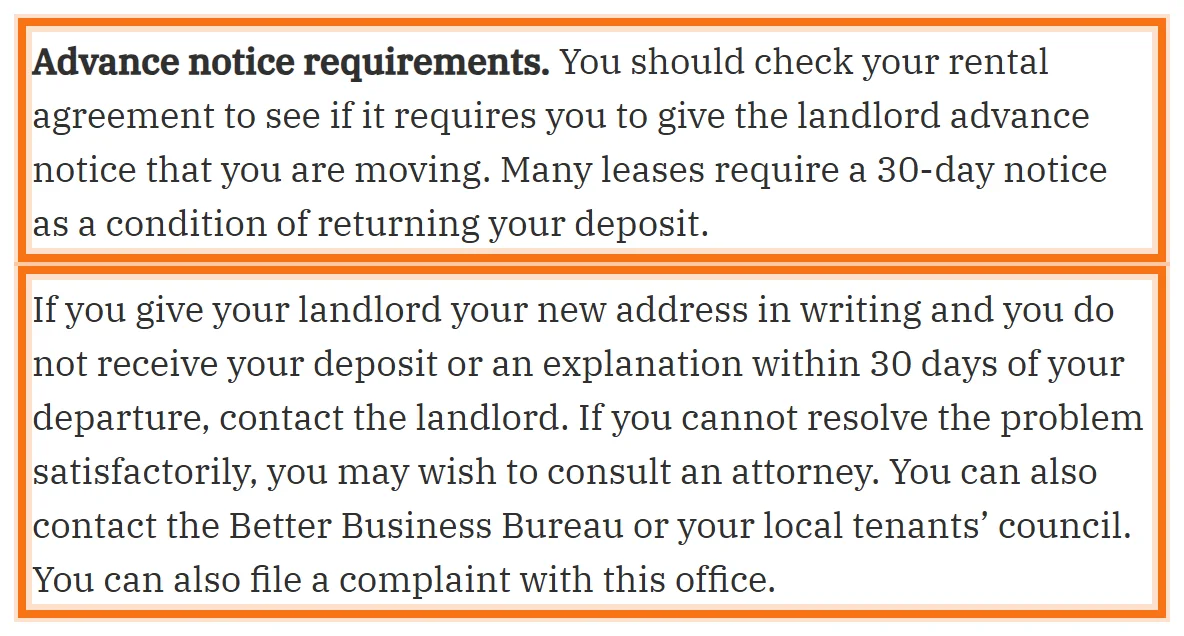
Two dates matter as much as any photo: the day the tenant surrendered the house and the day you received a forwarding address in writing. The Texas Attorney General tells tenants exactly this, so expect them to know it.
What Texas law asks the move-out file to prove
The deposit rules in Texas Property Code chapter 92, subchapter C, are short, and each one points at a record:
- 92.103(a): the landlord refunds the deposit "on or before the 30th day after the date the tenant surrenders the premises," except as 92.107 provides.
- 92.104(a)-(b): the landlord may deduct "damages and charges for which the tenant is legally liable under the lease or as a result of breaching the lease," but "may not retain any portion of a security deposit to cover normal wear and tear."
- 92.104(c): anything kept must come with "a written description and itemized list of all deductions," with a narrow exception for undisputed unpaid rent.
- 92.106: the landlord "shall keep accurate records of all security deposits."
- 92.107: no obligation to refund or account until the tenant gives a written forwarding address, but the tenant does not forfeit the refund by failing to give one.
Then the two lines that make documentation decisive. Under 92.109(c), in a suit by the tenant "the landlord has the burden of proving that the retention of any portion of the security deposit was reasonable." Under 92.109(d), missing the 30-day mark creates a presumption of bad faith, and 92.109(a) sets bad-faith liability at $100, three times the amount wrongfully withheld, and the tenant's reasonable attorney's fees. The statute's definition of normal wear and tear, and how it plays out room by room, is in what counts as normal wear and tear. This is general information, not legal advice; ask a Texas attorney about a specific deduction.
Common gaps that weaken a move-out record
The gaps that most often turn a clear deduction into an argument:
- No move-in report at all, or one without photos, so there is no baseline.
- Photos taken with furniture still in the house, hiding the floors and walls.
- Photos with no date, so the tenant can say the damage happened later.
- A walk-through done a week after the keys came back, after a cleaner or a contractor had been through, so the condition on the day of surrender cannot be shown.
- Deductions listed without a cost behind them, or a cost that was never invoiced.
- No record of when the forwarding address arrived, so nobody can show when the 30 days started to matter.
Because 92.109(c) puts the burden on the landlord, each gap works against you. The record has to be made on the day of surrender, before anyone else touches the house.
How the comparison turns into deductions
With the move-in and move-out records side by side, each difference goes into one of three groups. Normal wear and tear cannot be charged. Tenant-caused damage or cleaning beyond the condition at move-in can be, if the lease supports it. And some items need work before the next tenant but are your cost either way, such as an appliance that simply wore out.
Each chargeable line gets a description, the matching before and after photos, and a cost from a vendor quote or invoice. Be careful with items that were already old at move-in: the move-in photos and the item's age are part of the evidence, and a full replacement charge for something near the end of its life is hard to defend as damage rather than wear. The move-out inspection guide walks through building the itemized list, and who handles a security deposit dispute covers what happens if the tenant pushes back.
What you should receive as the owner
Expect a written move-out report with the full photo set, the comparison against move-in, each proposed deduction with its cost, and the date the itemized list is due. You should see it before the 30th day, because the deposit is handled for you but the deductions are made in your name as the landlord.
You should also receive the make-ready scope that comes out of the same walk-through, split between what the tenant pays and what you pay, so nothing surprises you on the next statement. Keep all of it where you can find it later: deposit questions and insurance claims can surface long after the move-out, and 92.106 expects accurate deposit records.
How Perpetual documents a move-out
Perpetual Property Management is broker-owned, with our office at 5755 Rufe Snow Dr, Suite 155, in North Richland Hills, managing rentals in Keller, North Richland Hills, Fort Worth and nearby Northeast Tarrant County cities. What we publish about condition records:
- Move-in: photo-documented move-in condition reports, room by room, timestamped and acknowledged by the tenant, as part of leasing and move-in.
- Every move-in and move-out gets a 360° condition inspection, one of the five written guarantees in our management agreement.
- Move-out inspection measured against the move-in baseline, and photo reports to your owner portal from our inspections; an annual property inspection is on every plan.
- Deposits are held, accounted for, and returned or properly itemized on the statutory timeline.
- Repairs over $500 get photo or video proof in your portal.
Who reviews proposed deductions before the itemized list goes out, and on what schedule, is confirmed in writing in the management agreement before you sign. Statements and documents stay in the AppFolio owner portal. To see how we would document your house, call 682-593-7033.
The takeaway: A move-out is documented well only if the move-in was, so the time to protect your deposit deductions is the day the tenant gets the keys, and the second-best time is the day the keys come back.
Questions owners ask
Should the tenant be present at the move-out inspection?
Check your lease first; it may give the tenant a right to attend. The deposit sections of the Property Code cited here (92.103, 92.104, 92.107, 92.109) do not describe a joint walk-through. A tenant who attends can see the comparison, which heads off some disputes. Either way, do the inspection after belongings are out and keys are returned, and date every photo.
How long should move-out photos and reports be kept?
Keep the complete file, including photos, invoices and the itemized list. Property Code 92.106 requires the landlord to "keep accurate records of all security deposits," and questions can come up long after the move-out, from the tenant, an insurer or your CPA. Ask your attorney how long to keep records for your situation; digital storage makes deleting them a false saving.
What if the tenant disputes the move-out report?
Show the tenant the matching move-in and move-out photos and the invoice for the item. If the tenant still disagrees, the tenant can sue to recover the deposit, and under Property Code 92.109(c) the landlord then has the burden of proving that keeping any portion was reasonable. The dated records are that proof.
Can I do the move-out inspection myself if I self-manage?
Yes. Use the move-in report as your checklist, photograph every room in the same order on the day of surrender, record meter readings, keys and the forwarding address, and write each difference up with a real cost. Send the itemized list on or before the 30th day after surrender. The hard part is staying objective about wear and tear.
What if there is no move-in condition report?
Then the move-out photos show only how the house looks now, not what changed, and every deduction is harder to prove. Document what you can: listing photos from before the lease, repair invoices, earlier inspection reports and dated messages. For the next tenant, make a full move-in report with dated photos and the tenant's acknowledgment.
Does the 30-day clock start when the tenant leaves or when I get a forwarding address?
Property Code 92.103(a) counts the 30 days from the date the tenant surrenders the premises. Under 92.107(a), the landlord is not obligated to return the deposit or give the itemized list until the tenant gives a written forwarding address, and 92.107(b) says the tenant does not forfeit the refund by failing to give one. Record both dates.
How is a rental's condition documented at move-out in Fort Worth, Keller or North Richland Hills?
The same way anywhere in Texas: a room-by-room walk-through on the day of surrender, with dated photos set against the move-in report, plus keys, meter readings and the forwarding address. Each deduction then gets a description and a vendor cost, and the itemized list goes out on or before the 30th day under Property Code 92.103 and 92.104.
Related services
Property management in Keller, North Richland Hills and Fort Worth. How full-service management works in Tarrant County →