
Key takeaways
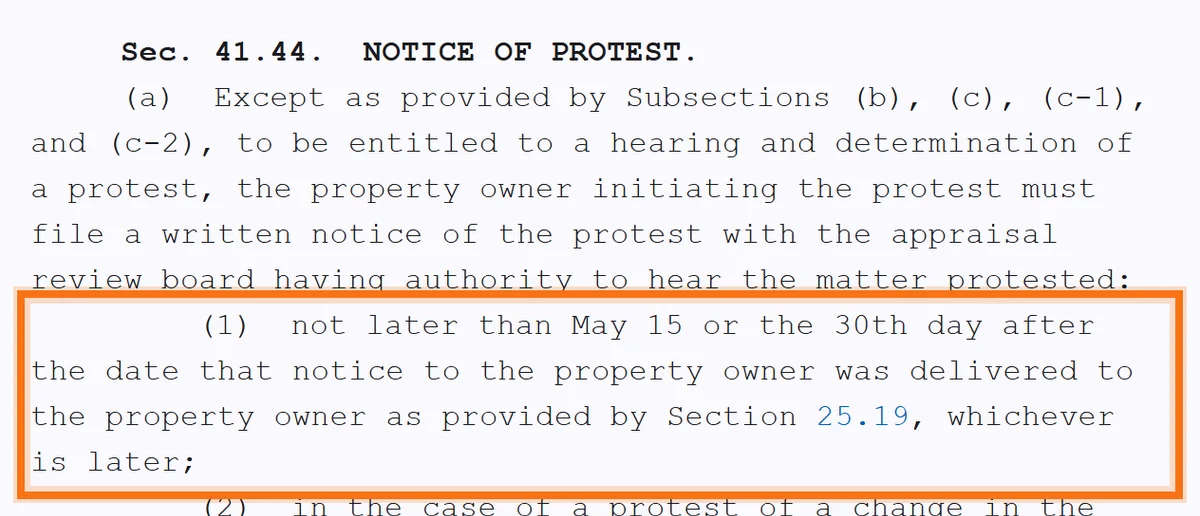
- The protest deadline is May 15 or the 30th day after your notice was delivered, whichever is later (Tax Code 41.44(a)(1)).
- You can designate an agent on the comptroller's form; only one agent per property at a time (Tax Code 1.111).
- A licensed real estate broker or sales agent may consult on single-family residences without tax consultant registration (Occupations Code 1152.002(a)(8)).
- Rent, expenses, invoices and dated photos are evidence the appraisal district must consider (Tax Code 23.01(b), 41.43).
- Non-homestead real property at or under the value threshold has a 20% yearly limit under Tax Code 23.231, a section that expires December 31, 2026.
Yes, a property manager can help you protest a Tarrant County appraisal, in two ways. The manager's records (rent ledger, expenses, repair invoices and inspection photos) are the evidence, and Texas law lets you designate an agent to act for you. For a single-family rental, a licensed real estate broker may do that without registering as a tax consultant. Whether your house is in Fort Worth, Keller or North Richland Hills, the deadline is the same.
This guide covers who may represent you, the steps and deadlines as the Tax Code states them, and the evidence to request. The wider property tax picture for a rental is in rental property taxes in Texas.
The Tarrant County protest, step by step, with the deadlines
Here is the protest in order, with the deadline as the Tax Code states it and the evidence a rental owner brings to each step:
| Step | Deadline as stated | Evidence for a rental |
|---|---|---|
| Notice of appraised value arrives | Tarrant Appraisal District mails the notices; TAD reported its 2026 notices as mailed | Check the value, the property description and whether any limitation is shown |
| File the notice of protest | Not later than May 15 or the 30th day after the notice was delivered, whichever is later (41.44(a)(1)); late filing before the board approves the records only for good cause (41.44(b)) | None needed to file; the notice only has to identify you, the property and your dissatisfaction (41.44(d)) |
| Ask for the district's evidence | At least 14 days before the hearing the chief appraiser must tell you that you may request it (41.461(a)) | Request it in writing; it is free (41.461(b)) |
| File your own evidence | Where the value was lowered the year before, information filed at least 14 days before the hearing raises the district's burden (41.43(a-3)) | Rent ledger, income and expense statements, repair invoices, dated inspection photos, open repair estimates |
| Informal conference | Held before the hearing if you request one (41.445) | The same packet, organized by issue |
| Appraisal review board hearing | Scheduled no later than the 90th day after the board approves the records (41.45(a)); you may appear, send an affidavit, or argue by phone or video (41.45(b)) | Affidavit with exhibits if you will not attend in person |
| Decision and appeal | The board decides by written order (41.47(a)); the Comptroller lists appeal to district court, and in some cases SOAH or regular binding arbitration | Read the order and the appeal deadline it triggers before deciding |
How to read this table: the only date most owners miss is the second row, and it is fixed by law. The middle rows reward an owner whose records are already organized, which is where a manager's files help. This is general information, not legal or tax advice.
Related guides: Rental Property Taxes in Texas: Property Tax, Depreciation and Deductions in Plain English, Renting Out Your Home and the Homestead Exemption: What Changes, Year-End Reporting for Rental Owners: Statements, Forms and What Your CPA Needs.
Who may represent you: the owner, a designated agent, or a consultant
Under Tax Code 1.111(a), a property owner may designate a lessee or other person to act as the owner's agent for any purpose under the Tax Code. Section 1.111(b) says the designation is made on a form prescribed by the comptroller, signed by the owner or another authorized person, and takes effect once a copy is filed with the appraisal district. Under 1.111(d), you may have only one agent per item of property, and a new designation revokes the old one.
Who may be paid for that work is a separate question. Occupations Code 1152.151(a) says a person may not perform property tax consulting services for compensation without a certificate of registration. Section 1152.002(a) lists exemptions, including licensed attorneys, certified public accountants, and a person who provides those services "only in connection with farms, ranches, or single-family residences" and holds an active real estate broker or sales agent license (1152.002(a)(8)).
What that means for a rental house: a licensed broker who manages it may be designated as your agent for that single-family residence. A duplex or fourplex is not a single-family residence, so ask before assuming. Whether your manager offers this, and for what fee, is a question for the agreement. This is general information, not legal or tax advice.
How the district values a rental, and the 2026 limit on non-homestead property
Tax Code 23.01(a) says taxable property is appraised at its market value as of January 1. Section 23.01(b) adds that where the district uses mass appraisal, each property is still to be appraised on the individual characteristics that affect its market value, and "all available evidence that is specific to the value of the property shall be taken into account." Where the income method is the most appropriate, 23.012(a) has the chief appraiser analyze comparable rental data and operating expenses.
A rental has no residence homestead exemption and no 23.23 homestead cap. It may have a different limit: Tax Code 23.231, the circuit breaker, caps a yearly increase in appraised value at 20% plus new improvements for real property other than a residence homestead, if the value is not more than the threshold set in 23.231(j) ($5 million for 2024, adjusted each year by the comptroller). It applies from the year after the first January 1 you own the property (23.231(f)), and 23.231(k) says the section expires December 31, 2026. Check whether your next notice still shows it.
The evidence your manager already holds, and how to ask for it
A protest wins on documents, and a managed rental produces them every month. Ask your manager for these, by a date at least two weeks before your hearing:
- Rent ledger for the last twelve months, showing rent charged, rent received and any vacant days.
- Income and expense statements, the monthly owner statements and any year-end summary. Tax Code 41.43(a-3)(3)(A) names "income and expense statements" as information an owner can file.
- Repair invoices, especially for recurring problems.
- Dated inspection photos of original finishes, worn flooring, roof, foundation or plumbing issues.
- Open estimates for work the house needs but has not had.
- The rental analysis with the leased comparables used to price the house.
Condition evidence often does the most work, because a value built from neighborhood sales may not reflect a house that was never updated. Dated photos of a thirty-year-old kitchen answer that assumption directly.
Market value or unequal appraisal: choose both grounds
Tax Code 41.41(a) lists what an owner may protest, including (1) the determination of the appraised value and (2) unequal appraisal. Under 41.44(d), the comptroller's form must let you select a single box for either or both, so there is no reason to choose just one.
Market value asks what the house would sell for on January 1. Your manager's condition photos, invoices and estimates, and the rent the house actually earns, carry this argument. Under 41.43(a), the district has the burden of establishing the value by a preponderance of the evidence.
Unequal appraisal compares your appraised value with comparable properties. Under 41.43(b), it is decided for you unless the district shows, for example, that your value is at or below the median appraised value of a reasonable number of comparable properties appropriately adjusted. That comparison is research a manager does not usually hold, and it is where a consultant may help.
When a registered consultant makes sense
A registered property tax consultant, an attorney or a CPA can take the whole case, including the unequal appraisal research. Consider one when:
- You own several rentals, or properties that are not single-family residences.
- You live out of state and do not want to prepare an affidavit yourself (41.45(b) allows evidence by affidavit).
- The case turns on unequal appraisal and comparable research.
- The gap between your evidence and the appraised value is large.
Ask how the consultant is paid before you sign, and remember 1.111(d): designating a consultant revokes any earlier agent designation for that property. Either way, the consultant will ask for the same ledger, statements, invoices and photos your manager holds.
Mistakes that lose a protest
- Missing the 41.44(a)(1) date. A late notice is heard only if the board finds good cause and only before it approves the records (41.44(b)).
- Arguing the tax bill instead of the value. The board decides the appraised value, not the tax rate.
- Bringing opinions and no documents. Section 23.01(b) asks for evidence specific to the property; give it some.
- Two agents at once. A new designation revokes the earlier one (1.111(d)).
- Skipping the hearing without an affidavit. Under 41.45(b) you may offer evidence by affidavit, but it must reach the board before the hearing begins.
- Ignoring the district's evidence. You are entitled to request it free of charge (41.461).
This is general information, not legal or tax advice. Confirm dates on your own notice and ask a Texas attorney, a CPA or a registered consultant about your situation.
How Perpetual helps at protest time
Perpetual Property Management is broker-owned, with Justin Brown as Broker/Owner, at 5755 Rufe Snow Dr in North Richland Hills. What our site states that matters at protest time:
- Statements and documents: your AppFolio Owner Portal holds statements, documents and disbursement history, and statements and year-end reporting export cleanly for your CPA.
- Invoices: the original vendor invoice is always in your portal (price sheet).
- Photos: after an inspection you receive a photo report in your Owner Portal with condition notes (inspections).
- Comparables: our rental analysis prices from actual leased comparables, not asking prices.
Our site does not describe a protest service. Whether we act as your designated agent for a protest, or prepare an evidence packet, and any fee for it, is confirmed in writing in your management agreement; ask us before your notice arrives. Call 682-593-7033.

The takeaway: Calendar the 41.44 deadline the day the notice arrives, decide who files (you, your manager as designated agent, or a registered consultant), and ask your manager for the rent, expense, invoice and photo records that same week.
Questions owners ask
Can a property manager help me protest my rental property's tax assessment?
Yes, as a source of evidence and, depending on the person, as your agent. Tax Code 1.111 lets you designate an agent on the comptroller's form, and Occupations Code 1152.002(a)(8) exempts a holder of an active Texas real estate broker or sales agent license from tax consultant registration when the work is only for farms, ranches or single-family residences. Ask your manager whether it offers this and what it costs. This is general information, not legal advice.
What evidence lowers a rental property's appraised value in Texas?
Evidence specific to your house: dated photos of original or worn finishes, estimates for roof, foundation or plumbing work, repair invoices, a rent ledger and income and expense statements, and a list of comparable properties appraised lower than yours. Tax Code 23.01(b) says all available evidence specific to the property's value is to be taken into account.
When is the deadline to protest a Tarrant County appraisal?
Tax Code 41.44(a)(1) sets it at May 15 or the 30th day after your notice of appraised value was delivered, whichever is later. A notice filed after that, but before the review board approves the records, is heard only if the board finds good cause (41.44(b)). Use the date printed on your notice and file early.
Should I hire a property tax consultant for one rental house?
Often not, if the house is a single-family residence, the overvaluation is modest and your manager's records are organized. A registered consultant, attorney or CPA makes more sense with several properties, a duplex or larger, an unequal appraisal case, or a large gap between your evidence and the value. Ask how any consultant is paid before you sign. This is general information, not tax or legal advice.
Is there a limit on how fast a rental's appraised value can rise?
For 2024 through 2026, Tax Code 23.231 limits the yearly increase in appraised value of real property other than a residence homestead to 20% plus new improvements, if the value is not more than the threshold ($5 million for 2024, adjusted each year). It applies from the year after the first January 1 you own the property. The section states it expires December 31, 2026, so check your next notice.
Do I have to attend the hearing in person?
No. Tax Code 41.45(b) says an owner may offer evidence or argument by affidavit without appearing, or appear by telephone or videoconference, in which case evidence must be offered by affidavit. The affidavit has to reach the board before it begins the hearing. That route suits an owner who lives outside Tarrant County.
Can I see the appraisal district's evidence before the hearing?
Yes. Under Tax Code 41.461, at least 14 days before the hearing the chief appraiser must tell you that you are entitled, on request, to the data, schedules, formulas and other information the district will introduce, and it may not charge you for the copies. Request it in writing as soon as your hearing is set.
Related services
Property management in Keller, North Richland Hills and Fort Worth. How full-service management works in Tarrant County →