Key takeaways
- The Texas real estate license law sets no standard, minimum or maximum length for a management contract; the agreement states the term.
- Three structures cover what owners are offered: a fixed initial term that renews, a term tied to the tenant's lease, or no fixed term with a notice period.
- Texas licensing law lets a management contract run until one side gives notice (Occupations Code 1101.652(b)(12)).
- The term and the tenant's lease are separate contracts and often end on different days: map both before you sign.
- A longer term is fair only if something is written on the other side of it, such as guarantees with stated remedies.
What contract length should an owner expect when appointing a residential property manager in Texas? The one written in the agreement, because the Texas real estate license law does not set one. Owners in Fort Worth, Keller and North Richland Hills are usually offered a fixed initial term that renews unless someone gives notice, a term that follows the tenant's lease, or an agreement with no fixed term that either side can end with notice. All three are lawful; the termination clause decides which one is fair.
This guide compares the three side by side, shows how a term lines up with your tenant's lease, explains what a longer term should buy you, and lists the questions that pin down your real commitment before you sign.
The three contract structures side by side
Here are the three structures owners are offered, how long each commits you, and when you can usually leave without a fee:
| Term structure | How long you are committed | When you can usually leave without a fee | Best fit |
|---|---|---|---|
| Fixed initial term, then renewal | The stated number of months, such as 12, then month to month or another full term | At the end of the term with timely notice; earlier only if the termination clause allows | A vacant home that needs a full lease-up |
| Tied to the tenant's lease | Until the current lease ends, then the next lease | At the lease end date, with notice | An owner who wants one manager for a whole tenancy |
| No fixed term | Only the notice period stated in the agreement | Any time, with that notice | An owner with a tenant in place, or one comparing companies |
| Any of the three, renewing for a full term | A new full term each time a notice deadline passes | Only in the window before each renewal | Nobody: ask for month-to-month renewal instead |
How to read this table: the second column is the commitment on paper, the third is the one that matters when the relationship is not working. A 12-month term that renews month to month can be a better deal than a "no contract" offer with a large cancellation charge. The last row is the trap: any term becomes a long one if it renews for a full term every time a deadline is missed.
What Texas law says about how long a contract can run
Managing a rental for someone else in Texas is brokerage work under the Real Estate License Act, Occupations Code chapter 1101, and that act does not set a minimum, a maximum or a standard term for a management agreement. It does something narrower. Section 1101.652(b)(12) lets the Texas Real Estate Commission discipline a license holder who fails to put a definite termination date, not subject to prior notice, in a contract for licensed services, "other than a contract to perform property management services." A listing agreement to sell your house needs an end date; a management agreement may run until one side gives notice.
So the length is a negotiated term, like the fee. How the renewal side of that works is covered in whether property management contracts renew automatically. This is general information, not legal advice.
What the term actually controls, and what it does not
The management agreement is a contract between you and the manager; the lease is a contract between you and the tenant. Ending the agreement does not end the lease, and a lease with ten months left does not keep you with a manager whose agreement allows notice.
The term controls three things: when you can leave without an early termination fee, when the manager can change fees or terms, and when the agreement renews. Read it with the renewal and fee-change clauses. An agreement that renews for a full year and allows fee changes at each renewal on notice alone can quietly become a commitment you did not choose.
How the contract term lines up with your tenant's lease
Owners pick a term in the abstract, but it plays out against a lease. Illustrative only, not a quote. Assume an agreement that says "12-month initial term, then renews", signed while the house is vacant, and a tenant who moves in two months later on a 12-month lease:
| When | What happens | What it means for you |
|---|---|---|
| Month 1 | You sign; the 12-month initial term starts | The clock runs while the house is still being leased |
| Month 3 | The tenant moves in on a 12-month lease, months 3 to 14 | The lease will outlast the first term by two months |
| Start of month 11 | About 120 days before the lease ends | A manager that starts renewal work 120 days out, as we do, is already on the renewal |
| End of month 12 | The initial term ends, or renews under its clause | Leave now and the next manager inherits a tenant with two months left |
| End of month 14 | The lease ends or renews | The cleanest handover point, which a lease-tied term uses by design |
How to read this table: the agreement and the lease were signed two months apart, so their end dates never match. If you think you may change managers, the lease end is usually the smoother exit, and a term tied to the lease, or a renewal that runs month to month, lets you use it without a fee.
Renewal: the dates to put in your calendar
Many agreements renew unless written notice arrives before a deadline, and some charge the early termination fee during a renewal term just as in the first. The protective version renews month to month after the initial term, so after the first term you are only ever committed to the notice period.
When you sign, write down three things: the end of the initial term, the last day to give non-renewal notice, and the form notice must take. If you want no initial term at all, what that does and does not change is covered in month-to-month property management with no long-term contract.
Which length suits which owner, and what a term should buy
An owner with a vacant house is well served by a term long enough for the lease-up and the first tenancy, if the termination clause is fair. An owner with a tenant already in place has less reason to accept a long term, because the expensive leasing work is not happening up front. An owner who has been burned before, or is comparing two companies, is better off with no fixed term and a manager willing to earn the account every month.
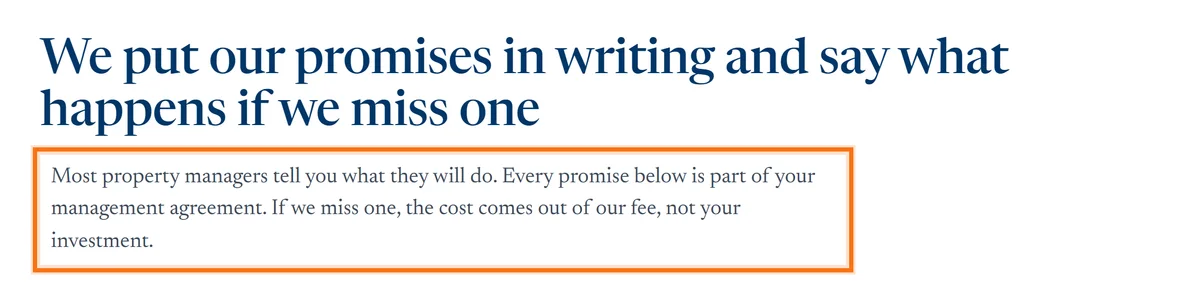
Whatever the length, ask what is written on the other side of it: how fast the home is marketed, how quickly calls are returned, when you are paid, and what happens if the first tenant fails. Those promises are what a term buys. Ours are written into the agreement:
A long term with nothing written on the other side of it is only a lock. The handover at the end of any term is described in how to switch property managers.
Questions to ask about the term before you sign
- "What is the initial term, and what does it renew into?"
- "How many days of notice do I give, and in what form?"
- "Is there any fee to leave during the initial term, during a renewal term, or if I sell the house?"
- "Can fees change at renewal, and do I have to agree in writing?"
- "Does the agreement end if the lease ends and I decide not to re-lease?"
Read the actual agreement before paying anything, with the term, renewal and termination sections side by side; seeing a sample management agreement before you pay explains why. If a term is unclear, a Texas attorney can review it. This is general information, not legal advice.
How Perpetual handles this
Perpetual Property Management is broker-owned: Justin Brown is a Texas broker and owns both the management company and our affiliated brokerage, Perpetual Realty Group, LLC, from our office at 5755 Rufe Snow Dr in North Richland Hills. For homes in Keller, North Richland Hills and Fort Worth, here is what our site states about what an agreement with us carries for its length:
- Five written guarantees, from listing on every major rental platform within 5 business days of being market-ready to rent disbursed by the 10th of each month. They apply to properties under an active agreement, subject to the Guarantee Addendum.
- Written fees only. Every fee you pay is listed in your written agreement; if a fee is not in the agreement, you do not pay it.
- Full-service management, as our management page lists it: Texas-compliant leases, screening every adult against written criteria, inspections with photo reports and monthly statements in the owner portal.
Our contract term, how it renews and what ending it involves are not published on the site, so they are confirmed in writing before you sign. Our pricing page lists "What does it cost to leave if you're unhappy?" among the questions we answer in writing for your property.
To talk through the term on an agreement you have been offered, or the one you already have, call 682-593-7033.
The takeaway: A management contract runs as long as the agreement says: identify which of the three structures you are offered, map it against your tenant's lease, and judge it by its termination clause and by what is promised in writing for the length of it.
Questions owners ask
Can I cancel a property management contract early?
Usually, but the cost depends on the agreement. Some allow termination with written notice at any time, some charge an early termination fee during the initial term, and many waive the fee if the manager has failed to perform and been given a chance to fix it. Read the termination clause before signing rather than after you want to leave.
Do property management contracts renew automatically?
Many do. The agreement states a renewal term, such as month to month or another full term, and a deadline for non-renewal notice. Put that deadline in your calendar. The version that protects an owner renews month to month after the initial term, so you are never committed beyond the notice period.
What happens to the tenant's lease if I change managers?
Nothing. The lease is between the tenant and the owner, and the manager signed it as your agent. The tenant gets written instructions on where to pay rent and who to call from the changeover date, and the lease continues on its existing terms until it ends.
Is a longer management contract ever better for the owner?
It can be if it comes with something in return, such as a reduced leasing fee, a locked fee schedule for the term, or a guarantee that depends on the manager keeping the house for a full tenancy. A longer term with no concession and a stiff termination fee benefits only the manager.
What contract length should an owner expect when hiring a property manager?
Whatever the agreement states, because the Texas real estate license law sets no standard term and lets a management contract run until one side gives notice (Occupations Code 1101.652(b)(12)). Expect one of three structures: a fixed initial term that renews, a term tied to the tenant's lease, or no fixed term with a notice period. Ask what the term renews into, how much notice you must give, and whether any fee applies if you leave early.
Is a month-to-month property management agreement better?
It is the most flexible for the owner, because you are only ever committed to the notice period. It is not automatically cheaper: some month-to-month offers carry a higher leasing fee or a cancellation charge that does the work a long term would. Compare the total cost of leaving under each agreement, not the length on the first page.
Does Texas law limit how long a property management contract can last?
No statute in the Real Estate License Act sets a minimum or maximum term. Occupations Code 1101.652(b)(12) requires most contracts for brokerage services to state a definite termination date not subject to prior notice, but it excludes contracts to perform property management services. A management agreement can therefore renew or continue until one side gives the notice it requires.
Can the management fee change during the contract term?
Only as the agreement allows. Some fix the fee for the term, some allow changes at renewal, and some allow changes on written notice at any time. Look for the fee-change clause next to the term and renewal clauses, and ask for any change to require your written agreement. A locked fee schedule is one fair thing to ask for in return for a longer term.
Related services
Property management in Keller, North Richland Hills and Fort Worth. How full-service management works in Tarrant County →