Key takeaways
- Refund or itemize within 30 days after the tenant surrenders the home (Property Code 92.103).
- Skipping the itemized list in bad faith forfeits the right to sue the tenant for damage to the premises (92.109(b)).
- Charge damage at its reasonable cost, never normal wear and tear (92.104, 92.109(c)).
- Justice court hears claims up to $20,000 (Government Code 27.031); in Tarrant County, suing one former tenant costs $54 plus $90 for the citation.
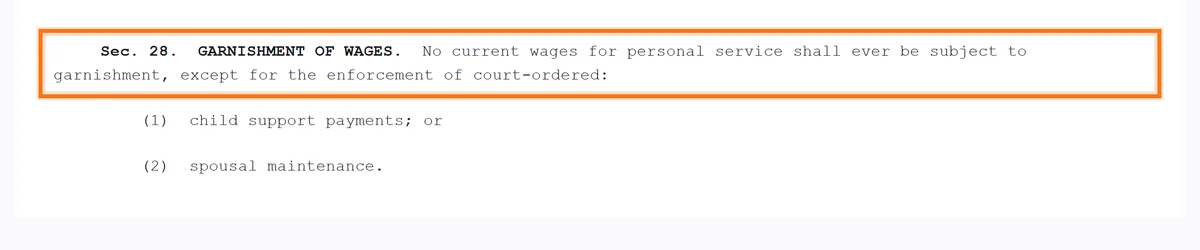
- A judgment is not cash: Texas does not allow garnishment of current wages for this debt (Tex. Const. art. XVI, sec. 28).
What can you do when tenant damage or unpaid rent is more than the security deposit? In Texas the path has four steps: a correct deposit accounting, a written demand for the balance, a claim in justice court, and a judgment you then have to collect. For an owner in Fort Worth, Keller or North Richland Hills, the first step decides whether the others are open to you, and the last step decides whether the money ever arrives.
Below: the deposit rule that can cost you the claim, how to value damage, a worked example, Tarrant County court costs, what a judgment can reach, and when to stop.
From deposit to judgment: the steps and the rule behind each
Here is each stage of recovering a balance above the deposit in Texas, what it involves and the rule that governs it:
| Stage | What it involves | The rule |
|---|---|---|
| 1. Apply the deposit | Deduct unpaid rent and damage the tenant is liable for under the lease | Property Code 92.104(a); no deduction for normal wear and tear (92.104(b)) |
| 2. Itemize | A written description and itemized list of every deduction | Within 30 days after surrender (92.103, 92.109(d)), once a forwarding address is given (92.107) |
| 3. Demand the balance | A letter with the itemization, invoices, ledger and a pay-by date | No statute requires it; it shows the court you asked first |
| 4. Sue | A suit in justice court for the remaining balance | Up to $20,000 (Government Code 27.031); a suit on a debt within four years (CPRC 16.004(a)(3)) |
| 5. Collect | Writs, liens and discovery after judgment | No garnishment of current wages (Tex. Const. art. XVI, sec. 28); abstract of judgment lien (Property Code 52.001); dormancy after 10 years without a writ (CPRC 34.001) |
How to read this table: stages 1 and 2 have hard legal deadlines and penalties, stage 3 is good practice, and stages 4 and 5 are choices you make on the numbers. Most of the money is won or lost at stage 2.
The itemized list can win or lose the claim
Every recovery rests on the deposit itemization, and Texas attaches real consequences to it:
- The deadline. The refund, or the balance with a written description and itemized list of deductions, is due on or before the 30th day after the tenant surrenders the home (92.103). Missing it creates a presumption of bad faith (92.109(d)).
- The forwarding address. The landlord is not obligated to refund or itemize until the tenant gives a written forwarding address, but the tenant does not lose the right to either by failing to give one (92.107).
- The forfeiture. A landlord who in bad faith does not provide the itemized list forfeits the right to withhold any of the deposit or to bring suit against the tenant for damages to the premises, and is liable for the tenant's attorney's fees (92.109(b)).
- The burden. If the tenant sues, the landlord has to prove the retention was reasonable (92.109(c)).
The condition record behind a defensible itemization comes from the move-out inspection compared against move-in photos, and the full deposit rules are in Texas security deposit rules. The itemization is also your demand letter's first exhibit. This is general information, not legal advice.
Working out what the tenant actually owes
The balance is not simply "what it cost me." Each category has its own rule:
- Unpaid rent. Rent through the date the tenant left, plus later rent only while the house sat empty. Property Code 91.006 gives a landlord a duty to mitigate damages when a tenant abandons the home in violation of the lease, and a lease clause waiving it is void. Rent from a new tenant reduces the claim.
- Damage. The reasonable cost to repair or replace, never normal wear and tear. Section 92.001 defines normal wear and tear as deterioration from intended use, and excludes deterioration from negligence, carelessness, accident or abuse by the tenant, the household or a guest.
- Late fees, utilities, cleaning and re-letting costs. Only what the lease provides for, at the amounts it states; late fees must also meet Property Code 92.019.
For items with a limited life, such as carpet, paint and blinds, charge the value the item had left, not the price of new. That is a judgment call, not a statute, but if the tenant sues over the deposit, section 92.109(c) makes you prove the retention was reasonable. The line between wear and damage, item by item, is in what counts as normal wear and tear.
A worked example: a $2,000 deposit and a $3,630 claim
Assumptions: a $2,000 monthly rent and a $2,000 deposit; the tenant left owing one month of rent and the house was re-leased from the next month; holes and paint damage cost $900 on the invoice; a ruined six-year-old bedroom carpet cost $1,200 to replace, on an assumed ten-year life; cleaning the lease allows cost $250. The figures are made up. Illustrative only, not a quote:
| Line | How it is figured | Amount |
|---|---|---|
| Unpaid rent | One month at $2,000; the house re-leased the next month | $2,000 |
| Holes and paint beyond normal wear | Invoice | $900 |
| Bedroom carpet | $1,200 x 4 of its 10 years of life left = the value lost | $480 |
| Cleaning allowed by the lease | Invoice | $250 |
| Total charges | $2,000 + $900 + $480 + $250 | $3,630 |
| Less the deposit | Applied in full | - $2,000 |
| Balance to demand | $3,630 - $2,000 | $1,630 |
How to read this table: billing the full $1,200 for six-year-old carpet would have added $720 the tenant could fairly dispute, and if the tenant sues over the deposit, 92.109(c) puts the burden on the landlord to prove the retention was reasonable. A smaller number with a clear method is easier to defend. The $1,630 is what the demand letter states, line by line, with invoices and photos behind each line.
The itemized demand letter
Before filing, send a written demand. It costs almost nothing and shows the court you asked first. Include the itemized deposit accounting, the invoices and photographs behind each damage charge, the ledger for the unpaid rent, the balance, a payment deadline, and a plain statement that you will file in justice court if the balance is not paid or a written payment arrangement is not reached by that date.
Send it to the forwarding address and to any other address you have, by a method that produces a record. If the tenant offers installments, put the dates and amounts in a signed agreement.
One Texas rule applies when the lease had no deposit at all: Property Code 92.110 requires written notice of the claim to the tenant on or before the date it is reported to a consumer reporting agency or third-party debt collector, or the right to collect is forfeited, unless the tenant gave no forwarding address.
Suing for the balance in a Tarrant County justice court
Many single-house balances fit in justice court. Government Code 27.031(a)(1) gives a justice court jurisdiction over civil matters in which the amount in controversy is not more than $20,000, exclusive of interest. Tarrant County's justice court fee schedule lists $54 to file a justice suit against one defendant, and the county's 2026 sheriff and constable fee schedule lists $90 for a citation, so suing one former tenant starts at $54 + $90 = $144. Ask the court which precinct to file in, and confirm current fees before you file.
Bring the lease, the move-in and move-out reports with photos, the itemized deposit accounting, the invoices, the rent ledger, the demand letter and proof it was sent.
Watch the deadline. Civil Practice and Remedies Code 16.004(a)(3) requires a suit on a debt within four years after the cause of action accrues, while section 16.003 sets two years for some property claims, such as trespass for injury to the property of another. Ask an attorney which period fits each part of your claim, and ask the court who may appear for you in a suit only for money. This is general information, not legal advice.
What a Texas judgment can and cannot reach
A judgment says the tenant owes you. Turning it into money is a separate effort, and Texas protects debtors:
What a judgment can reach:
- Bank accounts. Civil Practice and Remedies Code 63.001 makes a writ of garnishment available to a plaintiff with a valid judgment who swears the defendant has too little property in Texas subject to execution to pay it. In practice that means money a bank holds for the tenant, so you need to know where the tenant banks. Tarrant County's constable schedule lists $90 to serve one.
- Real property. A recorded abstract of judgment becomes a lien on the debtor's real property in that county, including property acquired later, but not property exempt from forced sale (Property Code 52.001). A homestead is protected from forced sale for most debts (Tex. Const. art. XVI, sec. 50(a)). The lien lasts 10 years from recording unless the judgment goes dormant (52.006).
- Time limits. If no writ of execution issues within 10 years of the judgment, it becomes dormant and cannot be executed unless revived (CPRC 34.001).
Whether to place the account with a collection agency is your decision; ask the agency in writing what it charges and what it does. Post-judgment steps have their own procedures and fees; consider an attorney here. This is general information, not legal advice.
When chasing the balance costs more than the balance
The question is whether the likely recovery, times the odds of actually collecting, is more than the filing and service fees, your time at a hearing and any attorney's fee. In the example above, $144 to sue for $1,630 is under 9% of the balance, which is worth it if the tenant has a bank account you can find or owns real property. For a tenant with no known account and no property, a judgment may sit uncollected, and the demand letter may be the sensible place to stop.
Facts that favor filing: a known bank, real property in the tenant's name, a large balance relative to the costs, and a complete file. Facts that favor stopping: no forwarding address, no known assets, and gaps in the paperwork. What a property manager can and cannot do in this process is in can a property manager help recover unpaid rent.
For your taxes, IRS Publication 527 says a cash-basis taxpayer does not deduct uncollected rent, because it was never included in income. Repairs you paid for are a separate question. Ask your CPA; this is general information, not tax advice.
How Perpetual handles this
Perpetual Property Management is broker-owned, with our office at 5755 Rufe Snow Dr in North Richland Hills, and we manage homes in Keller, North Richland Hills, Fort Worth and nearby. What our site commits to that matters here:
- Every move-in and move-out gets a 360-degree condition inspection, one of the five written guarantees, subject to the Guarantee Addendum.
- Our leasing page says deposits are held, accounted for and returned, or properly itemized, on the statutory timeline, and that the photo-documented move-in report decides most deposit disputes.
- Every adult applicant is screened against the same written criteria, including income of at least 3x the rent counting the two highest earners, through our tenant screening.
We do not offer a rent guarantee, and nobody can promise a former tenant's balance will be collected. Whether we send the demand letter, refer an account to a collection agency or appear in court for you, and any fee for that work, are confirmed in writing before you sign. Eviction service is included on Full Service and optional at $7.95 a month on the other plans, as listed on the price sheet. If a tenant has just left owing more than the deposit, call 682-593-7033.
The takeaway: Itemize on time, value damage at its reasonable cost, demand the balance in writing, and decide whether to sue on the odds of collecting, because a Texas judgment cannot reach current wages.
Questions owners ask
What happens if tenant damage costs more than the security deposit?
Apply the full deposit, send the itemized list within 30 days of move-out (Property Code 92.103, 92.104), then send a written demand for the rest. If it is not paid, you can sue in justice court for up to $20,000 and collect on a judgment through a bank garnishment or a lien on non-exempt real property.
Can a property manager help recover unpaid rent after a tenant moves out?
Yes, with the paperwork: the itemization, the ledger, the photos and invoices, and usually the demand letter. The decision to sue, and collecting on a judgment, stay with the owner, and no manager can promise the tenant has money to collect. Ask the court or an attorney who may appear for you in a suit only for money.
Can I keep the entire security deposit if the damage exceeds it?
Yes, if lawful deductions add up to at least the deposit. You still send the itemized list within 30 days; the statute excuses it only when the tenant owes rent at surrender and there is no controversy about the amount (92.104(c)). Keeping the deposit does not waive your right to pursue the balance above it, but skipping the list in bad faith forfeits the right to sue for damage to the premises (92.109(b)).
Can a landlord report an unpaid balance to the credit bureaus in Texas?
An individual owner does not report to the credit bureaus directly; that runs through a collection agency or reporting service, if you choose to use one. If the lease had no security deposit, Property Code 92.110 requires written notice of the claim to the tenant on or before the date it is reported to a consumer reporting agency or third-party debt collector, or the right to collect is forfeited. Ask an attorney before reporting any debt.
How long do I have to sue a former tenant for unpaid rent in Texas?
Civil Practice and Remedies Code 16.004(a)(3) requires a suit on a debt within four years after the cause of action accrues. Section 16.003 sets two years for some property claims, such as trespass for injury to the property of another, so ask an attorney which period fits each part of your claim.
Can I garnish a former tenant's wages in Texas?
No. Article XVI, section 28 of the Texas Constitution says current wages for personal service shall never be subject to garnishment, except to enforce court-ordered child support or spousal maintenance. A judgment for unpaid rent or damage can instead reach money in a bank account through a writ of garnishment, or real property through a recorded abstract of judgment, other than exempt property such as a homestead.
How long is a Texas judgment against a tenant good for?
If no writ of execution is issued within 10 years after the judgment, it becomes dormant and cannot be executed unless revived (Civil Practice and Remedies Code 34.001). A recorded abstract of judgment is a lien on the debtor's non-exempt real property in that county for 10 years from recording, unless the judgment goes dormant first (Property Code 52.006). Ask an attorney about reviving or extending a judgment.
Property management in Keller, North Richland Hills and Fort Worth. How full-service management works in Tarrant County →